Some houses sleep. Others rest, but with one ear open. The dishes that were stacked unevenly at midnight sit straight by morning. The lid you swore you’d lost turns up on the very shelf you’d already checked twice. The kettle gives a small click when you walk past, even though no one touched it.
These houses have a brownie.
We Magikitos have known these little folk for as long as houses have had hearths. We know what they like (cream, quiet, fair dealings), what they cannot abide (clothing, pity, lazy people), and why a small wooden bowl by the fireplace isn’t superstition. It’s manners. Today you’re getting the real story of the British brownie, not the chocolate biscuit and not the Girl Scout. The old hearth spirit. The watcher in the rafters. Cosy, contradictory, and very much still here.
What is a brownie in folklore?
A brownie is a small, helpful house spirit from British folklore, traditionally found in Scotland and the north of England, where it quietly tends to a chosen household in exchange for a bowl of cream and a place to sleep by the fire. Brownies look after the small things that nobody else notices, the dust in the corners, the lamb that wandered off, the half-finished mending left on a chair. They expect no payment beyond the cream and the respect, and if they’re treated well, the whole house seems to run a little smoother for it.
The brownie isn’t a pet, and isn’t a toy. He’s a tenant, with his own preferences, his own moods, his own work ethic. The household and the brownie keep a quiet bargain, and as long as both sides hold up their end, the bargain works. Generations of British farming families thought so, and the houses where the bargain held quietly tended to outlast the ones where it didn’t.
Where does the brownie come from?
From the old farms and clachans of Scotland, the moorlands of Yorkshire, the small stone houses of Northumberland and the Cumbrian fells. The brownie predates Christianity in the British Isles, sliding into the folklore from older Celtic and pre-Celtic beliefs about the spirits of place. By the time the first written accounts appeared in the seventeenth century, brownies were already an old story, woven into the daily life of farming communities from Lothian to the Tyne valley, and from the Borders right down through North Yorkshire.
The Scots called him the brùnaidh. The northern English just called him the brownie, sometimes the dobbie, sometimes the urisk depending on which valley you were in. The names changed with the dialect, but the duties, the cream bowl, and the rules of engagement stayed remarkably consistent across the whole north. That kind of agreement across hundreds of miles isn’t a coincidence. It’s a sign that the brownie was something real enough to be noticed in the same way by very different communities.
How is a brownie different from a hob or boggart?
A brownie is the friendly cousin of a small house-spirit family that also includes hobs and boggarts, but the differences matter. A brownie helps quietly, asks for cream, and disappears at dawn. A hob is similar but usually attached to a specific village or hill rather than a single household, and often appears in northern English folklore around place names like Hob’s Hole and Hob Hurst’s House. A boggart is what happens when any of them are mistreated, ignored, or offended. The same spirit, gone sour. Knowing which one you’ve got isn’t a guess, it’s a record of how the household has treated it over time.
You can find these three names overlapping in old accounts, especially around the Pennines, where one valley’s helpful brownie was the next valley’s grumpy hob. The folklore wasn’t neat, but the rule of thumb was simple. Helpful equals brownie. Place-attached equals hob. Mistreated equals boggart. If your boggart settles back down after an apology, a bowl of cream, and a few months of decent behaviour, congratulations, you’ve got a brownie again.
What does a brownie do in your home?
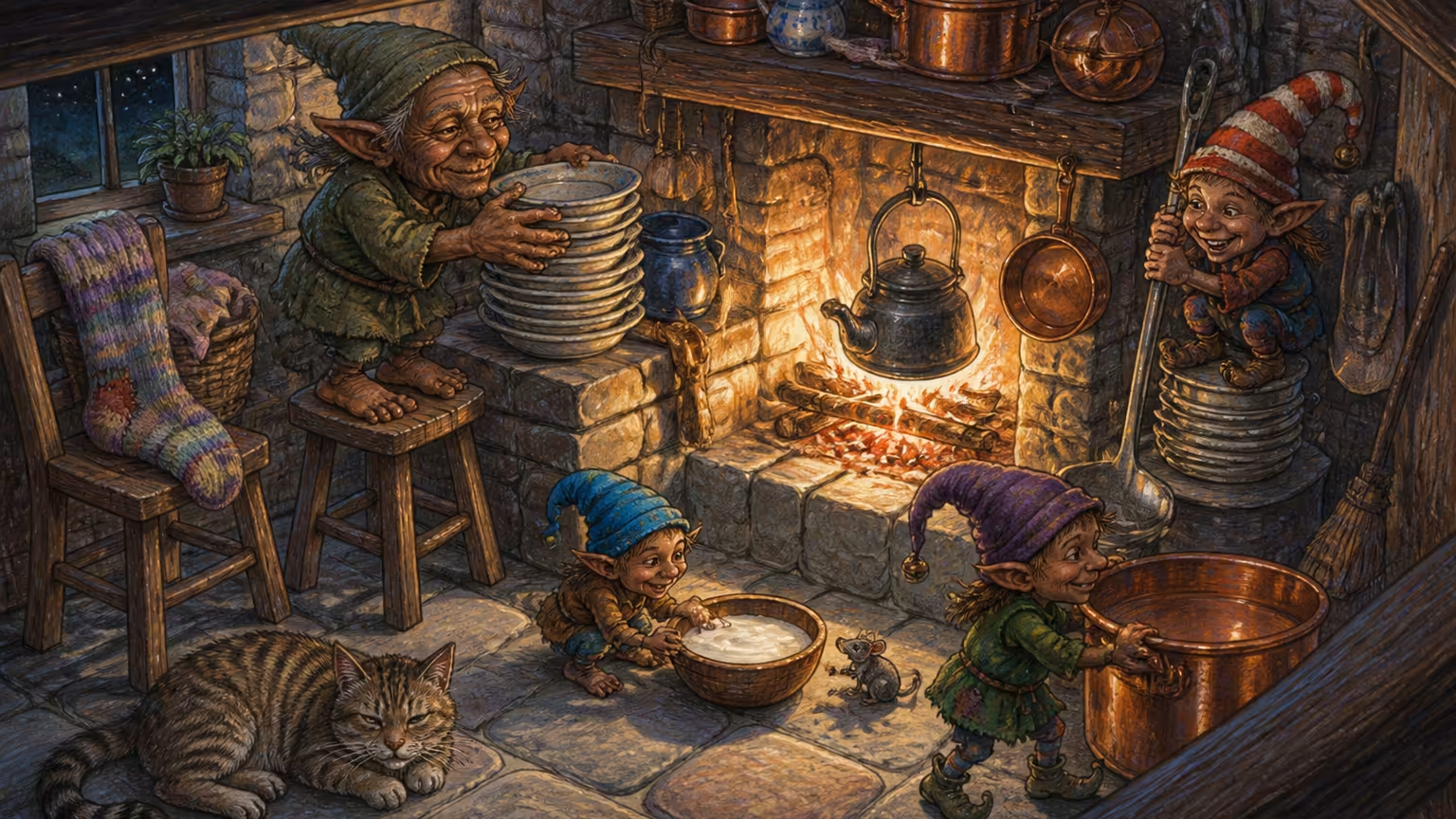
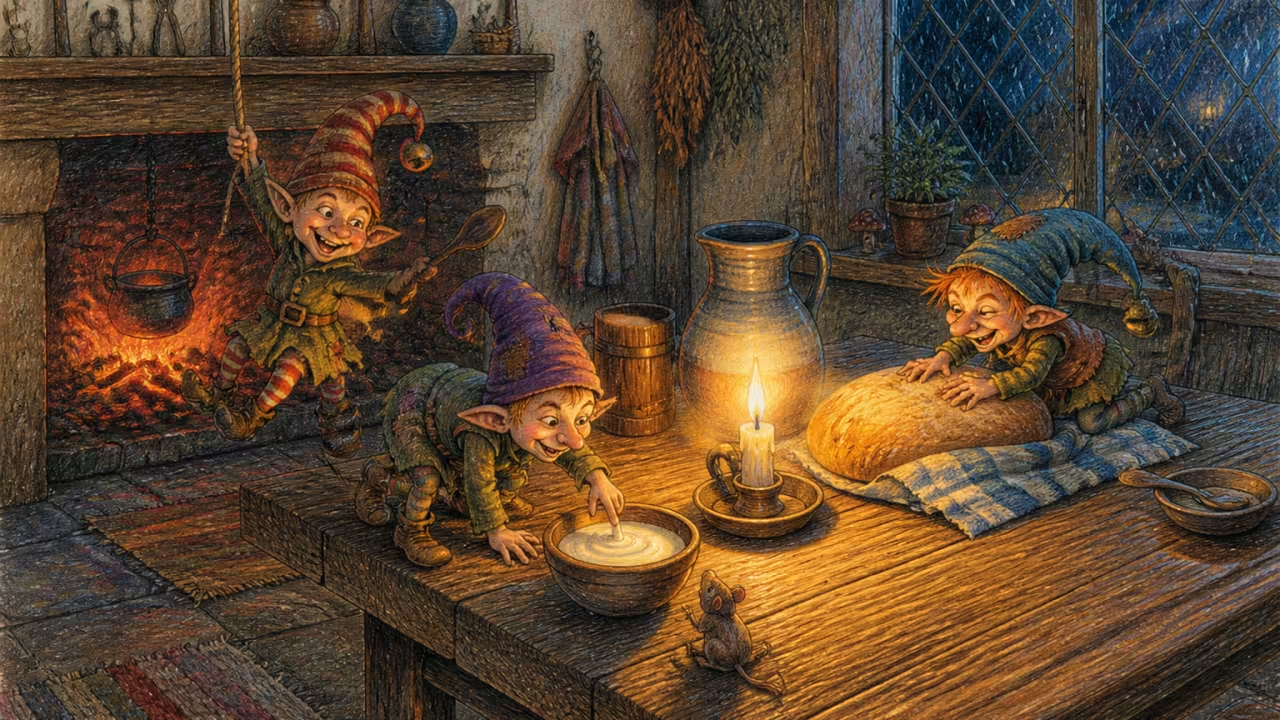
Small, useful things, done at night, never seen. Brownies tidy the hearth, mend small breakages, churn the butter that wasn’t quite churning, calm the cattle when the storm was loud, find the things you really did look in the right drawer for but somehow missed. They don’t do glamorous magic. They do the quiet, repetitive, devotional work that holds a house together. It’s the kind of magic that becomes invisible because it’s so consistent, until one day the brownie leaves and the whole place gets a little harder to keep.
The list of tasks varies by region. Scottish brownies were famously fond of dairy work and herding. Yorkshire brownies took on more of the woodworking and small repairs. Northumbrian brownies were said to favour spinning and weaving. But all of them shared a love of cream, a hatred of being watched at work, and a quiet pride in jobs done properly.
Are brownies real?
As real as the cream that disappeared overnight when you’d left it covered. As real as the way some old houses just feel watched-over, while others feel exposed and tired. Brownies are real in the way folklore is real: they’re a name for something genuine that British country people noticed for centuries, and named, and respected. Whether that something is a spirit, a habit of attention, or the household gathering its own quiet protective magic over time, you’ll have to decide yourself. The Magikitos hold the door open.
What the folklore tells us is that hundreds of farming communities across the British Isles independently noticed the same small kindnesses happening in well-kept houses, and across generations they called the source of those kindnesses by the same name. That isn’t proof, but it isn’t nothing, either. It’s the kind of evidence that doesn’t fit a courtroom but fits a living room very well.
How does a brownie look?
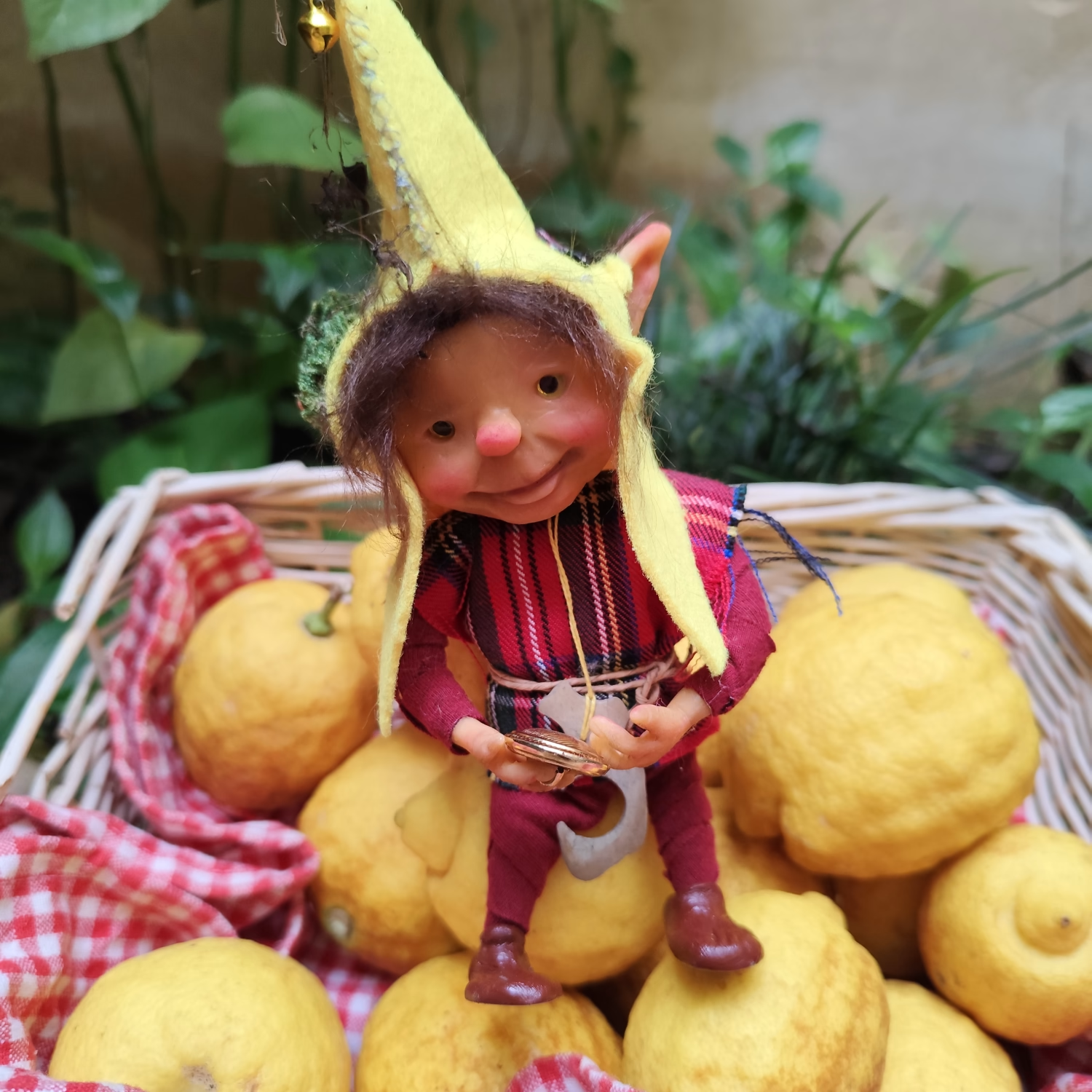
Small, brown-skinned, dressed in what looks like a worn-out smock of moss or felt, often with no shoes. About the size of a loaf of bread, with a face that seems older than the house itself, watchful eyes, and big hands for someone so small. Brownies don’t dress up. They wear whatever they’ve worn for generations, and the moment you try to upgrade them, the trouble starts (we’ll get to that). The classic image is bare feet, brown felt, and an expression that says it has seen worse than anything you’ve done today.
Carmen, who shapes the brownies at the workshop in Taramundi, says the face comes last for a reason. Until you know who the brownie is, you can’t shape the face. The first thing she models is the shoulders. The way a brownie holds its shoulders tells you everything about whether he’ll settle into a Yorkshire farm or a Scottish hill house or a small flat in north London where someone, by some quiet miracle, still keeps a hearth.
Where can you find a handmade brownie figure?
From someone who treats the carving as a small act of devotion, not as a manufacturing problem. The cheap mass-produced brownie figures you find in seasonal aisles aren’t the genuine article, they’re just decorations. We Magikitos work with Carmen at her workshop in Taramundi, who shapes each brownie by hand from cold porcelain, dresses it in real felt, and gives every one a face it earned rather than one stamped on. Have a look at our brownies collection, and if you fancy something smaller to keep them company, our treasures.
The thing about handmade brownies is that they age in a way mass-produced ones can’t. The handmade finish softens with time. The felt settles into folds that fit the brownie’s posture. The little touches Carmen gives the eyes catch the light differently as the years go by. After a decade in your house, a Magikitos brownie looks like himself in a way no off-the-shelf figure ever will.
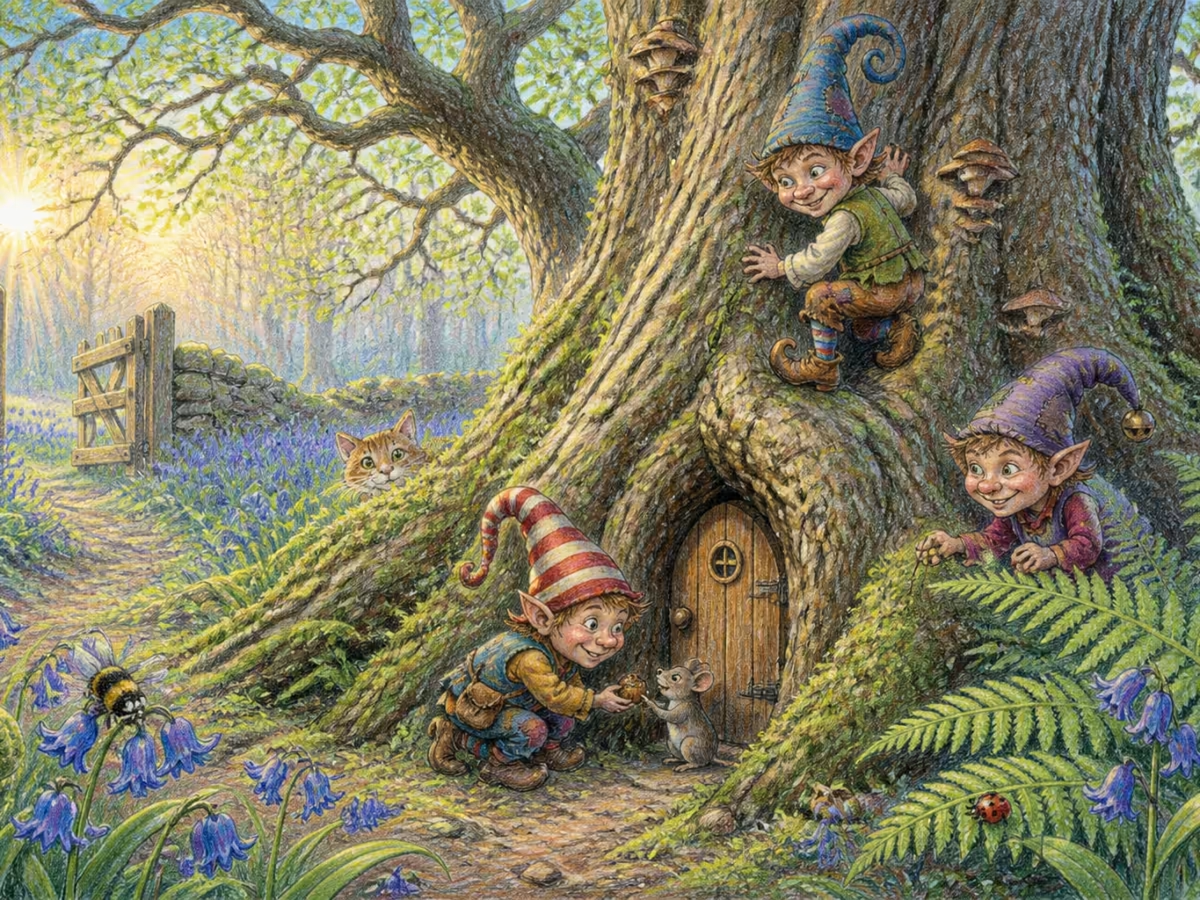
There’s a piece of old folklore from the Scottish Borders that says brownies didn’t always live in houses. They lived in the woods, in old hollow oaks and beneath standing stones, long before the first farms went up. When the farms came, some brownies followed. They didn’t leave the woods entirely, just adopted a second address, the kitchen as well as the hollow tree.
It’s a nice idea. It also explains why some brownies still seem to know things about the land outside that a household creature really shouldn’t.
A brownie isn’t a pet. He’s a tenant who pays his rent in attention to details you’ve already forgotten.
The Magikitos, from the workshop in Taramundi
Should you ever name your brownie?
Yes, but only after living with him for a year. The proper way isn’t to name a brownie when you bring him home, but to wait until you’ve noticed how he behaves, which corner he prefers, what time he seems most active, what little things he tends to look after. A year is the old measure. After a year the name comes naturally, and it’s almost always a small, plain name (Tom, Wully, Knock, Hob), never something fanciful. A name given too soon doesn’t stick, and a name that doesn’t stick is mildly insulting to the brownie, which is a thing you really want to avoid.
The grandmothers in the Borders used to say the brownie names itself, you just listen for it. By the end of the first winter, you’ll hear it. It’ll come to you while you’re doing something completely ordinary, like wiping down the counter or banking the fire, and you’ll just know. Trust that. Don’t fight it. The brownie has already decided.
What happens if you give a brownie clothing?
He leaves. That’s the old rule, and as far as British folklore is concerned, it has never been amended. Offering a brownie new clothes, a coat, shoes, a tidy little smock, is the one thing that drives him off, no exceptions and no explanations. The story goes that brownies see clothing as charity or, worse, as a payment that puts them above their station, and either way it breaks the silent contract of cream-for-work. Some folklorists think this rule is a memory of older spirit-rules about reciprocity. Most country grandmothers think it’s because brownies are proud, and pride is universal. Either way, leave the cream. Skip the wardrobe.
The famous version of this story is from the Borders, where a kindly mistress made the brownie a fine coat and left it folded by the hearth. The brownie tried it on, admired himself, and then sang a small farewell verse and walked out the door, never to be seen again. The household, by all accounts, lost a great deal of small magic that year. The coat, they say, is still in a museum somewhere. The brownie is not.