Fairies aren’t pink glitter dolls. They’re forces of nature. And yeah, it’s time someone said it out loud.
Because somewhere along the way, someone decided fairies were tiny, harmless, decorative little things. Their job was to float around with butterfly wings, sprinkle sparkly dust, and sing sweet songs. And with all the love in the world, that’s a massive disrespect to thousands of years of tradition.
The original fairies (not to be confused with Brownies) were scary. They demanded respect. They could wreck your life or save it, depending on their mood. Powerful, unpredictable, and completely fascinating.
Today we’re taking the real walk through their story. From the Celtic Sidhe to Ghibli’s Kodama. And you’re gonna be gobsmacked.
The Sidhe: The Fairies Who Ruled Ireland
Let’s go back to the start. The real start.
In Irish Celtic mythology, the Tuatha Dé Danann (the tribe of the goddess Danu) were a race of supernatural beings who ruled Ireland before humans arrived. Warriors, artists, magic-workers. They had their hands on nature, time, and death.
When humans (the Milesians) came to Ireland, the Tuatha Dé Danann weren’t wiped out. They withdrew. They went to live under the hills, inside the sídhe (mounds, barrows). And from there, from the underground world, they kept on existing. Invisible, but present. Powerful, but hidden.
Those are the Sidhe (pronounced “shee”). The original fairies. And they weren’t tiny things with little wings. They were human-sized (or bigger), immortal, beautiful, and dangerous. They could grant you a wish or curse you to wander the world for a hundred years. They could fall in love with you or steal your soul. No middle ground.
In Ireland, people didn’t throw the word “fairy” around. They’d rather call them “the good people” or “the neighbors” because you really didn’t want to offend them. Saying their name straight was risky. The Sidhe listened. Always.
Medieval Folklore: Neither Good nor Bad
When Christianity spread across Europe, fairies didn’t vanish. They changed shape. The Church tried to label them. Demons? Fallen angels? Restless souls? Nobody could agree.
What did happen is they got folded into everyday imagination. Medieval stories are packed with fairies, just not the Disney kind. Medieval fairies are ambiguous, complicated, and morally grey.
Morgana le Fay (from the Arthurian cycle) is a fairy. She’s a healer, a sorceress, an antagonist, a rescuer. All at once. Melusine, the fairy who turns into a serpent on Saturdays, is a devoted wife and a wild creature at the same time. The fairies in the lais of Marie de France (12th century) seduce knights, pull them into their world, then send them back half-mad with love.
In medieval European folklore, meeting a fairy was a life-changer. It could go wonderfully or terribly. Fairies were agents of change. They’d yank you out of your normal routine and throw you into an adventure that you didn’t come back from the same way, if you came back at all.
What we now call “fairy tales” weren’t originally for kids. They were adult stories about bumping into the unknown. About crossing thresholds. About being changed by what you find there. Only centuries later did people sugarcoat them for nursery shelves.
Shakespeare and Elizabethan Fairies: The Shrinking Starts
Then Shakespeare shows up. And with him, the first big shift in how people pictured fairies.
In “A Midsummer Night’s Dream” (1595), Shakespeare gives us small, mischievous, funny fairies. Oberon and Titania are majestic, sure, but their attendants (Peaseblossom, Cobweb, Moth) are tiny and comic. Puck, the most famous one, is a prankster who stirs up chaos for the fun of it.
Shakespeare didn’t invent tiny fairies. He picked up a folk tradition that was already growing in England. But putting it on stage and making it a hit locked the image in. After Shakespeare, fairies started shrinking. Literally.
Before him, fairies were human-sized. After him, every generation made them smaller. And every time they shrank, they lost power, they lost danger, they lost depth. Fairies were on their way to becoming garden ornaments.
The funny part is Shakespeare knew exactly what he was doing. If you read “A Midsummer Night’s Dream” closely, the fairies are still powerful and manipulative. Puck is charming, but he’s also unsettling. Oberon uses magic to control Titania against her will. This isn’t syrupy stuff, it’s a story about power and desire dressed up as a light comedy.
But people held onto the tiny, silly fairies. That’s pop culture for you.
Victorian Fairy Fever: Paintings, Photos, and Gardens
If Shakespeare shrank fairies, the Victorians turned them into decoration. They nearly finished them off.
In 19th-century England, a full-on fairy fever took over. People painted them, carved them, drew them in books, stuck them in home décor. Artists like Richard Dadd, Arthur Rackham, and Cicely Mary Barker showed fairies as tiny, delicate beings living among flowers. Pretty. Harmless. Completely tamed.
Victorian fairies were nature under control. Magic made safe. Mystery turned into a living-room ornament. It fit perfectly in a society that was industrializing everything and needed to believe nature was cute and manageable, not wild and dangerous.
The fever peaked with the Cottingley Fairies (1917). Two girls, Elsie Wright and Frances Griffiths, photographed “fairies” in a Yorkshire garden. The photos were fake (cardboard cut-outs), but for years half the world believed them. That included Arthur Conan Doyle, the creator of Sherlock Holmes, who wrote an entire book defending them.
That the father of the most rational detective in fiction fell for cardboard fairies tells you a lot about how badly Victorian society needed magic. They’d explained the world so hard that they were desperate for something to stay unexplainable.
Tolkien vs Garden Fairies: The Rebellion
J.R.R. Tolkien hated what the Victorians did to fairies. He made it crystal clear in his essay “On Fairy-Stories” (1947), one of the most important texts ever written on the subject.
Tolkien argued that “fairies” weren’t tiny decorative creatures at all. He pointed instead to tall, majestic, immortal beings, wise and dangerous. He even had his own name for them, the Eldar. That vibe is much closer to the original Celtic Sidhe.
His immortal folk (Galadriel, Elrond, Legolas) brought back the lost grandeur. Tall, beautiful, powerful, and a little intimidating in their perfection. Tolkien gave fairies their old dignity again. He took them out of the garden and put them back in deep woods, where they always belonged.
But Tolkien also nailed something important. Fairy stories aren’t just entertainment. They’re a way of making sense of life. They teach us about good and evil, sacrifice, change. It’s philosophy told as a story. Treating them as “kids’ stuff” makes as much sense as saying music is only for babies because you sing them lullabies.
How Did Disney Shrink Fairies Into Pink Glitter?
Then Disney arrived. And well, we all know what happened.
Tinker Bell. The Peter Pan Tinker Bell. Tiny, blonde, in green, glittery wings. The image that defined “fairy” for whole generations. And basically everything fairies weren’t.
It’s not that Disney is evil. They’ve made beautiful things. But their version of fairies stripped out what made them interesting, the danger, the ambiguity, the power, the unknown edge. They turned them into cute little pets. Into merch.
After Tinker Bell, every film, every show, every toy brand pushed the same mold. Fairy equals tiny winged woman, pink or purple, harmless, decorative. Fairies went from forces of nature to stickers on school folders.
And people grew up thinking that was what fairies were. That folklore was just glitter and sweet songs. That thousands of years of oral tradition could be summed up as a blonde with wings.
With love, but no. That’s not fairies. Not even close.
Studio Ghibli: Fairies Go Back to Nature
And when it looked like fairies were doomed to be plastic forever, Hayao Miyazaki showed up. From Japan. And flipped the whole thing.
Studio Ghibli’s nature spirits aren’t called “fairies.” They’re Kodama, forest spirits, water creatures, wind gods. But they’re exactly what European fairies were for thousands of years, nature that’s alive, aware, and has its own will.
In “Princess Mononoke” (1997), the forest is full of Kodama, small spirits that live in the trees. Quiet, eerie, fragile. When trees die, the Kodama die. When the forest is destroyed, they all vanish.
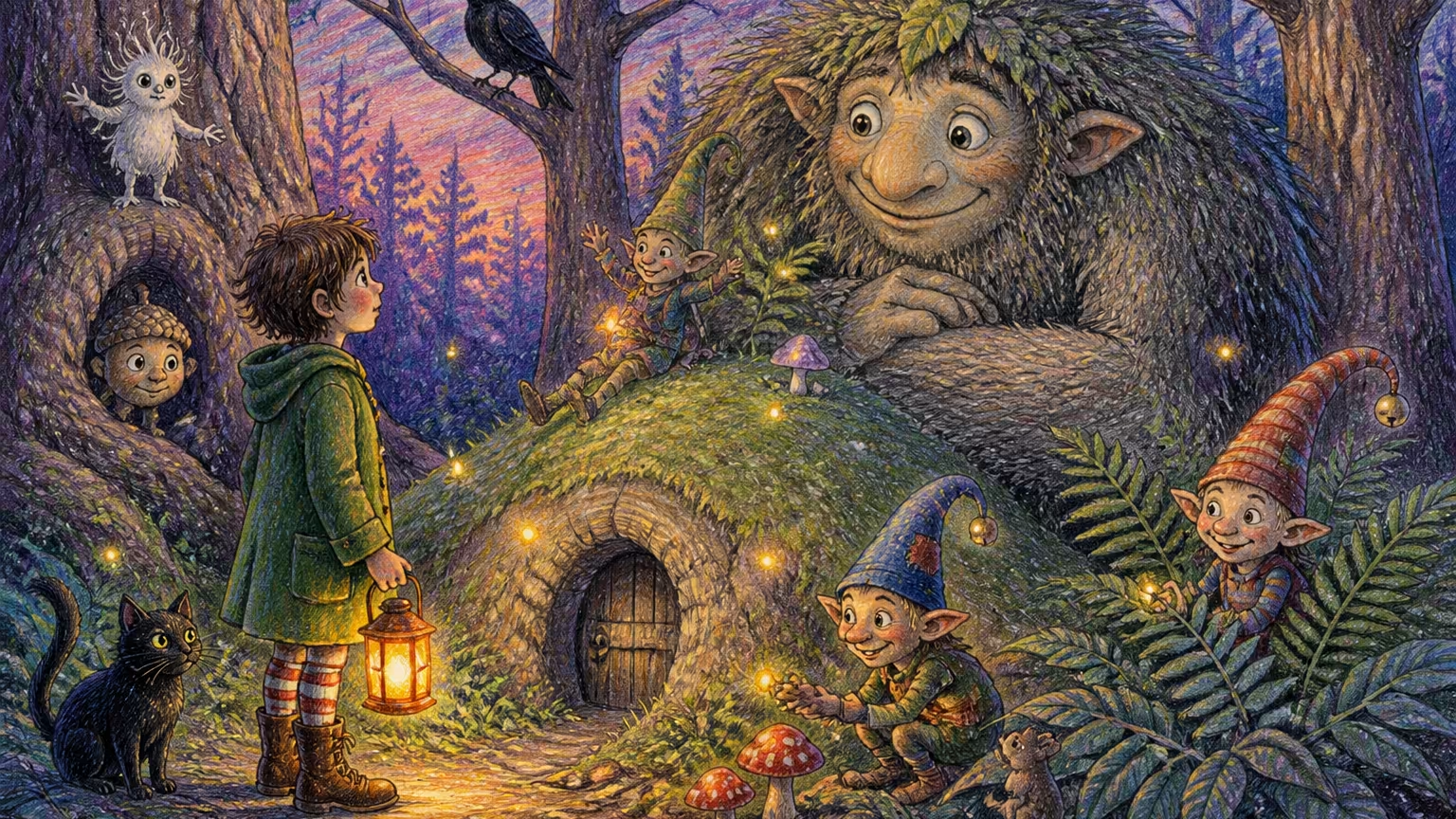
In “My Neighbor Totoro” (1988), Totoro is the spirit of the forest. Huge, furry, powerful, kind. Not a hint of pink or glitter. Totoro is pure nature force, the kind that protects the woods and the people who respect them. Basically what the Celtic Sidhe were before Disney glued on sparkly wings.
In “Spirited Away” (2001), the spirits are moody, ambiguous, and morally complicated. Just like medieval fairies. The magical world isn’t good or bad. It’s other. With its own rules, its own dangers, its own rewards.
Miyazaki did something nobody had managed in decades. He reconnected fairies with nature. His creatures don’t live in gardens or toy boxes. They live in ancient forests, deep rivers, mountains nobody’s stepped on. They’re not there to decorate. They’re there because that’s home.
It’s the same idea the Celts had three thousand years ago. The Japanese call it animism. The Celts called it the Otherworld. We call it magic.
The Magikitos Fairies: Back to the Roots
So what do the Magikitos Fairies have to do with all this? Everything.
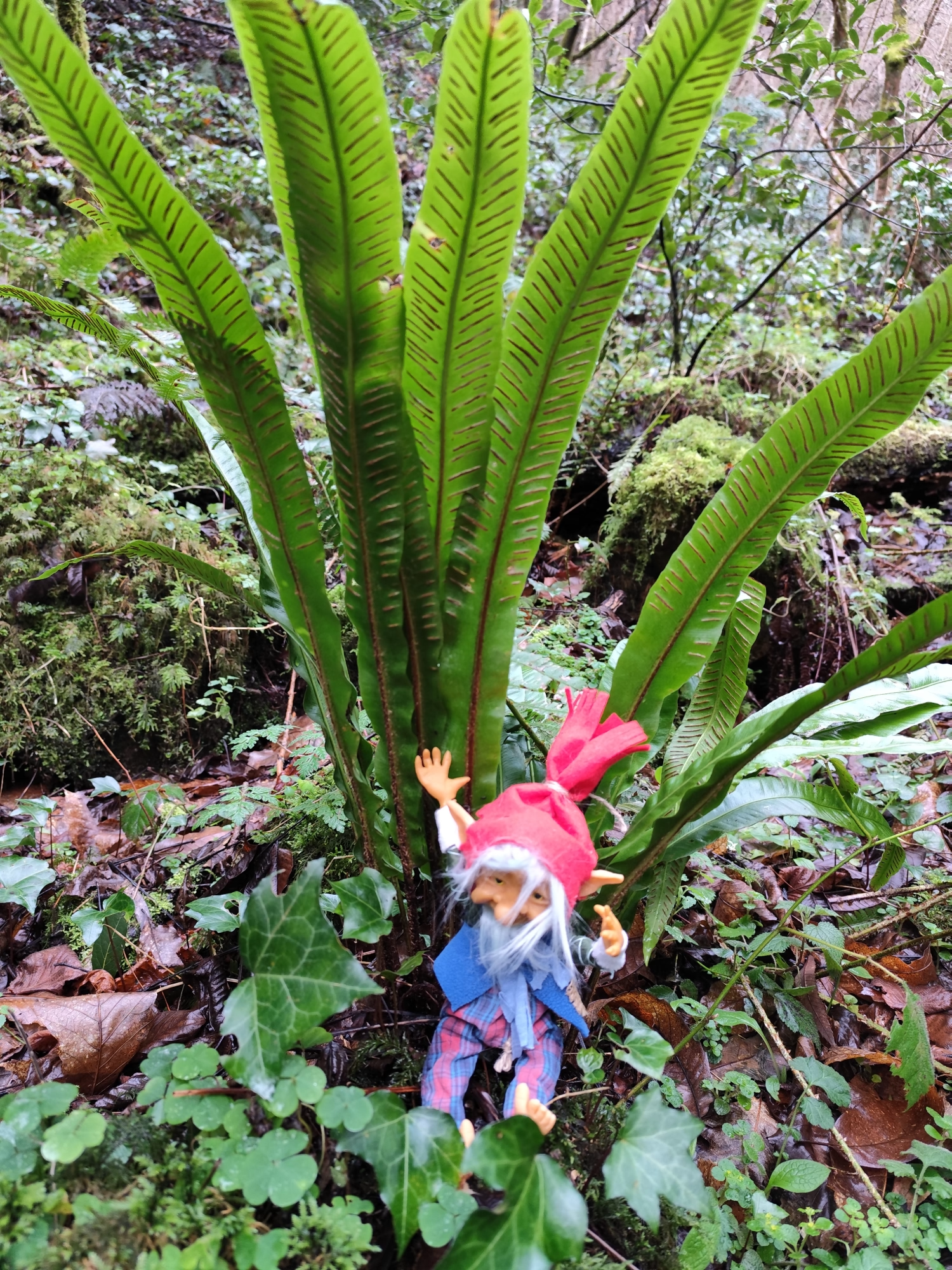
Magikitos Fairies aren’t pink figurines. No plastic wings, no glitter. They’re crafted from natural sheep’s wool, with earthy colours and textures that feel like moss, fleece, soil. They look like they wandered out of a Celtic forest, not a toy store.
Their energy is calm, deep, quietly present. Like the original Sidhe. They’re not loud. They don’t beg for attention. They’re presence. A silent kind of company that stays with you without asking for anything. Just like old-school nature spirits have always been.
When Carmen creates a Magikitos Fairy, she isn’t crafting a “fantasy product.” She’s carrying on a thread that started with the Tuatha Dé Danann, walked through medieval woods, survived Shakespeare, held its ground against the Victorians, and found an echo again in Miyazaki’s forests.
What Did We Lose Along the Way?
At some point, we decided fairies were a lie. That folklore was superstition. That believing in something you can’t measure is for naive people.
And in doing that, we lost something big. Not literal belief in magical beings (nobody’s asking you for that). We lost the attitude. The ability to look at a forest and feel it’s alive. To listen to a river and think it’s got something to tell you. To walk into a home and sense a warm presence welcoming you in.
The Celts had it. The Japanese kept it. And we can get it back. You don’t need to believe in fairies as a fact to live with the sensitivity of someone who does.
That’s what we try to do with Magikitos. We don’t sell “belief.” We sell presence. Company. An excuse to look at the world with a little more wonder.
Fairies have been trying to tell us the same thing for three thousand years. Nature is sacred. Home is sacred. And everyday life is where the magic lives. No glitter required. Just pay attention.