

There is exactly one object in the whole house that starts your day by attacking you, and the cheek of it, you paid for it yourself. Everything else waits with the patience of furniture. The kettle doesn’t pounce. The shower doesn’t shout. Your slippers ask for nothing. The alarm clock, though, gets up early just to scream at you. And we are Brownies, we have spent centuries watching how people wake, so we’ll say it plainly from the off: that little machine is not your friend.
And no, we’re not wheeling out the same old line about alarms cutting your sleep short. Everyone has said that one. Ours is subtler and bigger at the same time. The alarm doesn’t just slice the night in half. It does something worse: it opens your day with an order. Before you have a single thought of your own, before you even know who you are that morning, you have already obeyed. You’ve done something out of fear, with a jolt, because a gadget told you to. You begin the day as a subordinate to your own nightstand.
And there is the real theft, and we know a thing or two about theft. It doesn’t steal minutes of sleep from you. It steals your say over the first border of the day, that little sacred stretch where the body decides on its own when to come back from the land of dreams. Quick introduction, while we’re here: round these parts we potter about as Thieves of Lost Hurries, the Brownies who pick the rushing up off the floor when nobody’s claiming it anymore and let it loose back in the forest, where it bothers no one.
Because the body has its own sunrise. It keeps a clock that doesn’t go tick-tock, it goes light. And light is the only alarm in the world that asks instead of orders. Waking with the first glow at the window is waking by invitation, not by sentence. The brain doesn’t snap on like a bulb, click and done. It comes up the way a forest comes up at dawn: one stray bird first, then colour creeping slowly back into the leaves, and only at the very end the sun strolling in like it wasn’t bothered either way. The alarm is a click. The body is an ember.
We know a human (no names, the poor soul still blushes) who had seven alarms set three minutes apart. Seven. Every morning he negotiated with his own phone like a man haggling over a ransom: “one more and I’m up”, “this one, definitely”, “I swear, the next one”. He lived dawn as a hostage standoff with himself, and he lost every single time. We nicked the thing one night, no permission asked, and the next morning the sun woke him with no warning. He welled up. Not from sadness. He’d forgotten mornings were allowed to be soft.
Your Body Was Already Waking Up on Its Own (and Nobody Thanked It)
Here’s the secret the nightstand would rather you didn’t know. Long before anything goes off, your body has been quietly getting ready to return. About an hour before sunrise your cortisol starts climbing, and that’s not the villain of the story, it’s the early-bird Brownie in your blood: switching the house lights on from the inside, nudging your temperature up, fine-tuning your pulse, leaving you primed to open your eyes all by yourself. There’s a song already playing, softly. And then the alarm barges in and starts bellowing over the tune, like that uncle who raises his voice right when you were finally getting the joke.

Sleeping badly at night and waking well in the morning is an equation that never balances, no matter how many alarms you pile on. Half of waking well is actually played out in the small hours, while you’re flat out. Our Sleep Brownie makes a whole craft of it: switching off the thoughts going round in circles, drawing the blinds inside your head, handing you over to dawn properly rested, which is the only way dawn can do its quiet job of waking you without a racket.
Because when you’re torn out of sleep at the wrong moment you don’t wake up, you get evicted. And an evicted body spends the whole morning dozy: slow, foggy, answering in halves, ideas sliding off it like water. That’s not laziness. That’s a brain pulled out of the oven too soon, still raw in the middle.
An alarm doesn’t wake you. It evicts you. And nobody who starts the day in fear starts it free.
Is It Bad to Wake Up to an Alarm Every Day?
Waking up to an alarm every day won’t break you, but it charges a quiet toll: it yanks the body out of the middle of a sleep stage instead of the end, and that’s what leaves you with the leaden hangover you drag along until your mid-morning coffee. The truly healthy thing isn’t the alarm itself, it’s your body arriving at waking time already half-awake on its own. If you need a scream every single morning to get out of bed, the problem isn’t that you can’t hear the alarm: it’s that you go to bed too late and ask the gadget to fix by shouting what only enough sleep can fix.
That said, we’re not fanatical little Brownies either. There are train mornings, flight mornings and exam mornings when the alarm is a necessary evil, and that’s fine. What we’re defending isn’t chucking the alarm clock out the window (lovely image, mind), it’s taking its crown away. Let it be the exception, not the master. Let the rule be the light.
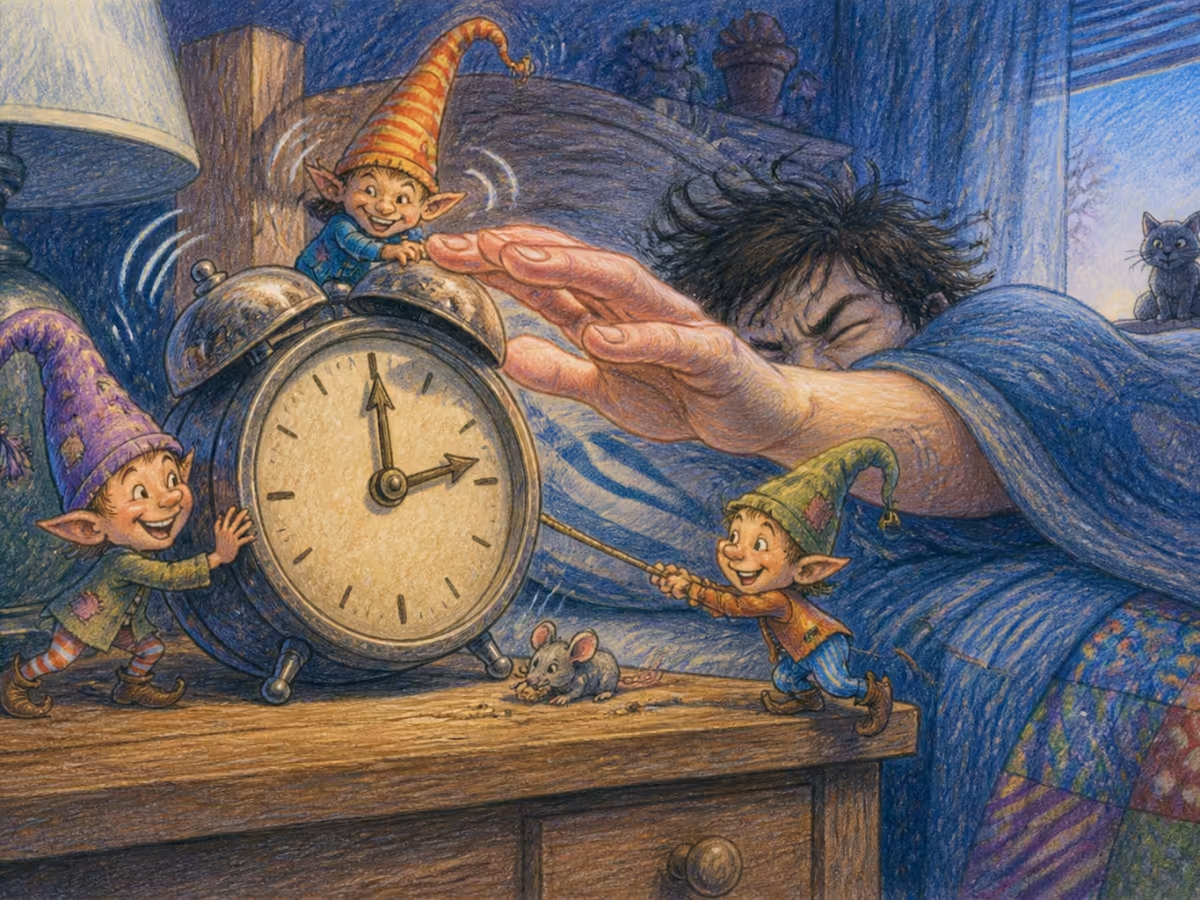
Have a good look at the baddie. It’s not ugly on the outside, it’s ugly on the inside: it turns your first gesture of the day into an angry swat. And a gesture gets repeated three thousand times a year. Three thousand mornings begun by hitting something. Maybe that’s the secret reason so many people eat breakfast with a face like thunder.
We propose something else. Let your first move of the day be a stretch, not a strike. Let the morning off the hook from being productive at second zero, because the art of doing nothing starts the moment you wake up too.
The Brownie Trick for Letting the Light Wake You
You don’t need to move to the countryside or buy gadgets. Leave a sliver of blind open overnight, just enough for the morning to creep in on its own. Go to bed when you’re properly sleepy, not when the clock says so. And give yourself ten minutes of soft landing before you leap out of bed: no phone, no lists, no sprinting. A body is grateful to be welcomed, not recruited.
How Do You Wake Up Without an Alarm and Still Not Be Late for Everything?
To wake up without an alarm and still make it to your life on time, the trick lives in the night before, not the morning: go to bed at a steady hour and let some natural light in at dawn, because the body syncs to the brightness and starts waking you on its own a few minutes before you need it. You do it in layers, not overnight. Bring bedtime forward bit by bit, leave the blind ajar, and for the first few days set one very soft, very distant safety-net alarm, almost a pretend one, just to trust you won’t sleep through. In a week or two the body picks up the rhythm and the alarm becomes an ornament that barely ever goes off.
And if there’s a spell when you just can’t, don’t flog yourself over it. Waking well is a luxury you cultivate, not an exam you pass or fail. It’s part of the same small daily scrap as staying sane in the modern world: winning back, scrap by scrap, the little moments the noise had taken from you without asking.
So now you know. The alarm clock will still be there on the nightstand, doing its little number. But now you’ve seen its insides. Tomorrow, if you can, let the light wake you. Stretch like a cat, listen for the first bird, let the ember catch at its own pace. The rushing, leave that to us: we gather it off the floor and set it loose in the forest, where at last it harms no one. Good morning, creature. No shouting.