In 1919, Rudolf Steiner founded a school in Stuttgart on a principle that sounded odd at the time: children don’t need plastic or factory-made objects. They need materials that feel alive. Soft, imprecise, warm things that leave room for imagination rather than filling it all in with perfect, finished details.
That’s where the first wool fairies came from. Not as products. As philosophy made tangible.
What Exactly Are Waldorf Fairies?
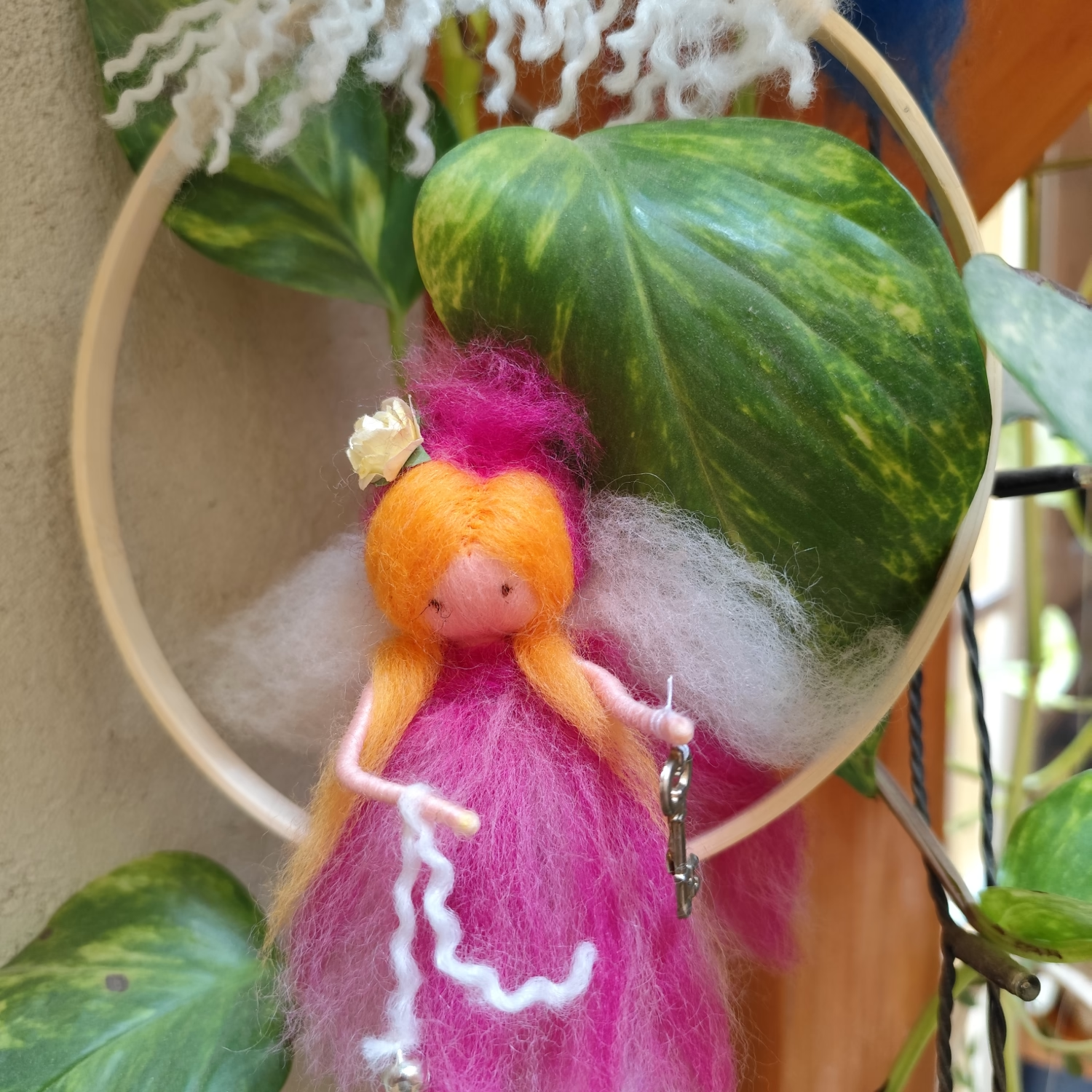
Waldorf fairies are handcrafted figures made from carded wool or felt, born from Rudolf Steiner’s Waldorf educational philosophy. The core idea is almost startlingly simple: natural, warm and imperfect materials open the imagination in ways that plastic perfection closes down. A wool fairy doesn’t have the fixed expression of a resin figurine. It has whatever expression you choose to see in it that day.
In Waldorf schools, these figures are part of the early years of symbolic play. The thinking is that a toy that’s too finished does all the creative work for the child. A wool fairy is a starting point, not a destination. The one looking at it brings the story. The figure receives it.
And here’s the twist that tends to surprise people: the same quality that won over children has been winning over adults for decades too. Not out of nostalgia. Because whoever recognises something in a well-made wool figure is recognising something that’s genuinely there.
Why Does Wool Have Something That Resin Never Will?
Carded wool has warmth, texture and a feel you can’t get from a mould. When you run your hand over a well-crafted felt figure, the information your fingers receive is completely different from what they’d get from ceramic or resin: the brain registers something different, something it recognises as alive even if it can’t quite explain why.
Natural materials speak a language plastic hasn’t learned. Not because they’re prettier in the conventional sense, but because they’re a continuation of something. Wool comes from an animal. It passed through hands that know how to work it. It has a history before it becomes a fairy. And that history doesn’t disappear when the process ends: it stays inside, in the density of the fleece, in the way light enters and leaves without warning.
The difference between a handmade wool figure and a mass-produced one isn’t just visual. It’s tactile, it’s historical, and it’s almost impossible to explain without sounding like a butter advert. But you feel it the moment you hold one. And once you feel it, you can’t unfeel it.
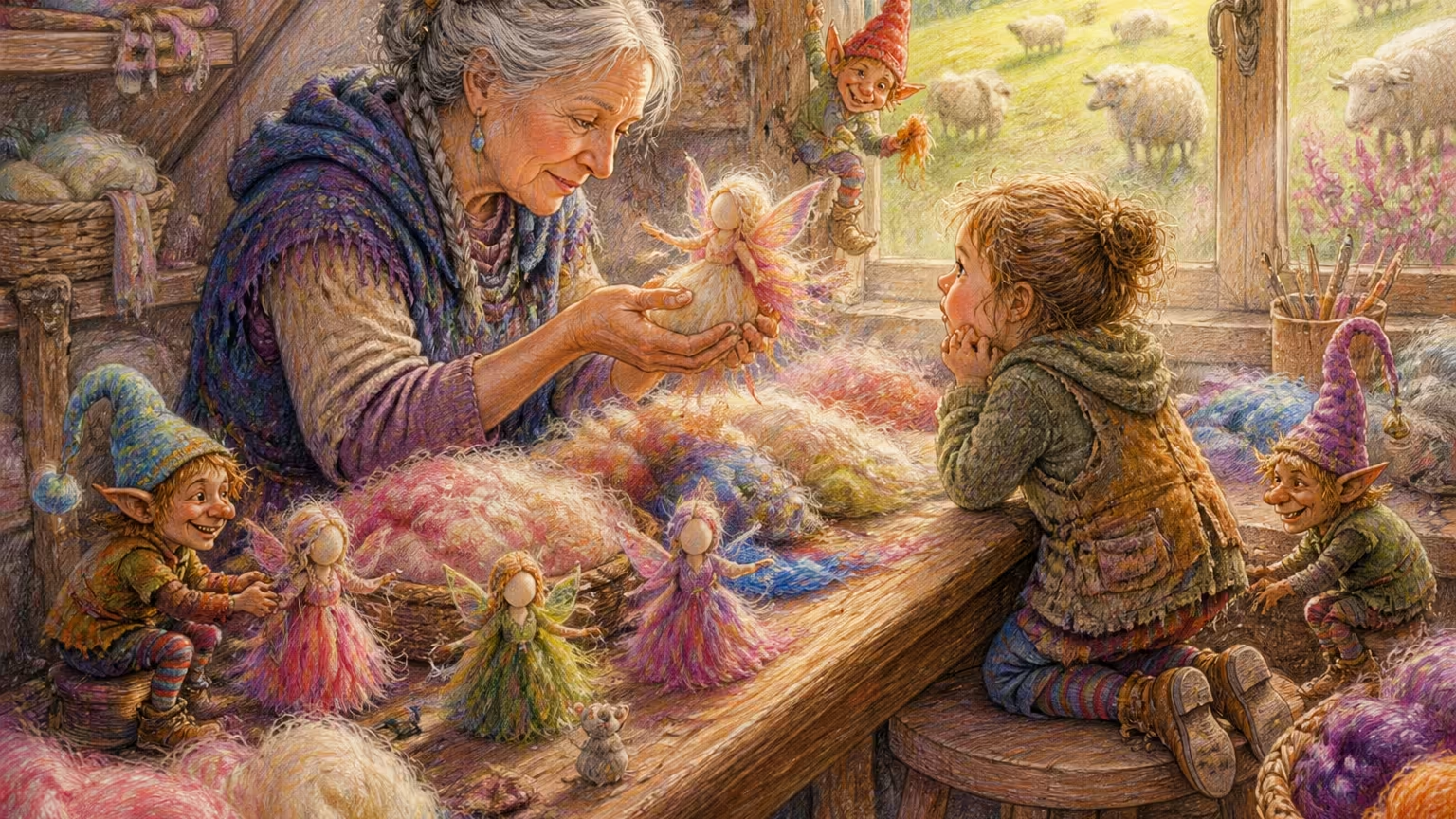
The fairies with the most soul come from craftspeople who know their material from the inside out. Carmen, who creates the Magikitos in her workshop in Taramundi, doesn’t choose wool from a catalogue. She chooses it by how it behaves under her hands, by what it holds, by what it won’t do.
Each figure comes from accumulated knowledge that isn’t written in any manual. And the fleece records it perfectly: every piece holds the decisions of someone who knew exactly what they were making.
Waldorf, Craft and Wool: The Same Language, Different Accents
Waldorf pedagogical fairies and artisan collector fairies aren’t exactly the same thing. One was born for the symbolic play of childhood. The other is a companion for spaces, for people who don’t need an excuse to have a fairy at home. But the language of the materials is the same: natural wool, handwork, intention.
What sets a quality wool figure apart: real density and consistency, colours from dyed wool (not paint on top), and a posture that has intention even if it’s imprecise. Something in the tilt of the arms or the angle of the head tells you someone thought about that moment before finishing it.
To understand why handmade craft matters in a world full of mass production, that’s the longer answer. And if you want to see what makes a figure built without moulds different from one cast in a factory, this explains it in a way that sticks.
Wool isn’t perfect. That’s precisely the point.
Waldorf schools have been working with fleece for over a century. Not because it’s fashionable. Because some materials do more than just take up space. And the ones that do, do it always, even when nobody’s watching.