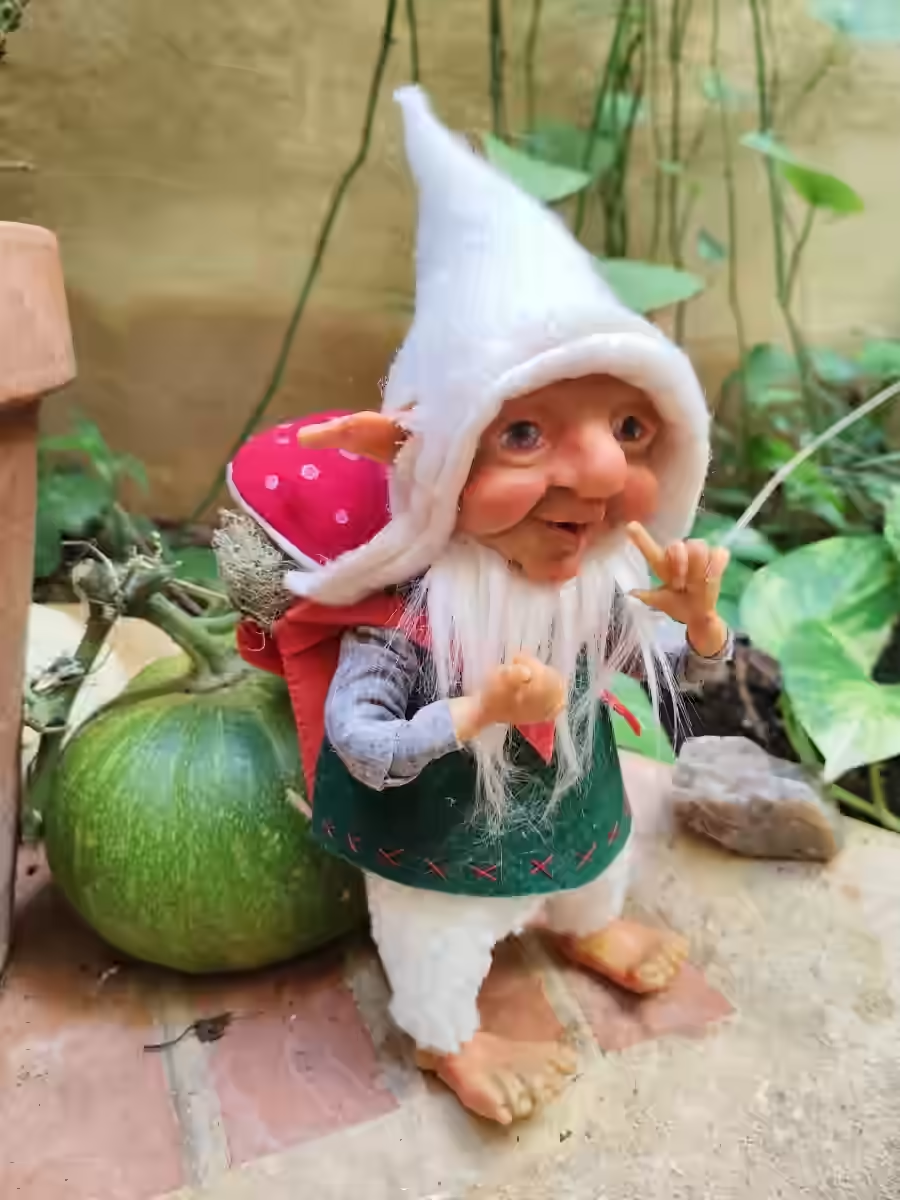
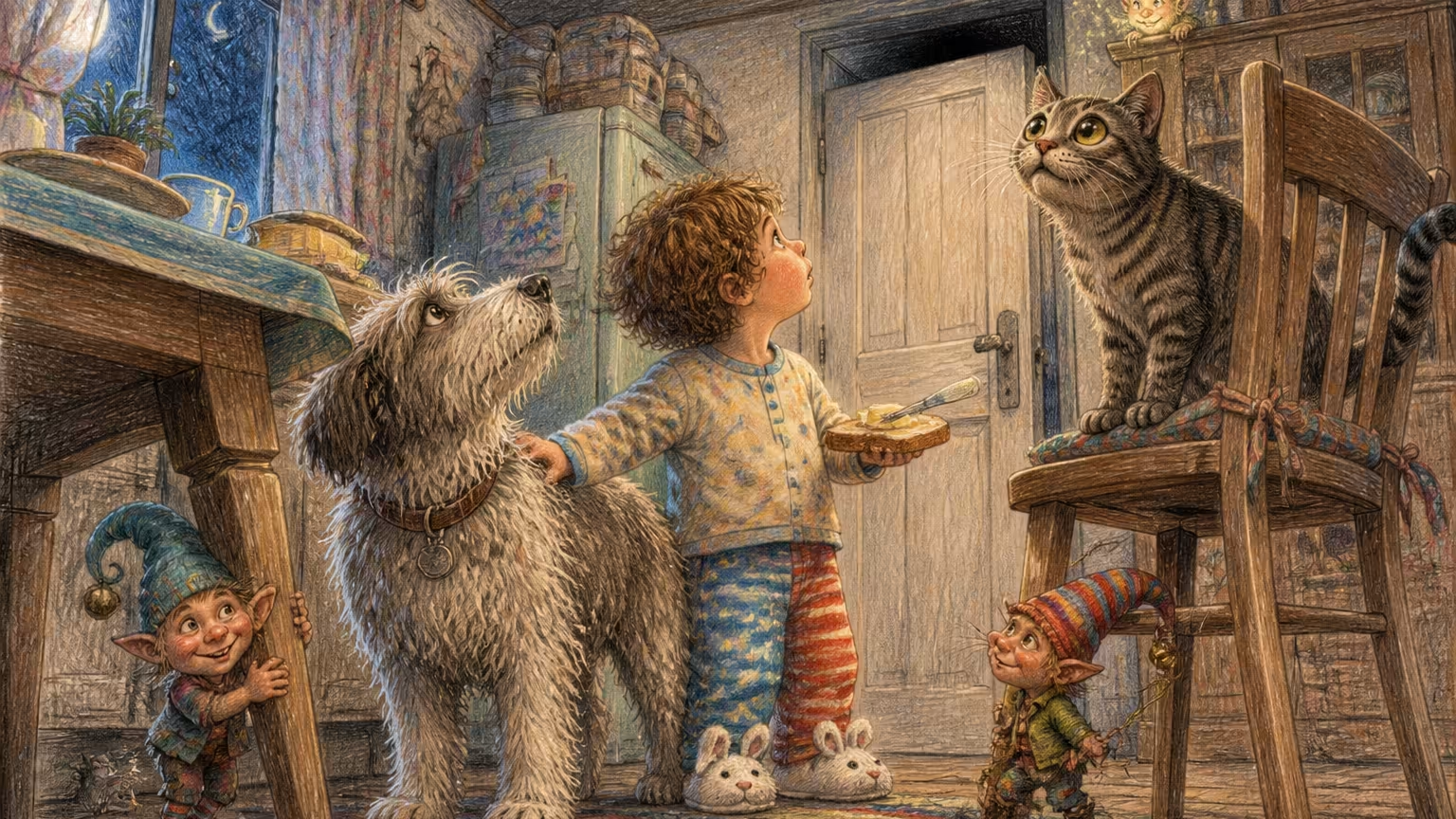
There is an image that repeats in millions of kitchens, hallways and living rooms worldwide. Your dog stares at the corner of the cupboard and barks twice, like he is warning someone only he can see. Your cat tracks a movement the ceiling doesn't have and freezes for a good while. You look too. Nothing. Just being weird, you think. Old age. Shadows. And sure, sometimes that is all it is. But there are days when your fluffball knows perfectly well something you have spent decades missing. We Magikitos are the first ones to confirm it, and we know a thing or two about staring at odd corners.
We are not here to sell you a cheap ghost story or to dust off old myths for clicks. You are here to actually understand what is happening when your animal looks at what you cannot see. The answer has layers. First the layer science has already signed off on. Then the other one, the one that slips past the microscope and starts exactly where the critter goes still. We are going into both without skipping either.
What Biology Already Grants You Without Blinking
Before we get into presences and loaded corners, you should be clear on the starting line. Your dog and your cat do not arrive in the world with your sensors. They arrive with stock equipment yours cannot touch with a telescope. And that is already plenty.
- Brutal hearing. An average human picks up frequencies up to roughly 20 kHz. Your dog grabs up to 65 kHz, your cat up to 64 kHz. That means they catch the fridge humming, a cricket three streets over, a loose wire chirping, mice scurrying in the attic and the ultrasound of a tired lightbulb. What feels like silence to you sounds like a symphony to them.
- Off-the-charts smell. A dog's nose has roughly 300 million olfactory receptors. Yours has about 6 million. You need to read that sentence twice. A cat's smell is more modest, yet she still recognises the chemical fingerprint of someone who walked down the hallway three days ago. They smell your scared sweat, your in-love sweat and your nap sweat. Three different ones.
- Eyes that do not blink at the dark. A cat sees in dimness where you walk by feel. Her retina has six times more rods than ours. Add her photo-engraved iris and your cat reads the night room the way you read the morning newspaper.
- Paws that feel vibration. Pads are surfaces sensitive to tiny tremors. Before an earthquake hits the news your dog is already up with his head tilted. It isn't magic. It is old engineering.
- An inner compass. There are serious studies documenting that dogs prefer to line up north-south when they do their business, on days of stable geomagnetic field. They feel the planet beneath. We stopped noticing that one centuries ago.
So far, clean science. If you only take this part you have got half the answer. Your dog is not barking at nothing. He is barking at something that IS there, your factory-issue radar just does not register it. Same with the cat. But we Magikitos haven't come here to settle for the manual. Here we open door number two.
The Layer the Microscope Hasn't Signed Off On Yet
Some things you feel before you can name them. We have been living alongside humans for thousands of years in barns, cottages, pantries and woodpiles, and we have noticed that when a dog or a cat plants itself in front of an empty spot with that odd stillness, there is usually a reason. Not always the one you imagine. Sometimes it is a draft a Brownie left after sneaking through. Sometimes it is a household presence doing its rounds. Sometimes it is the shadow of an old affection that still hovers over Grandma's couch.
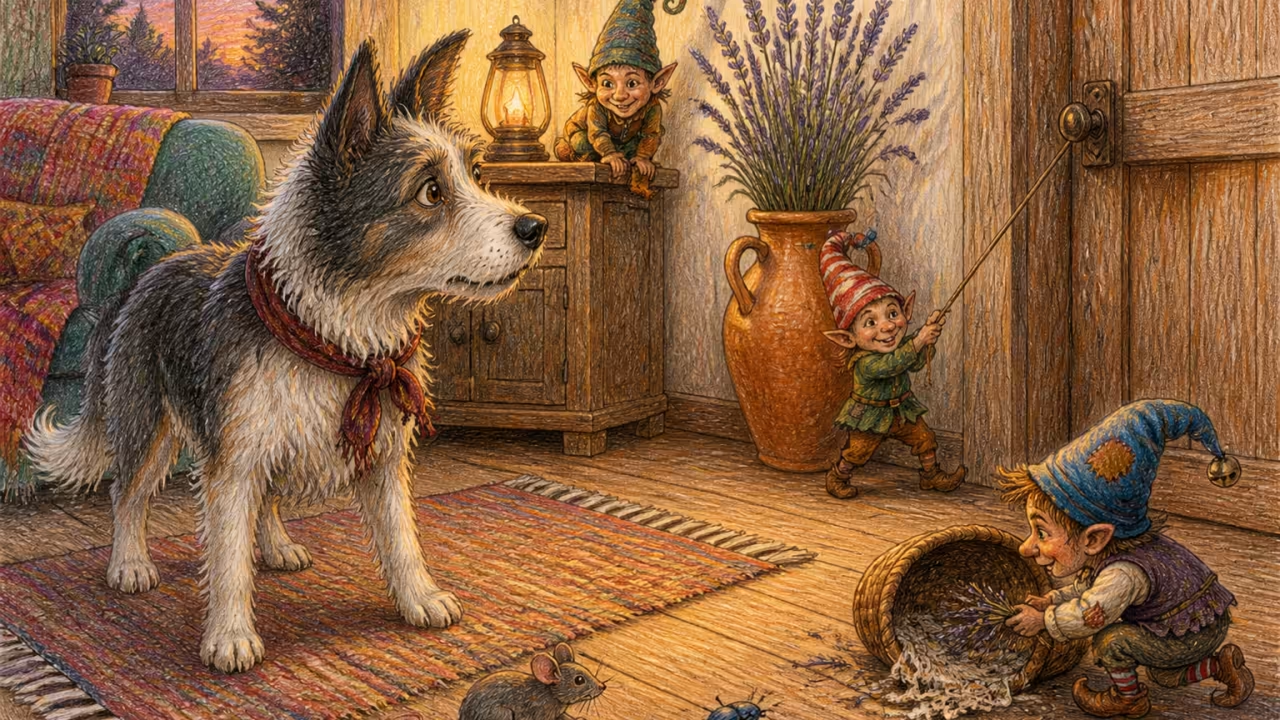
Our cousins the kids also see us Magikitos, at least until they grow up and the world trains them to look only at the convenient stuff. Animals never go through that training. Their business is survival, and survival demands catching everything, including what is not in the textbooks. So when a fluffy creature stays glued to a corner with one ear up, she is not being silly. She is doing her job properly.
What Your Pets Actually React to When They Freeze
Here is an honest list, no spiritual-marketing rack, of what we critters genuinely notice while you humans think we have lost it:
- Currents that are not quite air. A door that breathes badly, a window with bad sealing, a pantry with old damp, all of that moves air in ways a human perceives as nothing and a dog perceives as a conversation.
- Household presences. Brownies tend to cross the kitchen at strange hours. Your cat clocks them as a soft shift in the air. She is not scared. She is curious.
- You leaving or entering the room. When you stand up from the sofa three steps before your animal supposedly «noticed», she already had you logged through your weight shift, your body heat or your scent in the air.
- Tiny tremors right before things actually move. Spoons, curtains, the kettle. If your fluffball stares at the counter half a minute before something falls, he hasn't read your mind. He has read the table wood.
- The smell of old affection. Grandma's couch, your dad's coat, the corner where the family dog slept twelve years back. To you, that is furniture. To your animal, those are open files still breathing.
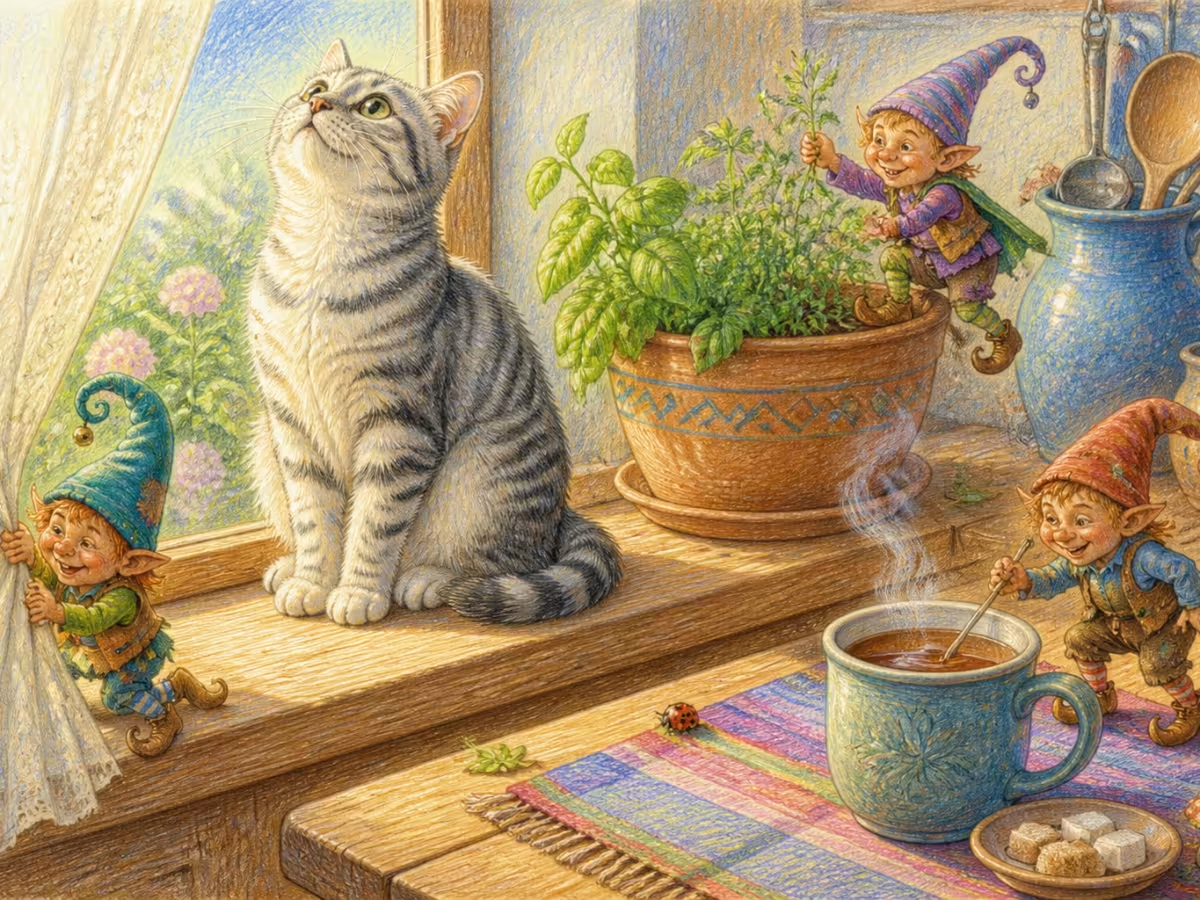
In English there is a phrase, gut feeling, that nails the posture of an animal frozen in front of something you cannot see. The gut is not speaking with words. The gut is using older equipment. And that older equipment is pure information, the kind that lives before language and beyond laziness. Your animal lives in that channel almost all day.
Don't tell her off when she gets like that. She is running her sums with the world. Force her to look away and the only thing you achieve is that she loses respect for your judgement.
What to Do When Your Animal Locks Onto Something
- Don't shout at her or force her to look away. She is concentrating on the job.
- Walk over slowly and rest a soft hand on her back. Let her know you are there too.
- Look in the same direction for a moment. Don't expect, don't force. Just look.
- If she stays locked for over a minute, air the room, check for nearby electrical noise, try turning off the TV.
- If you find nothing, give her a gentle rub and let her be. She will close the conversation on her own pace.
What Exactly Do Animals See That We Don't?
They see the fine layers of the world your brain filters out so it doesn't go crazy: ultrasound, soft infrared, vibrations below the threshold, tiny drafts, scents with memory, friendly household presences like the Brownies of the home, and the trail of old affection that still floats in corners where someone loved a lot. They aren't seeing horror-film ghosts, they are seeing the living tissue of the house, the part adults have learned to turn off purely to save mental battery.
That list is neither esoteric nor mystical. It is fine biology mixed with everyday folk wisdom. Some bullets have peer-reviewed studies. Others have three thousand years of crossed testimonies from Asturias to Japan. And then there is plain sense, the one that says if your twelve-year-old dog stares at the spot where your grandmother used to drink her coffee, maybe it isn't a coincidence, a tic or old age.
Why Do Animals Still See and Grown-Ups No Longer Do?
Because nobody taught them to unlearn. The human adult spends twenty years training the filter: «that doesn't exist», «that is impossible», «don't look there». Children keep the clean sight until the filter is installed, which is why kids still see us Magikitos. Animals, on the other hand, do not need to install that filter because their job is the opposite. Stop seeing the fine layer and you stop eating. Evolution does not forgive the luxury of looking selectively.
That explains the gap and also the marvel. While you are deciding whether the hallway light played a trick on you, your dog has already classified the source of the stimulus, consulted his olfactory archive of the last six months and decided whether it is worth barking or going back to sleep. He does all of that faster than you can think the word «nothing». There are power animals in shamanic traditions around the world precisely because the old cultures noticed that gap and respected it. We do not think that is a small thing.
Living With an Animal That Sees More Is a Serious Gift
If you share a home with a dog or a cat, you have got a sensor that logs twice the world you do. That is not a problem. That is a privilege. Learn to read her. When your animal stays still, don't reach for the spectacular explanations first. Reach for the soft ones: a cable, a draft, a noise, a smell from last week. When the soft explanations run out and the creature is still there, watching, then you have got permission to suspect that something good is happening in your house and the human routine is missing it.
We Magikitos have been handing out this reminder from house to house for ages. The unfiltered curiosity your animal points at every weird wall is exactly the stuff that everyday magic is stitched from. And everyday magic is the difference between us Magikitos and the people who care for us, on one side, and a world that has decided that only what shows up on a doctor's scanner exists, on the other. That isn't life. That is accounting.
So next time your fluffball stares at the ceiling and gets stuck there, don't tell him off. Look that way too for a moment. Even if you see nothing, let the silence do its bit. Maybe, without realising, you have just looked at the same thing he did. And maybe you will take a small clean piece of the world with you for the rest of the day.