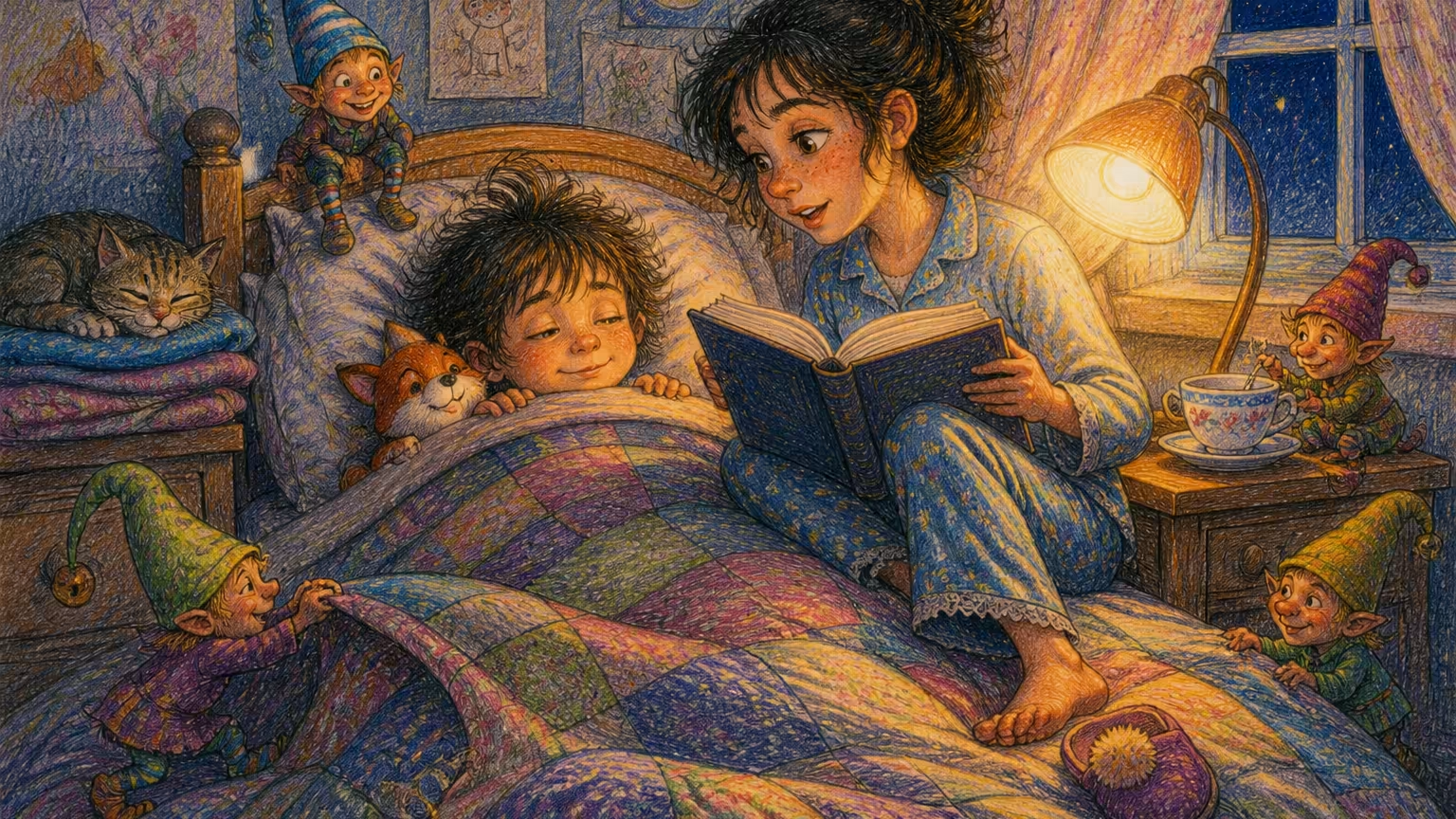
There's a spell so old that nobody calls it a spell anymore. It happens every night, in the half-dark, with a low voice and a blanket pulled up to the chin. No wand, no fairy dust. Just a story.
We fairies have been watching that scene for centuries. Someone reads, someone listens, and the whole world shrinks until it fits inside one little bed. It's one of the few kinds of magic that works just as well at five as it does at fifty, and hardly anyone notices how strong it is.
Because the bedtime story isn't really about sleep. It's about landing.
The bedtime story isn't there to knock anyone out
We get this wrong all the time. We think reading someone a story is a trick to make them shut their eyes, like pressing an off switch. It isn't. A story doesn't switch anything off, it softens. It gathers up a little person (or a big one) who's come from the day with pockets full of noise, and unpacks them line by line until they're light again.
There's a point in the night when the body's ready to give up and the head still isn't. It keeps chewing on tomorrow, on today, on something somebody said. The story slips right into that gap. It hands the mind something lovely to follow so it'll finally let go of whatever won't leave it alone. That's the whole ritual, a gentle ramp between the racket of being awake and the hush of being asleep.
And like every good ritual, it's worth more for being predictable than for being clever. Same time, same voice, same happily ever after. The brain loves knowing what's coming. The moment it recognises the sequence, it drops its guard without being asked.
Why do bedtime stories work so well?
Because they chain together three things the body reads as a sign that nothing's wrong, a familiar voice, a rhythm you can see coming, and an ending that won't scare you. That mix slows the heartbeat, loosens the breath, and tells the brain it can stop keeping watch over the day. They don't make you sleepy by being boring, they make you sleepy by being calm. The story is the soft bridge between a head going a hundred miles an hour and a pillow that's been waiting all evening.
Notice that no child ever asks for a story because they want information. They ask for it because they want company shaped like words. That's the part we forget as grown-ups. We're not after the tale, we're after the someone on the other side of it. A plain old fable told by the person you love beats the finest narration in the world told by nobody at all.
The voice telling it is everything
Here's our little fairy obsession, the voice. A story stands or falls on who's saying it. The voice that wobbles a touch at the sad part, that speeds up when the wolf gets close, that giggles halfway through a sentence because it cracked itself up. No machine makes that. A real throat does, with the tiredness of its day and its fondness tucked inside.
It melts us, honestly, hearing someone read badly on purpose to get a laugh, or drop their volume right as the little one's eyelids start to weigh a ton. Those tiny things are the magic. We Sweet Dreams Fairies know it well, we don't switch off racing thoughts with a charm, we switch them off with a voice that stays close.
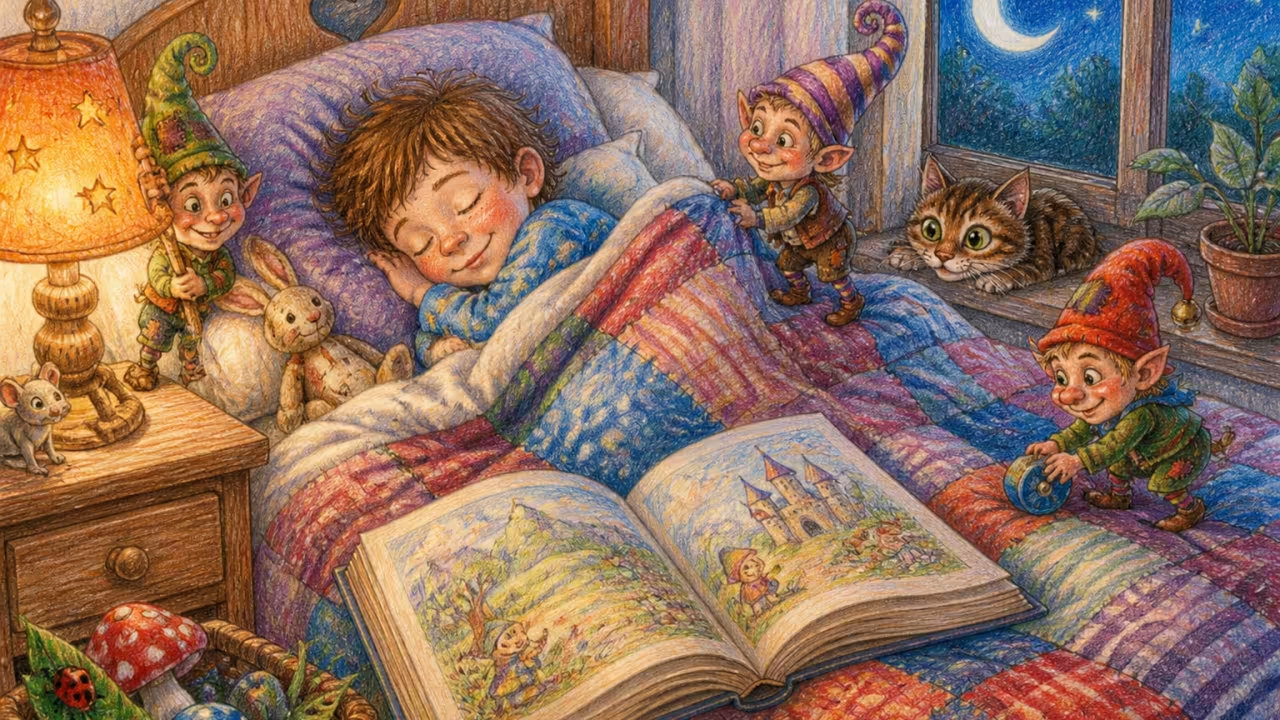
How to pick and tell a good bedtime story
You don't need to be an actor or own a whole library. You need a bit of sense and a bit of calm. Here are our fairy hints for making the moment actually work:
- Let it end well. Night isn't the time for the gut-punch twist. Kind ending, world back in its place, off to sleep.
- Short beats long. One small story finished is worth more than a big one chopped in half by sleep.
- Repeat without fear. The same tale forty nights running isn't laziness, it's safety. If they ask for it, it's working.
- Slow down as you go. Start with a spark and ease off the voice. Let the last few lines almost dissolve.
- Leave gaps. A pause, a soft question, an and what do you reckon happened next? Silence tells a bit of the story too.
If you're after stories with a little lesson tucked inside that don't sound like a lecture, we've gathered a free batch of tales read aloud by real people over here, morals that sneak in the back door, which is the only door that ever really works. And for the wind-down hours before bed even starts, some fairy colouring pages bring the volume down a treat.
There comes a moment when they don't want any more story, or anything at all. Just to shut their eyes. Round our way we call that conking out, and it's the sign the spell landed just right.
Do bedtime stories work for adults?
Yes, far more than you'd think. Being read to out loud switches off the loop of thoughts that keeps half the world staring at the ceiling, the mind, busy following a story that isn't its own, finally lets go of the one that is. That's why calm audio tales help you fall asleep and ease the anxiety of anyone who climbs into bed with the day still spinning in their head. It's not a kids' thing, it's plain physiology. A grown-up who lets themselves be told a story again sleeps like they haven't in years.
There's something lovely in the logic of it too. As children we were sent to sleep on stories, and somewhere along the road to growing up we decided that wasn't for us anymore. We swapped the voice that rocked us for a screen that wakes us up. No wonder so many people have forgotten how to sleep. The good news is it comes back fast.
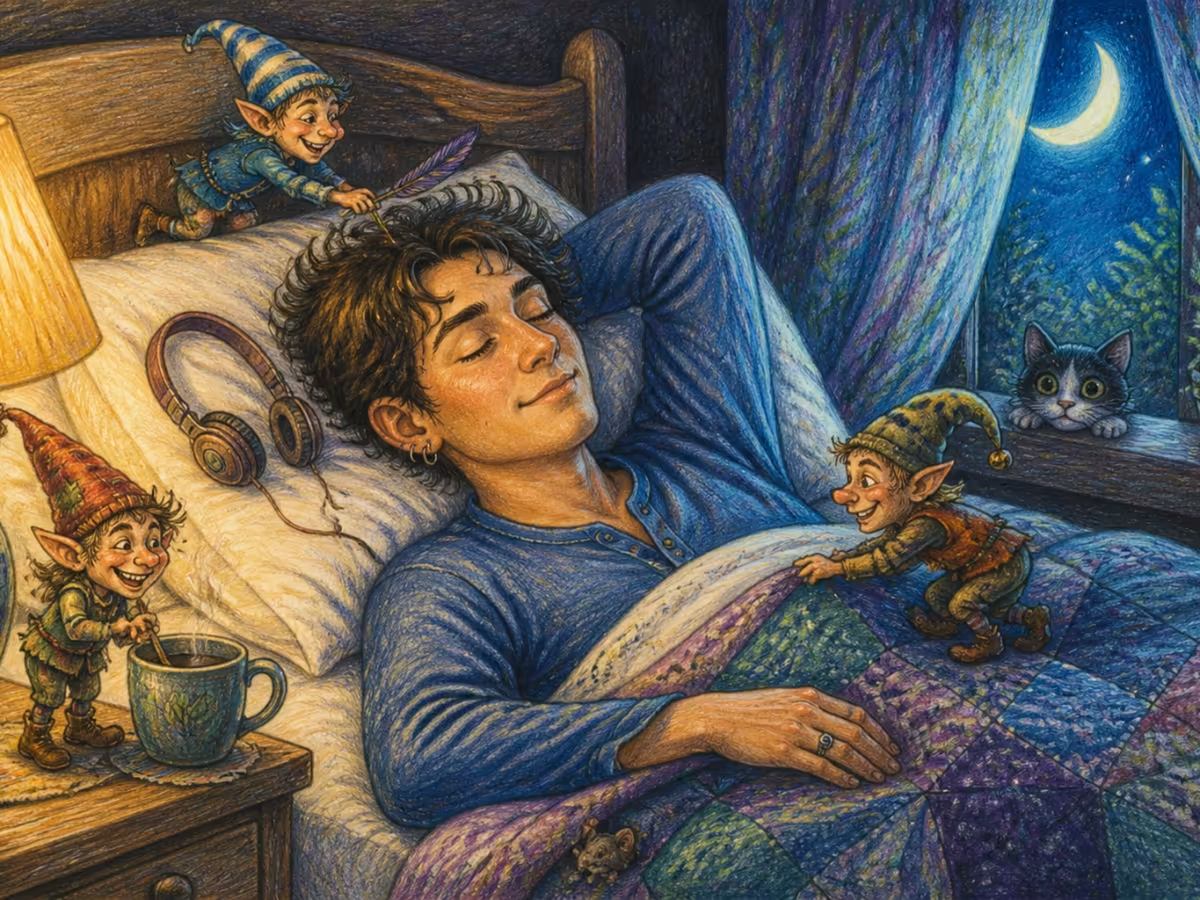
Try this on any ordinary night. Instead of the endless scroll, let a calm voice tell you something. Not so you catch the ending, the ending doesn't matter. So your head has somewhere to lean while your body gives in. If you drift off without ever finding out how it ended, congratulations, it worked.
And if your mornings are rough too, have a look at how to wake up without an alarm. Night and dawn are the two banks of the same river, and looking after one helps the other.
Our stories, real voices and zero machines
Now for the part that fills our chest the most. At Magikitos we keep a collection of audio stories that's like almost nothing else out there. Why? Because every single one is narrated by a flesh-and-blood person, with their own voice, their own accent, their own funny way of saying things. There isn't one syllable in here made by a machine. Not one.
A promise from us: every one of the Magikitos stories is told by real people, for free, and with love. Genuine voices for warm, funny tales with a pinch of a lesson, made to be heard with your eyes already at half-mast.
We defend it tooth and nail, because a human voice carries something no imitation reaches, the tiredness of the day, the smile that slips in, the warmth you can't program. That's what actually does the rocking. If you want to see for yourself, swing by our audio stories and pick one for tonight. Real voices are waiting to walk you all the way to sleep.
A story isn't told to put you to sleep. It's told so you feel kept company while you get there.
So tonight, before you give in to the tiredness, treat yourself (or the person you love) to the oldest spell in the world. A voice, a story, a blanket up to the chin. The rest takes care of itself. Goodnight, little one.