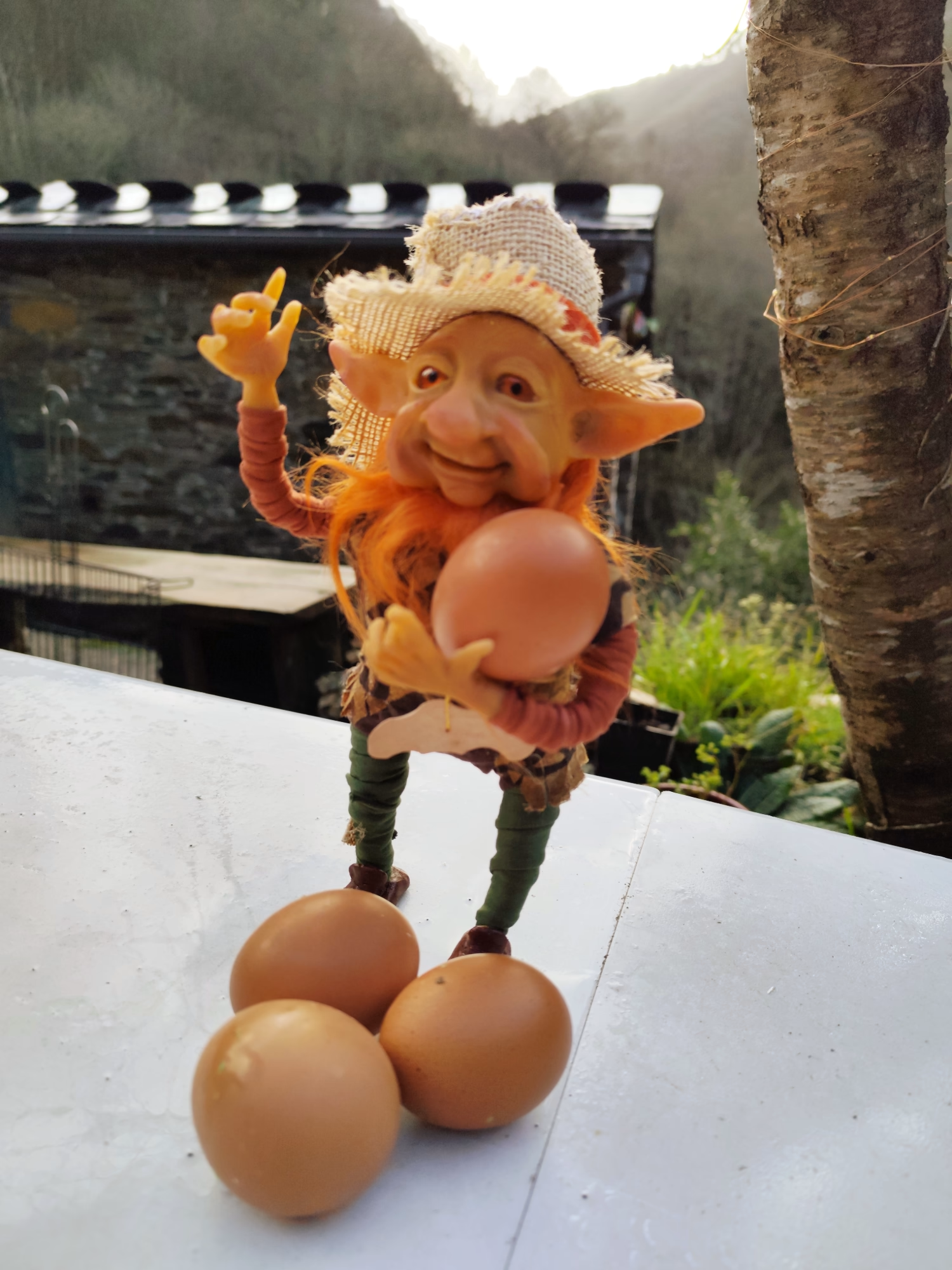
Stand any handmade Brownie figurine next to a resin one from a high-street gift shop and the difference hits you before you can form a sentence. One breathes. The other just... sits there, with that slightly too-perfect gloss that says "mass-produced on a Wednesday".
We've lost count of the people who've been dead chuffed with any figurine that has pointy ears and a cheeky grin. Fair enough, honestly. But if you're bringing a creature into your home, it's worth knowing exactly what you're choosing.
The materials Brownies are made from
Material isn't a technical footnote. It's the Brownie's opening line before it even says hello.
Needle-felted wool. The home technique of the fairies and little animals in the Magikitos world. Carded wool compressed by hand with barbed needles until it builds volume and personality. Warm to the touch, unbelievably squeezable, and each one comes out slightly different because human hands aren't moulds. The gap between real handcrafted art and mould-based production is obvious the moment you pick one up.
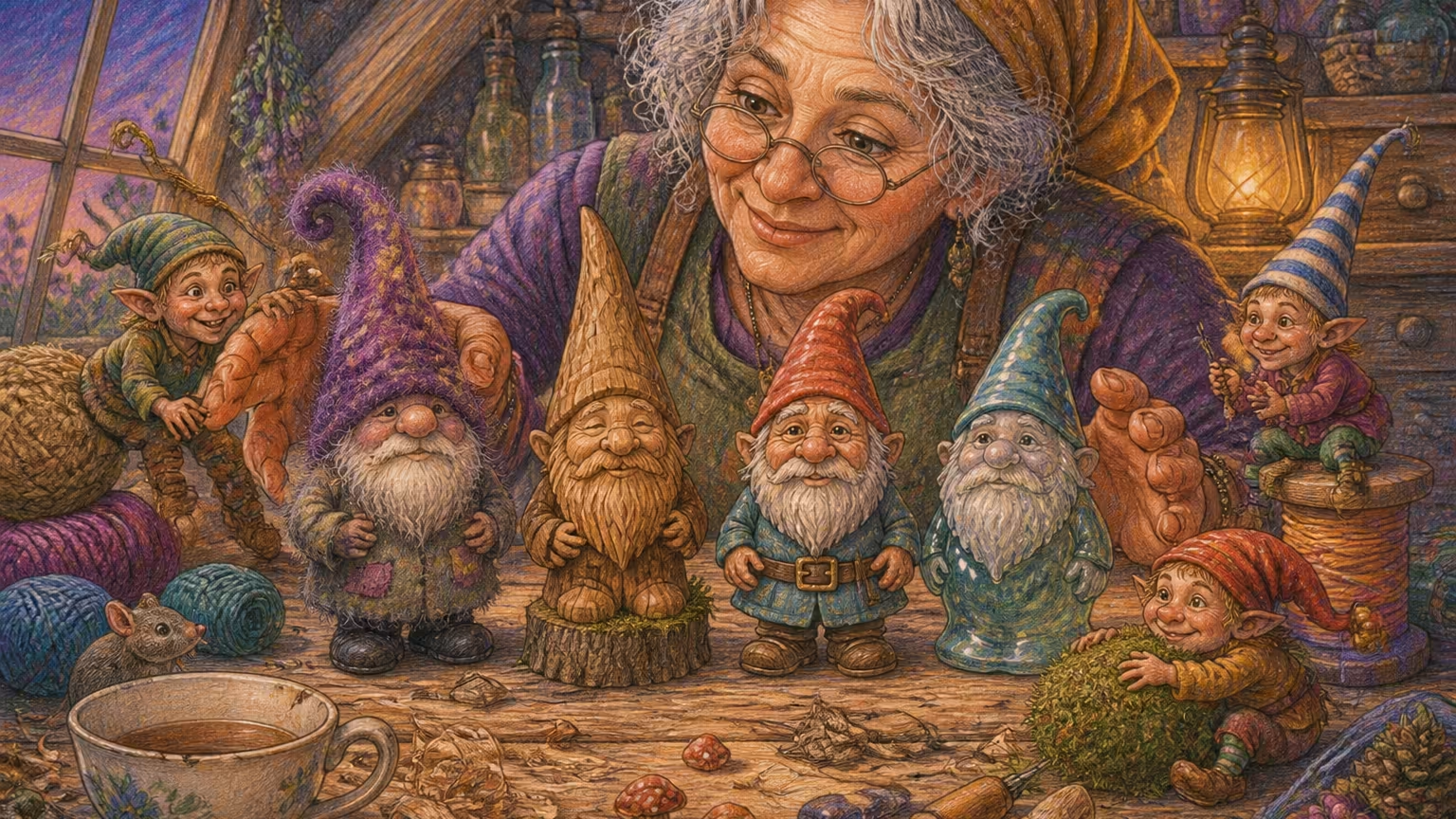
Carved wood. Nordic and Central European tradition. Actual weight in your hand. Texture of old forest. Good carved wood lasts generations, ranging from pleasingly rustic to so detailed it looks like it might blink. There's something in wood that goes straight to the part of the brain that believes in things it can't explain.
Clay and ceramic. Maximum detail: wrinkles, buttons, individual expressions. More delicate, but also more expressive. A well-painted ceramic Brownie has a presence that stops you mid-step. The downside: they fall, they shatter, and the Brownie ends up staring at you from the floor with an air of profound disappointment.
Synthetic resin. Beautiful in photos, crisp colours, sharp detail. But it's refined plastic. Same weight, same smell, and three years in it looks like every other gift-shop ornament. For quick visual impact, it can work. If you're after something that's truly spot on in terms of soul and staying power, look at a different material.
The types of Brownie figurine you can adopt
Material aside, Brownies come with very different personalities. This isn't marketing: each type of figure has its own folklore roots and projects a different energy into whatever space it calls home.
The hearth Brownie. The classic: sturdy, protective, slightly mischievous expression. In European tradition the same spirit shows up from Scotland's Brownie to Germany's Kobold to the Asturian Trasgu, always tied to home, kitchen, and general domestic wellbeing. Every culture on the planet seems to have its own version.
The forest Brownie. Wilder, with twigs, mushrooms or mud worked into the design. Less settled, more adventurous. Perfect for anyone who feels more understood by trees than by most people.
The Christmas Brownie. Seasonal by nature, though some people keep them out year-round with zero apology. If you're looking at this type, you probably already know what you want.
The Magikito. Cold porcelain Brownie with specific chispas and a defined role in the family that adopts them. Each one has a name, a specialism, and a character. No two are the same because they're made by hand, one by one, by Carmen in Taramundi. How to choose yours deserves its own full guide, and it has one.
How to choose the Brownie figurine that calls to you
Choosing a Brownie well is an exercise in honesty. Not in budget, not in trend, but in actual honesty: what do you want this creature to do in your life?
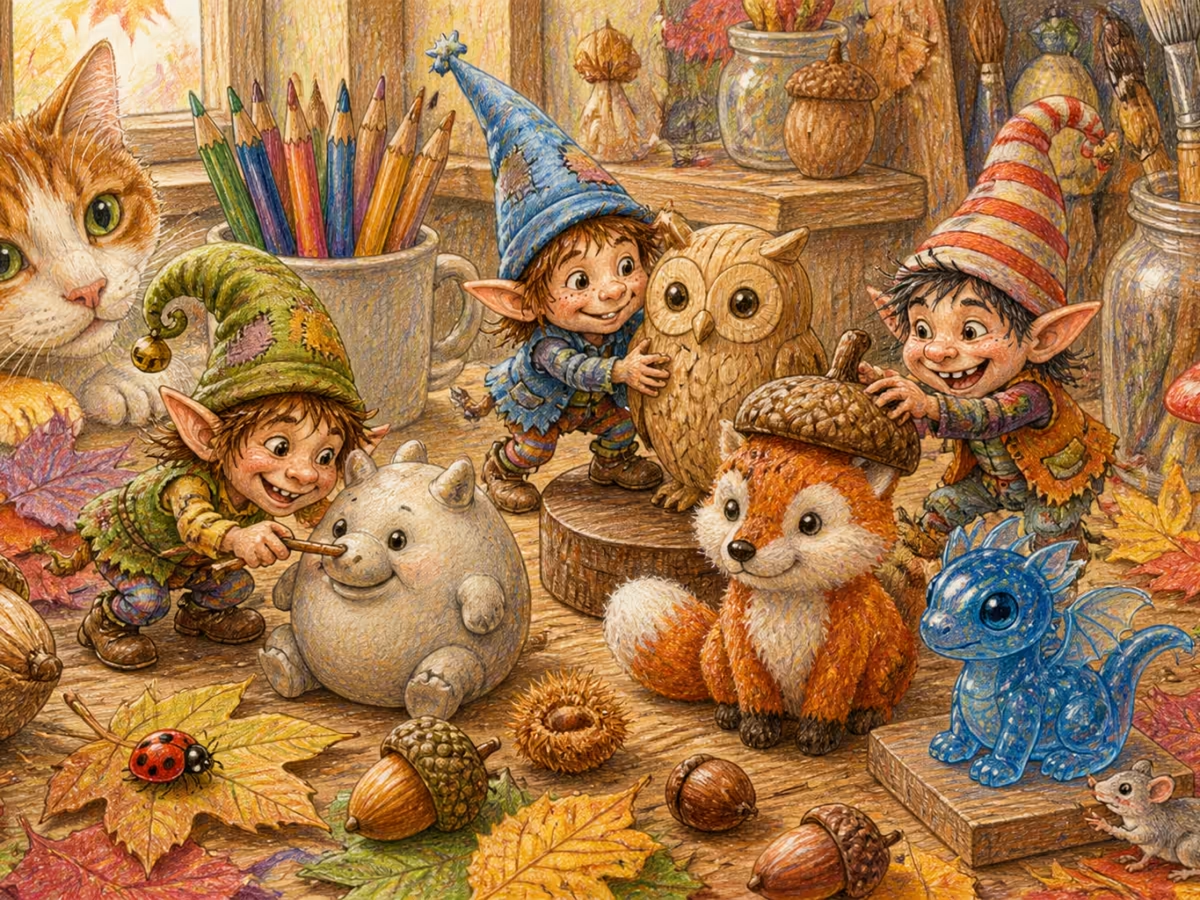
For warm, soft company in a rest space, felted wool wins every time. For presence on a bookshelf or a writing desk with history, carved wood carries that narrative weight that just works. For spaces where visual drama is everything, hand-painted ceramic might be your answer.
And if you're looking for a meaningful gift, any genuine artisan piece leaves mass-produced resin behind by miles. The difference between handmade and mass production isn't just aesthetic: it's the difference between an object with a story and one with nothing to say.
One more thing nobody mentions: size matters, but not the way people think. It's about coherence with the space. A thirty-centimetre Brownie on a bedside table can be a whole statement. In a large living room it might just disappear. Small and well-placed usually beats large and lost in the room.
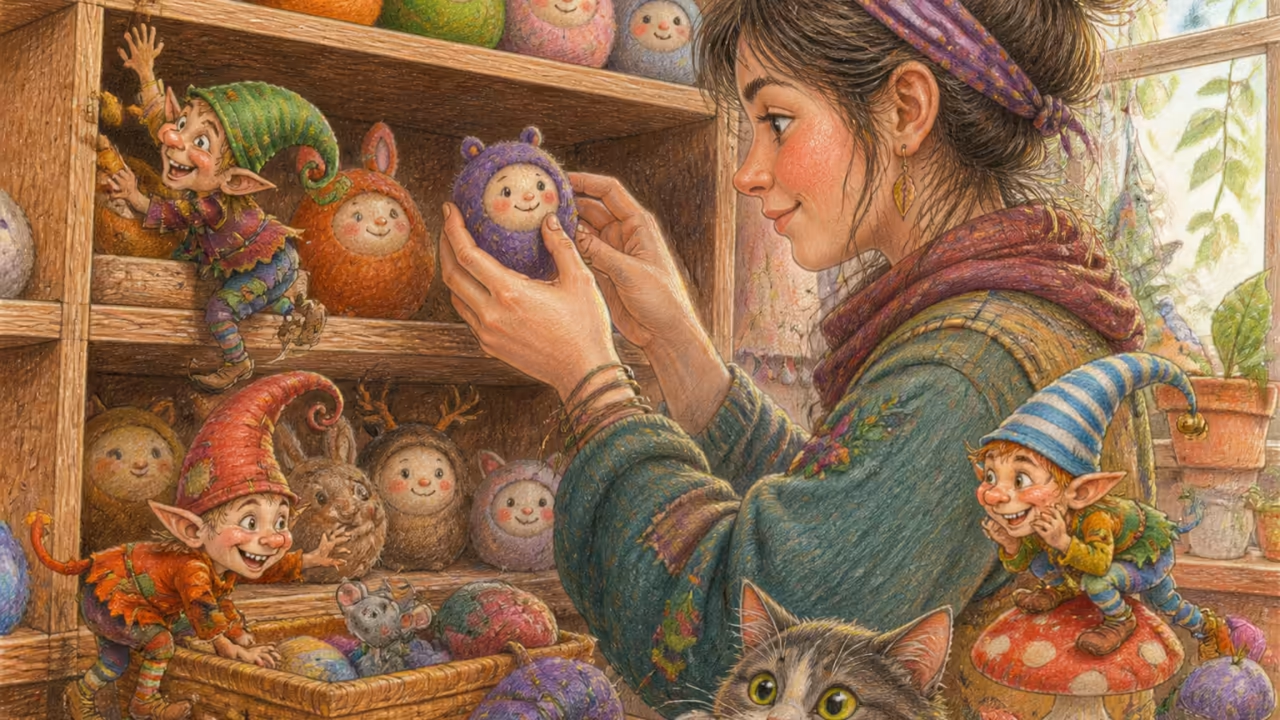
If you'd like to explore the creative side before committing to a physical piece, the Brownie colouring sheets are a different kind of entry point: a way to get familiar with the visual world of Brownies at your own pace.
Which Brownie figurine is the best handcrafted one?
The best handcrafted Brownie figurine is one made from needle-felted wool or carved wood by a genuine artisan. These techniques ensure every piece is unique, has authentic texture, and simply cannot be mass-reproduced. Needle felting, in particular, gives the Brownie a warm, gloriously imperfect quality that no mould can replicate, and that imperfection is exactly where the character lives.
The gap between this and resin is obvious to the touch. It's also obvious three years in, when the handcrafted piece is still itself and the plastic has started showing its true nature. If you're only choosing one, choose the one a human made with their hands.
Which material makes Brownie figurines last the longest?
Both carved wood and needle-felted wool last decades with minimal care. Wood just needs to stay away from extreme moisture. Felted wool gets cleaned with a soft brush and kept out of direct sunlight. Ceramic can last generations if it doesn't take a fall. Resin ages visually much faster. For real longevity, natural artisan materials beat technical plastic every time, no competition.