Some houses sleep. Others tend to themselves through the night, with a little help from someone you’ll never see. If you’ve spent any time around old British folklore, you’ll know the difference. You’ll also know that the British Isles have an unusual problem: too many words for almost the same kind of creature. Brownie. Hob. Pixie. Boggart. Hobgoblin. Dobby. Bwbach. Urisk. Pwca. They overlap. They contradict. They argue with each other in old folk tales. And nobody, in any village in any century, quite agreed on the rules.
We Magikitos have spent a few hundred years sorting through these names. Not to win an argument, but because in our workshop in Taramundi, Carmen shapes them, and she needs to know who she’s shaping. Today we’ll lay out the four main household creatures of British folklore, what makes each one different, how to tell which one might be in your house, and what to do once you have. It’s an old folklore explainer with a Magikitos twist. Cosy. Specific. Honest about the contradictions.
What are the four types of British household fairies?
Four classic British household creatures share the same family tree but live very different lives: brownies, hobs, pixies and boggarts. A brownie is a quiet helper attached to a specific household, asking only for cream and a place by the fire. A hob is similar but attached to a place rather than a family, often known by the name of the place itself. A pixie is wilder and more mischievous, attached to no one in particular, found on moorland and in stone circles, especially across the south-west of England. A boggart is what happens when any of them turn sour after mistreatment, haunting a household out of grumpiness or grief. Each has its own folklore, its own habits, and its own rules of engagement.
The four names overlap in some valleys, separate sharply in others, and shift again when you cross into Wales or Scotland. We’ll stay with the English forms here because they’re the most widespread, but you’ll find their cousins all the way from Cornwall to the Borders.
What is a brownie?
A small, brown-skinned household spirit from Scottish and northern English folklore, dressed in worn felt or moss, attached to a single family rather than a place, and asking only for a bowl of cream and quiet respect in exchange for tidying the hearth and minding the small details of the house. Brownies are the friendliest and most predictable of the four creatures we’ll meet here. We’ve covered them in depth in our dedicated piece, Brownie folklore: the British house spirit, which is where to go for the full story, the cream rule, the clothing taboo and the rest.
What matters here is the family link. A brownie is the household end of a much larger family that includes hobs, pixies and (sadly) boggarts. Knowing the brownie is the easiest way to recognise the others when you meet them, because they all share certain habits and break others.
What is a hob, and where does it live?
A hob is a place-spirit rather than a household one, found across northern England especially around the Pennines, the Yorkshire Dales, and the North York Moors. A hob attaches to a feature of the land: a hill, a hollow, a stretch of stream, a particular tree. The old place names tell you where they used to live. Hob’s Hole near Runswick Bay. Hob Hurst’s House in Derbyshire. Robin Hood’s Bay (Robin Hood being a hob nickname long before the outlaw came along). They behave much like brownies in that they’re helpful and quiet, but their loyalty is to the land, not to a family living on it. A new family moves into a hob’s cottage and the hob doesn’t really notice. Same hob, different humans.
The Yorkshire word for the inglenook seat by the fire was once the hob seat, the place where the spirit could comfortably warm itself. The English word hob in cooker hob comes from the same source. The creature gave its name to the part of the house it most reliably occupied.
What is a pixie, really?
A small, wild creature of the south-west of England (Devon, Cornwall, and parts of Somerset), known for mischief rather than helpfulness, and attached to moorland, stone circles and old wild places rather than to houses. Pixies don’t keep house. They lead travellers astray on the moors. They steal horses for night rides. They knot the manes of ponies into elf-locks. They live in clusters rather than alone, and they have a strong taste for music, dancing, and small but persistent jokes. The word pixie comes from the old West Country dialect, possibly from piskie or pisgie, and the creatures themselves are clearly cousins of fairies rather than house-spirits. Calling a brownie a pixie is a mild offence in some old folklore, and the pixies wouldn’t take it as a compliment either.
If you’re ever pixie-led on Dartmoor (the West Country word for being lost despite knowing the path), the traditional remedy is to take off your coat and put it back on inside out. It breaks the pixie spell. Whether it works depends on the pixie, the day, and how well you remember which arm goes first.
What is a boggart?
A boggart is the dark mood of any household spirit, gone wrong. The same brownie, hob, or pixie who once kept a house or place quietly happy can become a boggart through mistreatment, broken promises, sustained ingratitude, or sometimes just bad luck on the human side of the arrangement. Boggarts are noisier than the other three. They slam doors. They hide things. They make the dog bark at empty corners. They smash crockery. They feel less like a creature and more like a presence with an agenda. The old country wisdom on boggarts is simple. You can’t get rid of them by force. You can only apologise patiently, leave the cream, and hope the spirit settles. Sometimes it takes a year. Sometimes it never settles.
Which household fairy is the most helpful?
The brownie, by a clear margin. Across all the old folklore from the Borders down to the Welsh Marches, the brownie is the only one of the four creatures who consistently chooses to be helpful, as long as the cream is set out and the household holds up its side of the bargain. Hobs are helpful but indifferent: they tend to the land more than the people. Pixies are not helpful at all. They’re playful, sometimes amusing, sometimes infuriating, but they don’t sweep your hearth. Boggarts are the opposite of helpful. They actively undo the work that another spirit did. If you want a small magical helper, you want a brownie. If you’ve ended up with one of the others, that’s a different story altogether, and we’ll get to it below.
This ranking only matters if you’re thinking practically. Folklorically, all four are equally valuable. The boggart isn’t a villain, just a wounded creature, and the pixie isn’t a nuisance, just a wild one. The hierarchy here is about what they bring to your kitchen, not about their worth.
Where do they live?
Brownies live in the kitchen, the buttery, the dairy, or wherever the household keeps food and warmth, hidden behind shelves or under a low rafter. Hobs live in the land features they’re attached to: caves, hollows, old wells, particular trees, sometimes the foundations of very old buildings. Pixies live in clusters on moorland and around stone circles, especially in Cornwall, Devon, and the Somerset hills. Boggarts live wherever they were before they turned, often in the very same kitchen or hill they used to look after, but their relationship with the place becomes hostile rather than loving. The geography matters because it tells you what kind of creature you’re likely dealing with.
How do you tell which one you have?
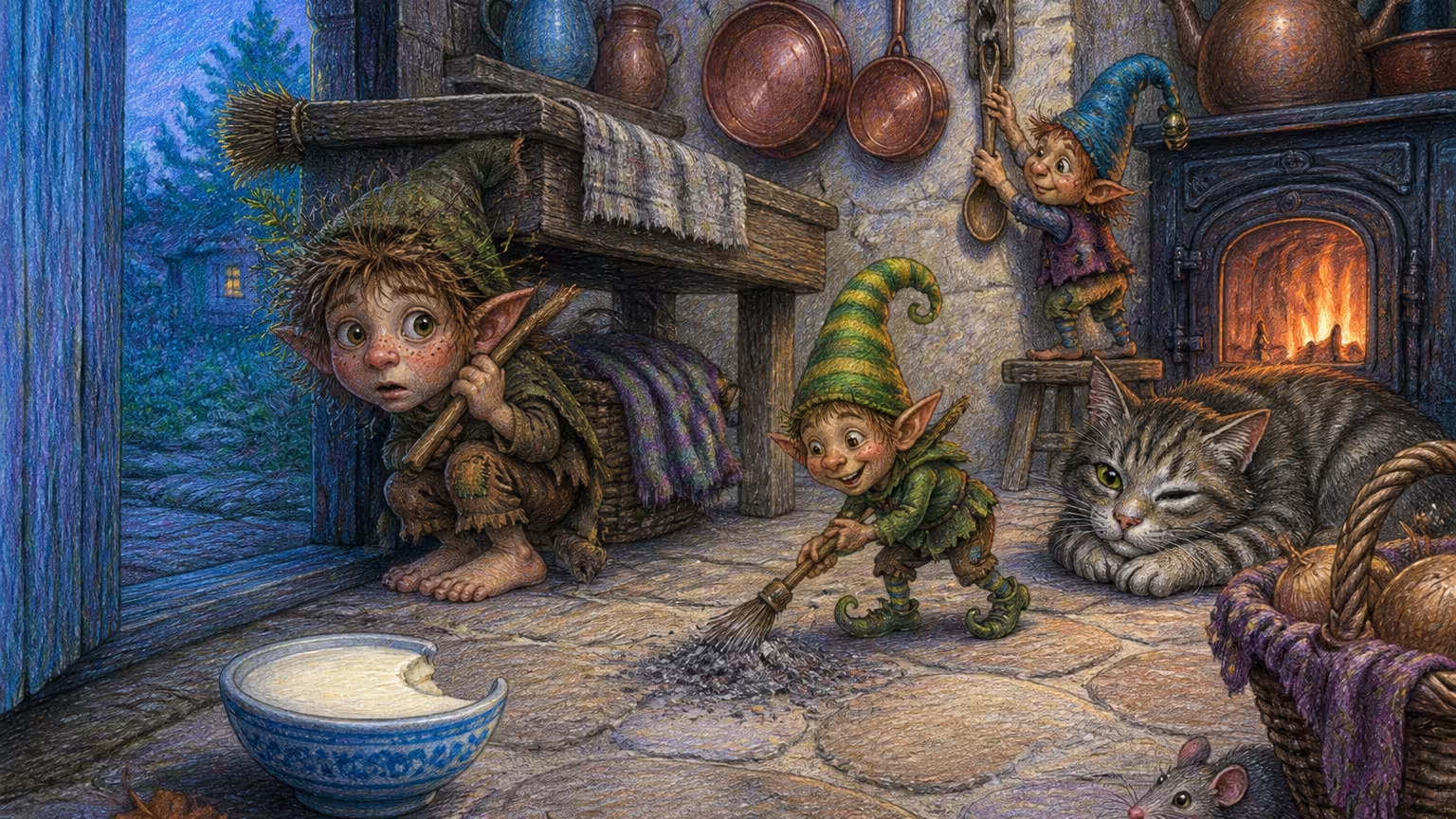
Watch what happens to the cream, and read what the rest of the house tells you. A brownie drinks the cream quietly, the bowl is half-empty by morning, and the kitchen seems a little tidier. A hob doesn’t drink the cream at all (it’s a land-spirit, not a household one), and you’ll instead notice that the well runs cleaner, the cattle behave better, or the boundary stones stay in their proper places. A pixie won’t come near a domestic offering, but if you find tangled hair on a horse you didn’t tangle, or get lost on a moor you know well, that’s a pixie. A boggart is unmistakable: the cream is overturned and the floor is sticky, doors open by themselves, things go missing in patterns rather than at random. Different signatures for each, and the cream bowl is your first diagnostic tool.
If you’ve never seen any of these signatures, the most likely answer is that your house simply doesn’t have any of the four right now. That’s not unusual. Plenty of houses in the British Isles are creature-free, especially newer buildings. The presence of a household spirit is something you notice, not something you have to disprove.
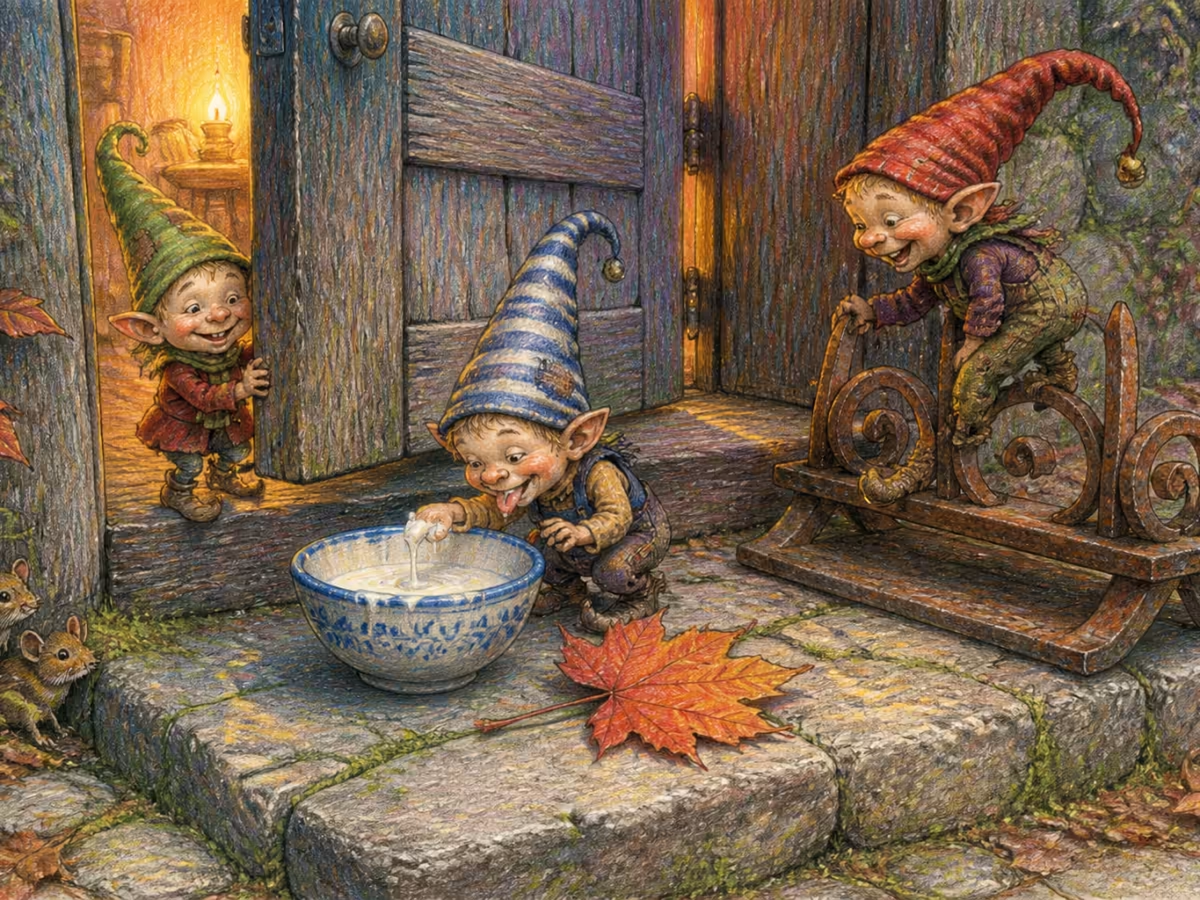
What the cream bowl really does is open a conversation. You leave it. The creature decides whether to answer. Over a week or two of evenings, you’ll learn what kind of creature you have just from how it responds. Brownies are quick and quiet. Hobs are slow and indifferent. Pixies don’t bother. Boggarts make a mess.
None of this is in any modern textbook. All of it is in the old country wisdom that British grandmothers used to teach their grandchildren without making a thing of it.
Can a brownie become a boggart?
Yes, and that is the most common origin of the boggart in British folklore. Mistreat a brownie by offering it new clothing (the classic taboo), by mocking its work, by leaving the cream bowl empty for months at a time, or by laughing at it openly, and the cheerful household spirit can curdle into something colder. The brownie doesn’t leave straight away. It goes quiet first, then sour, then disruptive, then finally settles into being a boggart. The old country wisdom is that a boggart can sometimes be redeemed by a long apology, a year of patient cream offerings, and a small change in the household’s attitude, but the more common ending is that the boggart leaves and the house becomes ordinary, neither helped nor haunted.
Many British country tales pivot on this transformation, because it’s a very British kind of moral. Kindness held up over time, and pride punished. The brownie who became a boggart wasn’t a bad spirit, and the family wasn’t a wicked family. Somewhere along the way, one side stopped paying attention. The folklore is more interested in that loss of attention than in any villain.
A brownie tidies. A hob tends. A pixie teases. A boggart remembers. Same family, four different memories.
The Magikitos, from the workshop in Taramundi
Where can you find handmade figures of these creatures?
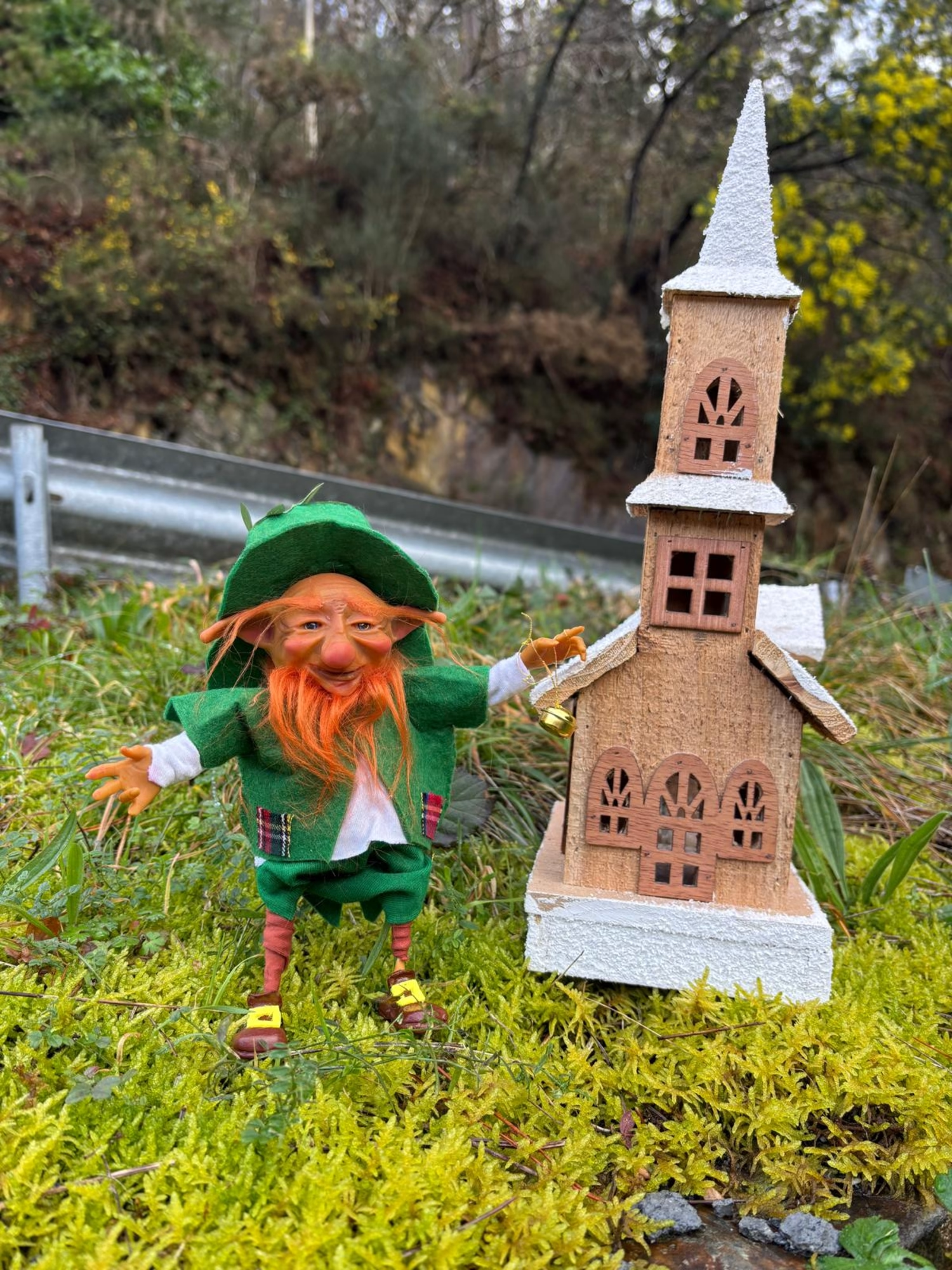
From small workshops that take folklore seriously rather than aesthetically. We Magikitos work with Carmen at her workshop in Taramundi, who shapes each creature according to its own folklore: the brownie with bare feet and a tidy posture, the hob with its arms folded as if looking out over imagined moors, the pixie with a mischievous tilt to the shoulders, and the boggart as a separate piece you’d never quite want in the kitchen. You can browse our brownies collection for the household spirits, and our treasures for the smaller folkloric pieces that pair beautifully with them.
One small caveat from the workshop: a boggart figure is a folkloric object, not a household helper. Most people are better off with a brownie. We thought you should know.
Are these creatures still believed in today?
By plenty of people, in their own quiet way, yes. Modern British folklore isn’t the loud public belief of medieval times, but it’s alive in the small rituals that still happen. People still leave cream on Yorkshire windowsills, often without quite knowing why. Cornish horse owners still sometimes mutter about pixies when they find a knot in the mane. North Yorkshire walkers still know which hollows used to be hob-haunts, and certain country pubs still have inglenook seats called the hob seat. The belief isn’t systematic anymore. It’s scattered, and that’s part of its charm. It survives in details that ordinary modern life lets through without comment.
We Magikitos like that. A folklore that has gone underground is still a folklore. It only really dies when nobody leaves any cream at all, and as long as a small minority of British households still does, the brownies, hobs and pixies have somewhere to belong. Boggarts too, sadly, but you can’t have one without the others.