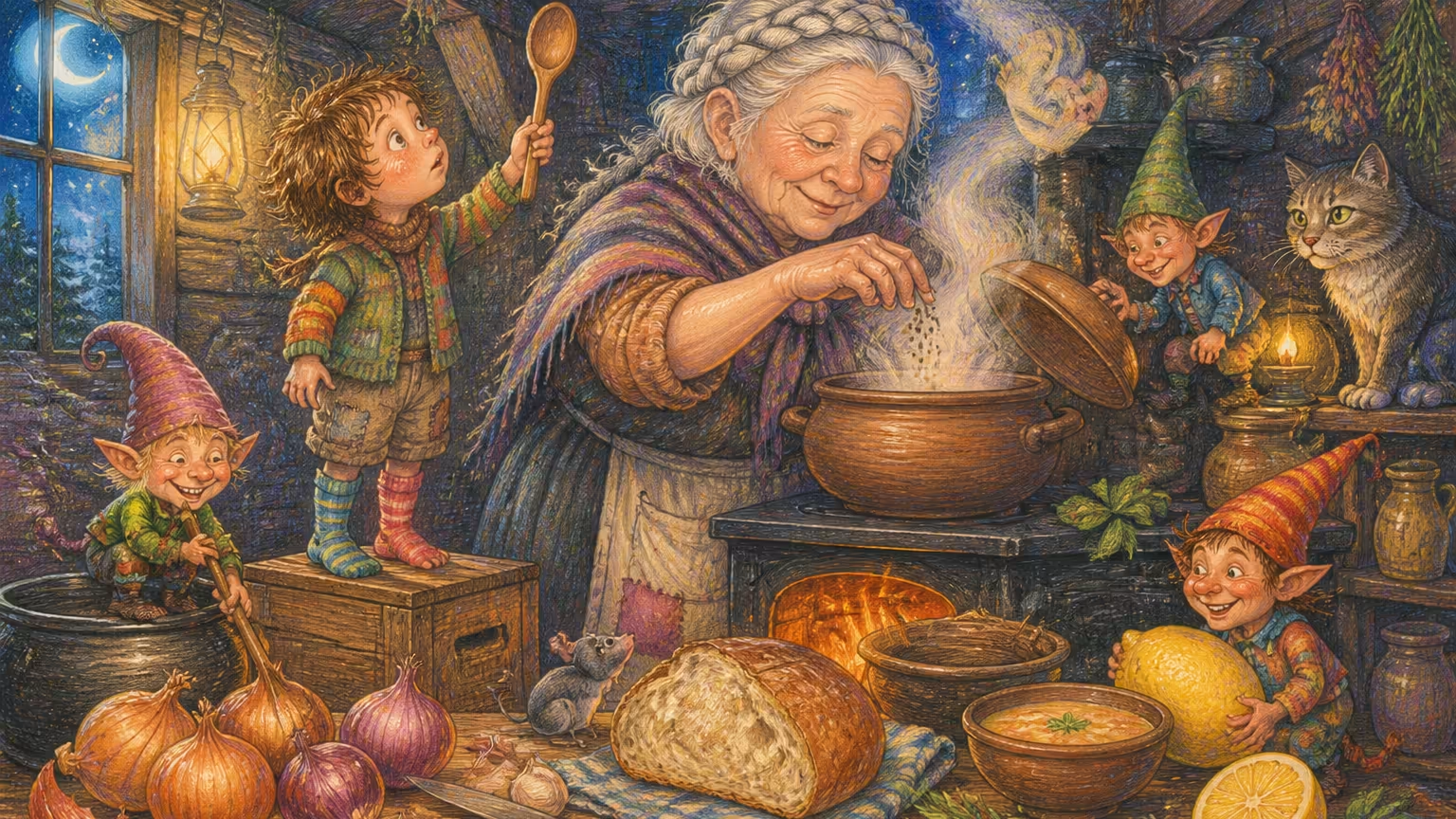
A truth we have been simmering on these forest stoves for centuries, and that we finally lift the lid on today: cooking is the highest art our species has ever made. Above the canvas, above the symphony, above the verse that rhymes with cosmos. Above. And not because we want to wind up the marble-and-violin academics, but because every steaming bowl of soup in every kitchen on the planet keeps telling us the same thing.
Today we sit you down and tell you why this barefoot trade, this household alchemy of wooden spoon and clay pot, this ritual that nobody at home ever bothered to dignify with a fancy name, sits higher than anything else our hands can pull off. And why what García Lorca called duende, that dark force that flares up in any real creative act, shows itself nowhere more openly than between a drizzle of olive oil and water about to break into a boil.
Art is the highest vibration the human mind can reach
Quick detour, no shortcuts. Art is not decoration. It is not cultural filler or wall ornament for bourgeois lounges. Art is the highest vibration a human consciousness can reach, the precise moment when evolution stops, looks at what it just made, and says "that's good, look at the lovely thing I just pulled out of the air." It is the peak. What truly sets the human animal apart from the rest of the cosmic mumble is not language, not the thumb, not the calendar. It is the ability to build beauty from inside.
And mind you, when we say beauty we are not pointing at the museum with the red rope and the imposed silence. We are pointing at the faculty of taking raw matter, be it oil paint, be it sound, be it word, be it tomato, and pushing it somewhere it was not before. Where nobody had been yet. Consciousness amazed at itself. That is art. And that is why it is the highest vibration there is.
Now, with that said: painting a canvas is a noble thing, hats off and a thousand years of respect, but feeding someone is something else entirely. The second kind of art lifts the trade to a plane the painting does not even glance at.
Cooking sits at the very top of the artistic ladder
Why? Because cooking is the only art that turns into you. Literally. What you paint stays on the wall, what you play stays in the air, what you write stays on the page. But what you cook becomes whoever eats it. It travels through the mouth, the gut, the blood, the heart. That carrot pushing its orange into your cheek tomorrow morning is no longer a carrot, it is your cheek. Cooking is the art you eat and then walk around with.
And on top of that it is the only art performed every single day. No waiting for the muse. No marble studio. No gallerist to sign off. Three times a day, in kitchens with sauce-spattered walls, anonymous people across the whole planet are pulling off legitimate creative acts. It is the only truly democratic art form: any human with a pot and a handful of honesty under one arm is qualified to practise it.
That, dear ones, is the very peak of conscious evolution. Making someone eat something that nobody had ever made for them before. It is staggering.
Cooking is the only art that becomes you. It travels through the mouth, the gut, the blood, the heart. What you paint stays on the wall. What you cook walks around with you.
The crime of the lonely pea with half a gram of sauce
And here the Brownies bang the worktop. Because if cooking is this, if it is this deep and this humble thing, then there is a whole genre of "haute cuisine" that is plain heresy and deserves to be called by its actual name.
We are talking about the plates where a single perfectly spherical pea shows up, placed with tweezers, surrounded by half a gram of sauce painted on with a sable-hair brush, on a plate the size of an airport tray, and for which they charge you forty-two quid. That is not art. That is gastronomic taxidermy. It is a solo performance the cook stages for himself, technical self-applause dressed up as refinement, a pirouette with nobody waiting on the other side. The diner walks out still hungry, with a lighter wallet, but above all with the sticky feeling of having attended a show that was not really aimed at him. That, friends, is the opposite of art. It is white-jacketed self-indulgence.
We have nothing against technique. A clean reduction, a tidy cut, a perfect cooking point are real virtues and the Brownies cheer them on. What we reject is the sophistication that forgets what cooking is for: so that someone who is hungry walks away full, content and ready to stay alive a bit longer. Any cuisine that loses sight of that has stopped being cuisine and has become edible geometry. And edible geometry, frankly, leaves us cold.
The honest truth steams out of a clay pot
The real stuff, the good stuff, the cooking the human conscience has been polishing for millennia, does not need tweezers or foams or smart asides. It lives somewhere else.
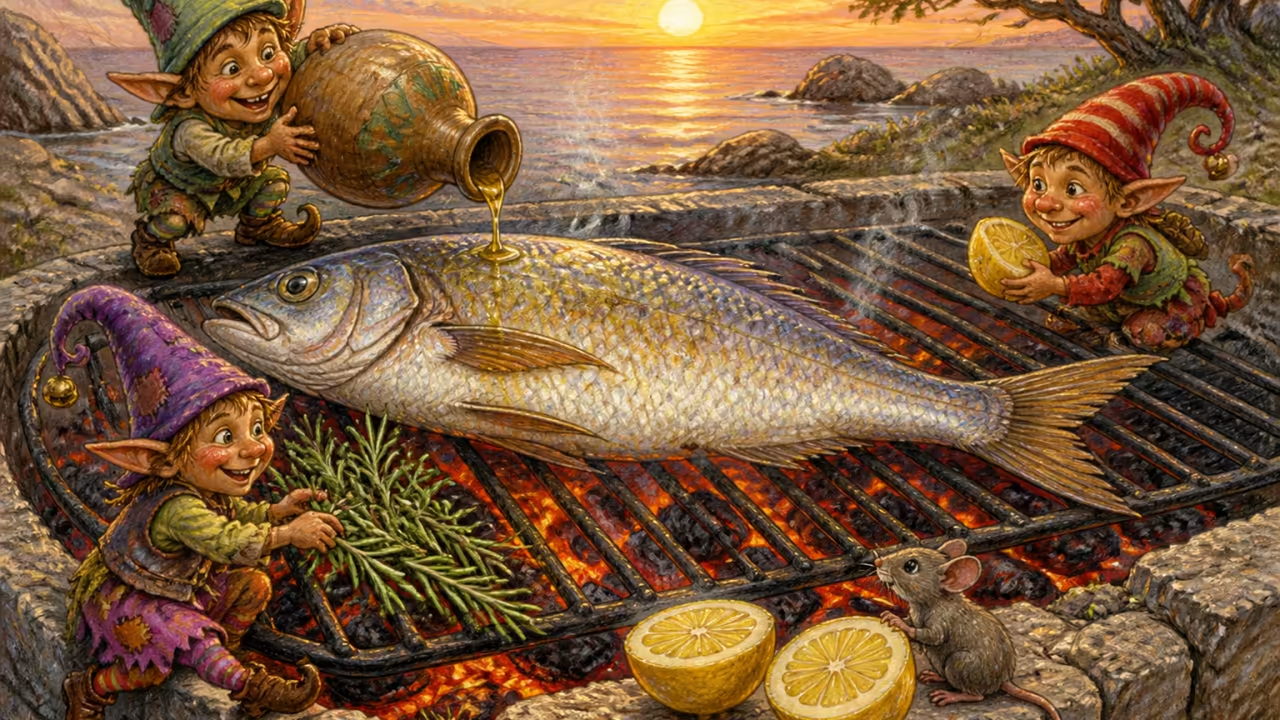
It lives in a clay pot that has been whispering to some white beans for four solid hours. It lives in the exact moment when you place a fresh fish onto a hot grill with care, that small graceful gesture that lays the creature on the embers with dignity instead of just chucking it. It lives in that thin trickle of olive oil that colonises a slightly dry rice and suddenly turns it into the best thing you will eat all week. It lives in the patiently sweated onion, in the garlic perfuming the whole house, in the stew that fills the kitchen with a smell your grandmother knew without ever asking why.
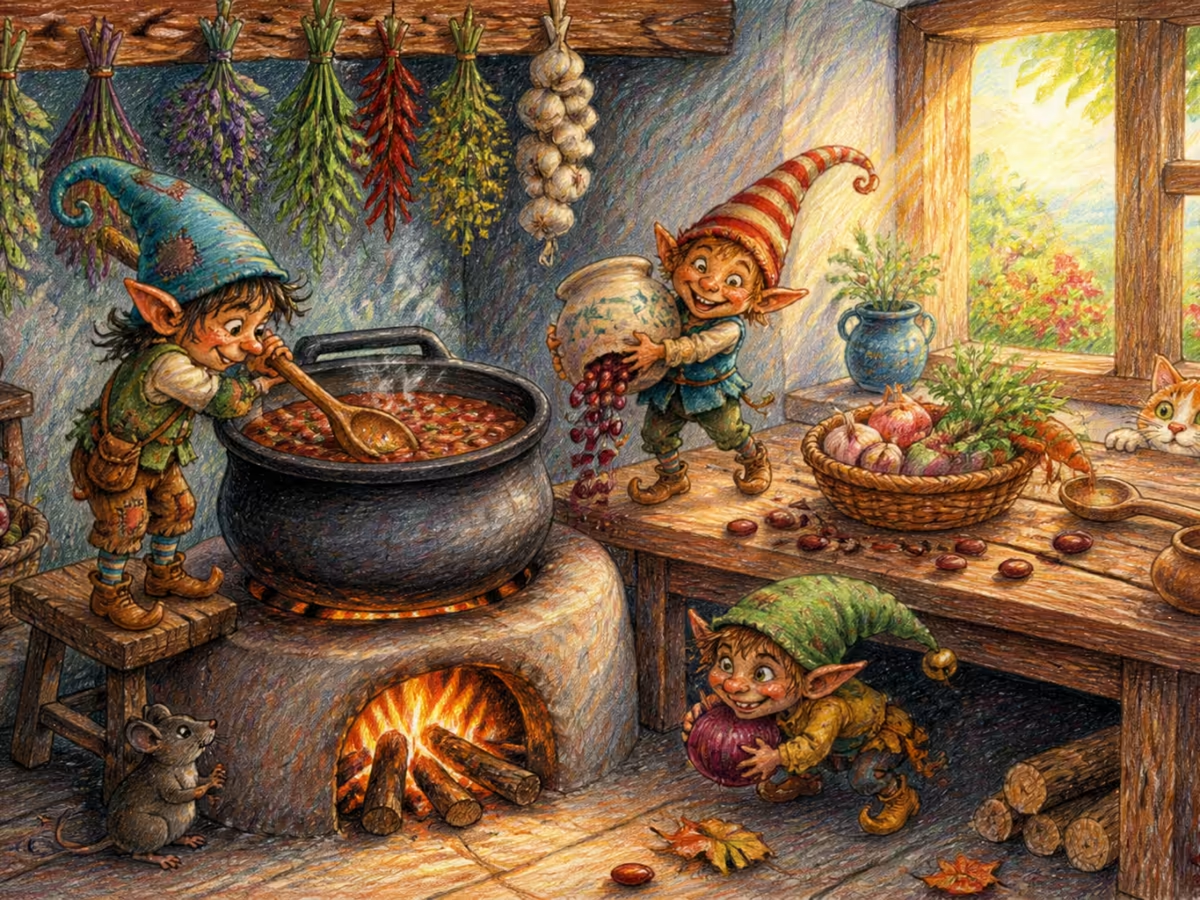
The great works of cooking are not served on Limoges bone china. They land in casseroles that know the names of three generations, in bowls that chipped one winter morning, in deep plates your grandmother once used to serve you the first proper stew of your life. That is the Brownies' museum. That is the gallery.
There is a brutal beauty to simplicity done well. To water boiling at exactly the right moment for the egg. To bread broken with the hands, not cut with a knife. To stew that welcomes bone and fat and time. Simple done well is infinitely harder than complicated done with smoke and mirrors, and people who cook every day know that in their fingertips.
The kitchen Brownie nudges your hand
Here the Brownies put the cards on the tablecloth: every kitchen houses a Brownie, and not metaphorically. He lives there for real. He is the one who, at the last second, whispers "give it a turn of pepper" when it had not crossed your mind. He is the one who shifts your hand a millimetre to the left so the salt lands in the right spot. He is the one who tells you the stew is done before any thermometer says a word.
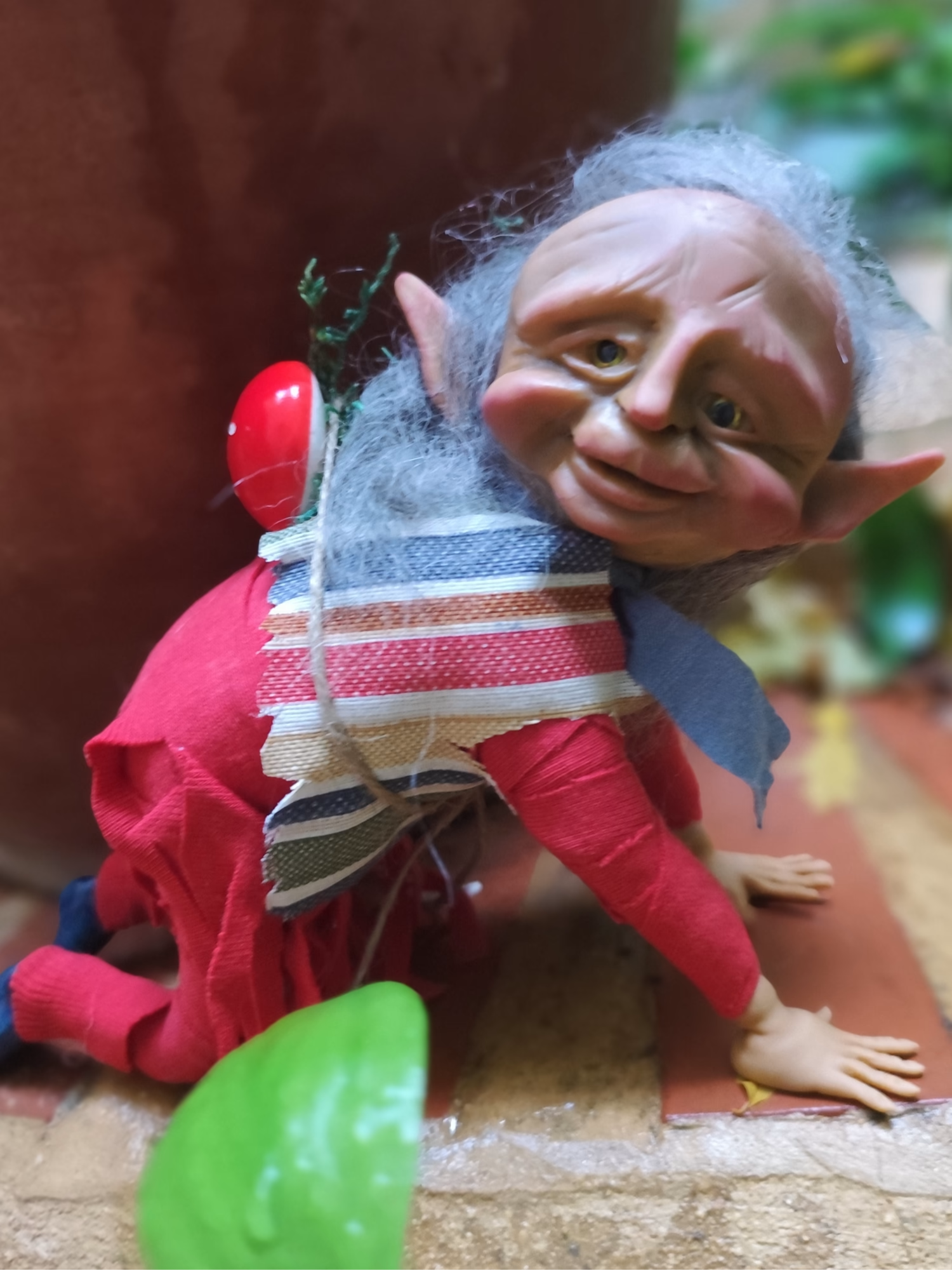
This particular kitchen friend of ours has a face, dear ones, and lives in his own corner of the forest: the Kitchen Brownie. He is no white-jacketed chef. He is the subtle creature who understands that yesterday's leftovers are tomorrow's dinner, that an old stock is liquid gold, that a piece of stale bread is asking to be soaked in olive oil and memory. He is the guardian of the household hearth, the one who keeps the flame alive while the family sleeps.
When you improvise a Sunday meal with four scraps from the fridge and somehow it turns out memorable, that was not you. It was him. You passed him the hand and he did the invisible part of the work. And when you cook on autopilot and the dish lands flat, that is him too, off paying a visit to another stove because yours did not invite him in that evening.
The best recipe is the one nobody wrote down
Here we hit the heart of the matter. The best recipe in the world is the one your intuition is telling you. Full stop. It is not the cookbook, it is not the famous chef's video, it is not the precise list of grams. It is that silent tug you feel when you open the fridge and, without knowing why, you know that tonight it is rice, and the rice wants sweated onion, and a squeeze of lemon at the end. You just know. You do not argue with it.
The intuitive recipe is the only one that knows how hungry you are today, what your body is craving, what the weather is doing outside, who you are eating with, what is actually sitting in your fridge. No recipe on the internet knows those four things at once. Only you do. And only if you shut up for a moment and let the bottom of your stomach speak.
The problem is that we have been trained for decades not to listen to the bottom of our stomach. We have been told that cooking well means following instructions with pharmacist precision, that without scales and thermometers we are doomed, that improvisation is the trade of the poor. And it is exactly the other way around: improvisation done with a brain is the very top of the craft. The good improviser is the one who knows each ingredient by name, has botched it a thousand times, and has reached the point where the spoon moves on its own.
Why is cooking an art and not a technique?
Because technique can be measured, replicated and taught, while art can only be practised. Two people following the same recipe with the same ingredients never cook the same dish. One pours in the warmth the other forgets, one catches the point the other lets slide past, one risks half an intention the other did not dare to try. And that half-intention is precisely the difference between eating and eating well. Technique is the floor of the trade. Art is everything built on top when someone cooks with head, hands and a bit of soul.
That is why an illiterate grandmother can cook better than a graduate of any culinary school. Technique you learn in a year, art you sharpen across a whole lifetime. The trick is not to know more, the trick is to feel more. To have tasted a thousand half-cooked broths and learned what they were missing without anyone ever explaining it. That bit does not come in any manual and never will.
The spark of adventure lives in every pot
And here we step into the most beautiful part, the bit that connects to the spark of adventure we all carry inside: there is no greater adventure than starting to cook without knowing what you are about to make. None. A hike with no map is lovely, sure. A trip without a hotel booking is brave, also true. But opening the fridge on a Friday night, looking at what is left and saying "let's invent something" is the purest exploratory act available to the civilised world.
You have it all there: the risk (it might come out so-so), the novelty (nobody has done exactly this before), the snap decision-making (eggs burn while you get existential), the gratitude at the end (someone is about to eat what you just made). Cooking without a recipe is the household version of the leap into the void. And like any leap done with care, it almost always lands well.
And right next to it there is its sister spark, the spark of creativity, the one that lives married to adventure and lights up at the slightest invitation. Creativity does not belong to professional artists with berets. It is the oldest and most everyday human faculty there is, and the kitchen is its daily gym. Every time you tweak a recipe to your liking, every time you swap an ingredient you do not have, every time you say "let me try a bit of this", you are making art without knowing it. You have joined the party without anyone handing you a name tag.
What if I cook without a recipe and it turns out badly?
Then you learn twice as much as when it turns out well, and next time it will not flop the same way. A failed dinner is pure information: it tells you which ingredient did not get along with which, which cooking point sailed past you, which amount was too much. A recipe followed perfectly teaches you nothing because somebody else did the thinking. A botched dish, taken to heart, is worth more than ten obedient recipes. And in the end, no failed dinner ever killed anyone: worst case you order a pizza, laugh about it, and tomorrow you start again with more craft in your fingers.
The fear of getting it wrong in the kitchen is the same fear that shuts down creativity in any other trade in the world. Shaking it off is the most important lesson the hob can teach, and it travels with you to every other corner of life. Wabi-sabi applied to the stew: the imperfect done well is often the most beautiful thing on the table.
Cooking as a way of looking at the world
For the Brownies, cooking is not a domestic chore. It is a way of being. It is a whole quiet philosophy you pick up by stirring slowly. Cooking teaches patience (onions will not sweat any faster because you are in a hurry), gratitude (someone planted that, cared for it, harvested it), generosity (the good stuff is almost always made for someone else), and humility (the kitchen puts you back in your place every time you start to think you have it all sorted).
Whoever learns to cook well learns, without noticing, how to live well. They learn to listen to what is in front of them before acting. They learn to wait exactly the right amount of time, not a minute more. They learn to be content with what there is, without needing what there is not. They learn to share without measuring. The hob teaches that, not the university. So the Brownies tell you, with no hesitation: if you want to learn how to be in the world, learn first to cook without a recipe. The rest of the craft of living follows on its own.
Next time you put a pot on the heat, remember: you are making art. The highest there is. And the kitchen Brownie is watching with affection, grateful that someone has finally understood that soup, too, is a museum.