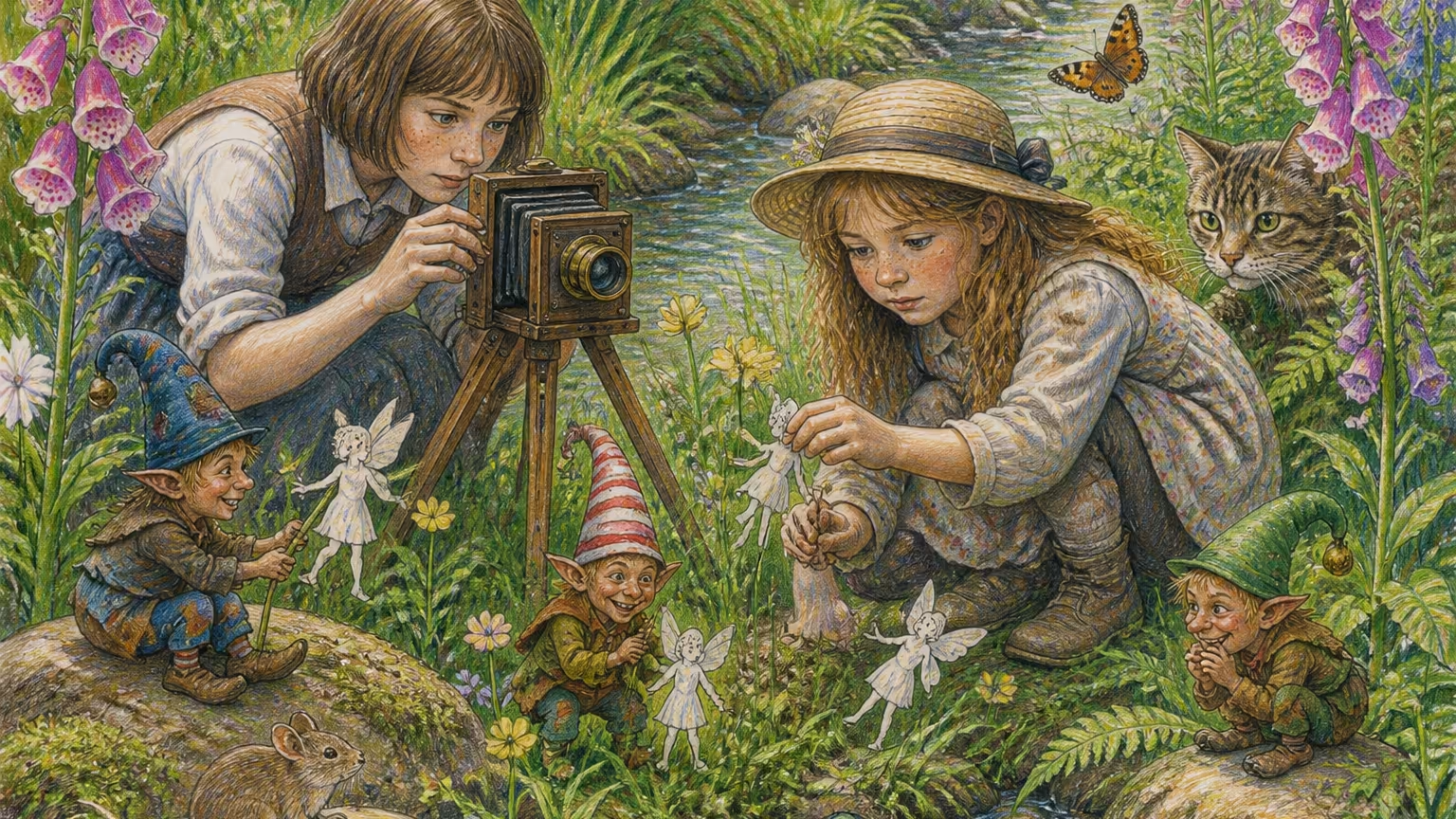
It was the summer of 1917. Two cousins were playing beside a stream in Cottingley, a small village in Yorkshire that had no idea it was about to become famous. Elsie was sixteen. Frances was ten. And between them they carried a secret that would fool the world for sixty-five years.
The camera belonged to Elsie's father. The scissors came from the kitchen. The figures came from a picture book. The result: five photographs that sent half of humanity into a debate about whether fairies actually exist. Spoiler: the hoax was so obvious that the only reasonable explanation for why it worked is that nobody wanted to see through it.
The stream and the camera they weren't supposed to touch
Arthur Wright wasn't a credulous man. He was a mechanic from Bradford with his feet firmly on the ground and little patience for fairy tales. When his daughter Elsie and her cousin Frances returned his Midg Quarter-Plate camera with a spent roll, he developed the plates expecting to find the ordinary things girls photograph.
What he found were fairies.
Small, winged, dancing in front of Frances with a breezy joy that was hard not to smile at. Arthur decided his daughter had set up a little theatre with cardboard cut-outs. He told them exactly that. And went to have his tea.
He was right. It's just that nobody else was going to listen to him.
The theosophical whirlwind (or how you get from Yorkshire to the whole world)
Elsie's mother, more open to the matter, brought the photos to a Theosophical Society meeting in Bradford. There, things took a turn that nobody in that room could have predicted.
The photos reached Edward Gardner, a committed theosophist with plenty of energy and very few doubts. Gardner sent them to expert photographers for analysis. They confirmed there was no manipulation in the plates. It was what it appeared to be. And in 1920, Gardner contacted someone who was writing a piece on fairy sightings for The Strand Magazine.
That someone was Arthur Conan Doyle.
The same Arthur Conan Doyle who had created Sherlock Holmes. The most rational character in the history of literature. The detective who didn't believe in magic, only in data, tobacco fibres and mud stains. His creator, it turns out, had been a committed spiritualist for years, with a deep need for the other world to be real.
The Cottingley photos arrived in his hands like an answer to a question he'd been asking for a long time.
Were the Cottingley Fairies real?
No, though the answer has a wonderful coda. The photographs were fake: Elsie and Frances cut out fairy figures from Princess Mary's Gift Book of 1914, pinned them to the ground with hatpins and posed beside them. The figures wore fashionable 1918 hairstyles, a detail anyone with a copy of the book could have verified straight away. But Frances Griffiths, until shortly before her death in 1986, maintained that the fifth photograph, the one showing a fairy bower, was genuine. That one they had really seen. The hoax was shared. The faith was hers alone.
The book that could have exposed everything (if anyone had opened it)
Princess Mary's Gift Book was a collection of stories and illustrated plates published in 1914. The fairies in the photographs came straight from its pages, complete with Art Nouveau wings and fashionable short hair. Anyone with a copy at home could have recognised them immediately.
Nobody opened it.
Not because they couldn't read. But because the wish for them to be real was stronger than any desire to look twice. Conan Doyle published The Coming of the Fairies in 1922. He wrote it with the solemnity of someone announcing the greatest discovery of the century. The debate stretched on for decades.
The hatpins were right there in the photos, if anyone had bothered to look.
1983: sixty-five years of a well-kept secret
Frances Griffiths was seventy-six when journalist Joe Cooper interviewed them for The Unexplained magazine. Elsie Wright was eighty-two. The two elderly cousins finally told the story of how they had done it.
Cut-outs. Hatpins. A summer afternoon by the stream. "We were just having fun," Frances said. "We never thought anyone would take it seriously."
They hadn't confessed earlier because they didn't want to let down all the people who had believed. They had carried the secret for over six decades without letting a single thread slip. And when they finally spoke, they did so with the calm of someone who has been carrying a very light weight for a very long time.
Because that was the weight: not a lie, but the responsibility of being the last refuge of other people's faith.
Why did Arthur Conan Doyle believe in the Cottingley Fairies?
Conan Doyle had lost his son Kingsley in the First World War and his brother shortly after. He'd been a spiritualist before those losses, but the grief turned it into an urgent need. He needed there to be something beyond the mud and the trenches. The Cottingley Fairies arrived at exactly that moment: two girls from Yorkshire with a borrowed camera who said they had seen what he most wanted to exist. His intelligence didn't fail him. His need for it to be true was just much bigger than his will to doubt.
What remains when the hoax is over
There's something we've been thinking about since we first heard this story: the Cottingley hoax isn't the story of how two girls fooled the world. It's the story of why the world was in such a hurry to be fooled.
The photos weren't technically perfect. The hatpins were right there. The fairies had catalogue haircuts. And still, scientists, respected writers and readers from all over the world chose to believe. Not because they were naive. But because they needed, very intensely, for there to be something in that Yorkshire stream that wouldn't fit in a chemistry notebook.
Frances died convinced that the fifth photo was real. Maybe she was right. Maybe not. But there's something very lovely about the most famous hoax in fairy folklore history ending with an old woman who refused to fully close that door by the stream.
If you're curious about where fairy myths come from long before Cottingley, this piece on the history of fairies goes back much further. And if you fancy something you can actually hold, our fairy colouring pages are a good place to let the imagination run free, no hatpins required.