We've been hearing this question for centuries. In children's whispers, in late-night search bars when nobody's watching, in arguments between adults who really should know better by now. Do fairies exist? We've decided it's time to answer. Properly. No mystical fog, no convenient hedging. Straight.
The short answer: yes. But "exist" is a word with a lot hidden inside it, and the version you have in your head is probably not ours. You won't find us in a glass jar or a personality quiz. That doesn't make us less real. Here's the full picture.
What the whole world already knew (without comparing notes)
Here's the detail that always leaves people quiet for a moment: every civilisation that lived close to nature arrived, independently and without contact with any other, at the same conclusion. There are small magical beings with their own will who share the world with humans, and they have their own rules about how that coexistence works.
The Irish Celts called us the Aos Sí, the people of the mounds. The Norse had the álfar, beings of light who inhabited a world running parallel to the human one. In Scotland we're part of the Seelie and Unseelie Courts, the good folk and the considerably less predictable, with very particular ideas about courtesy and hospitality. In England the word "fairy" traces back through Old French faerie to the Latin Fata, the Fates who wove destinies at birth. In Japan the forest spirits have names and personalities and were never doubted, historically speaking.
None of these traditions copied from the others. No shared texts, no folklore conferences, no ancient group chat. And all of them landed in the same place: there's something out there, it has a shape, and it deserves respect. Let's be honest: that's not a coincidence. That's recognition.
Fairy rings and other forest geometries
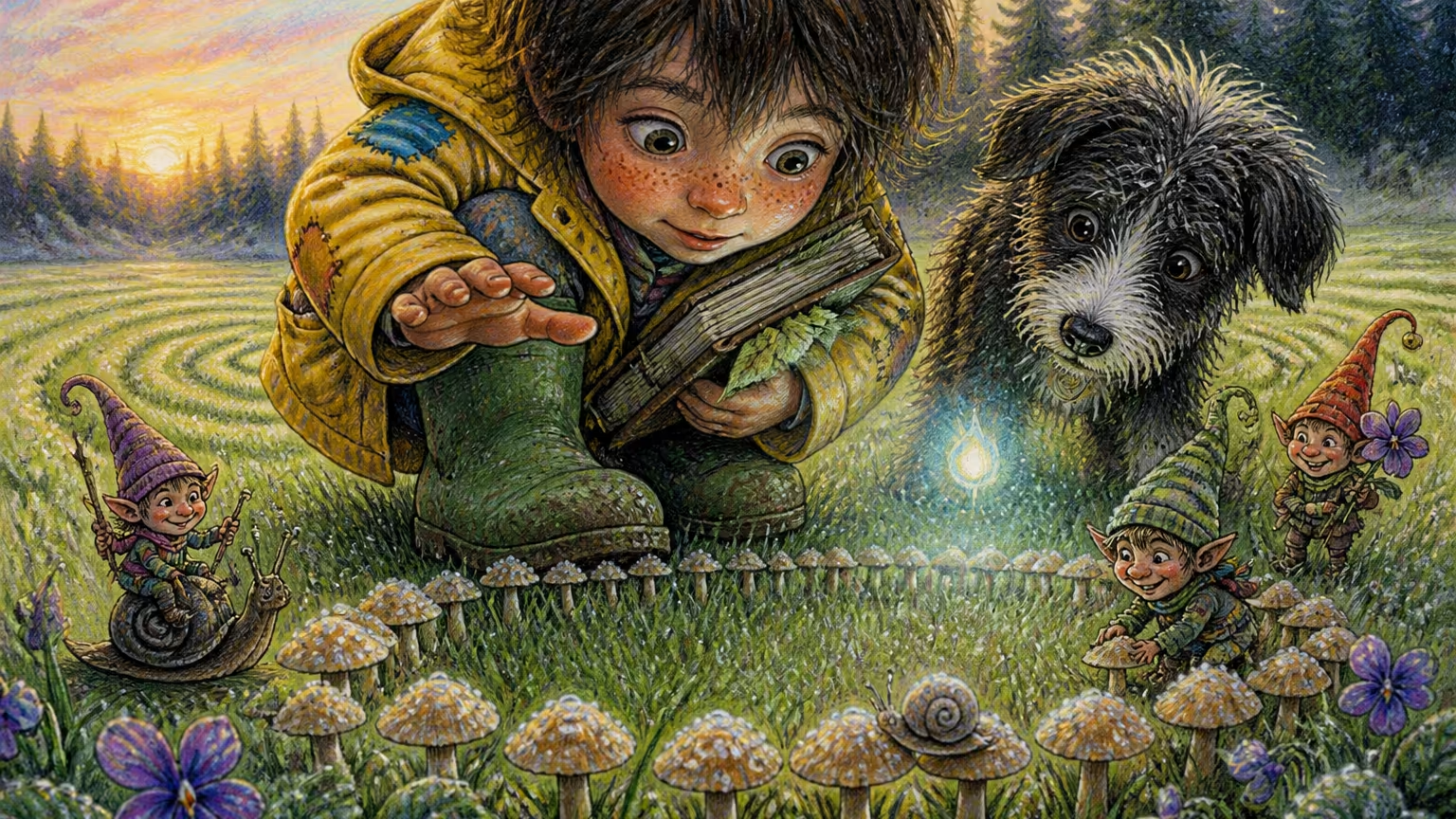
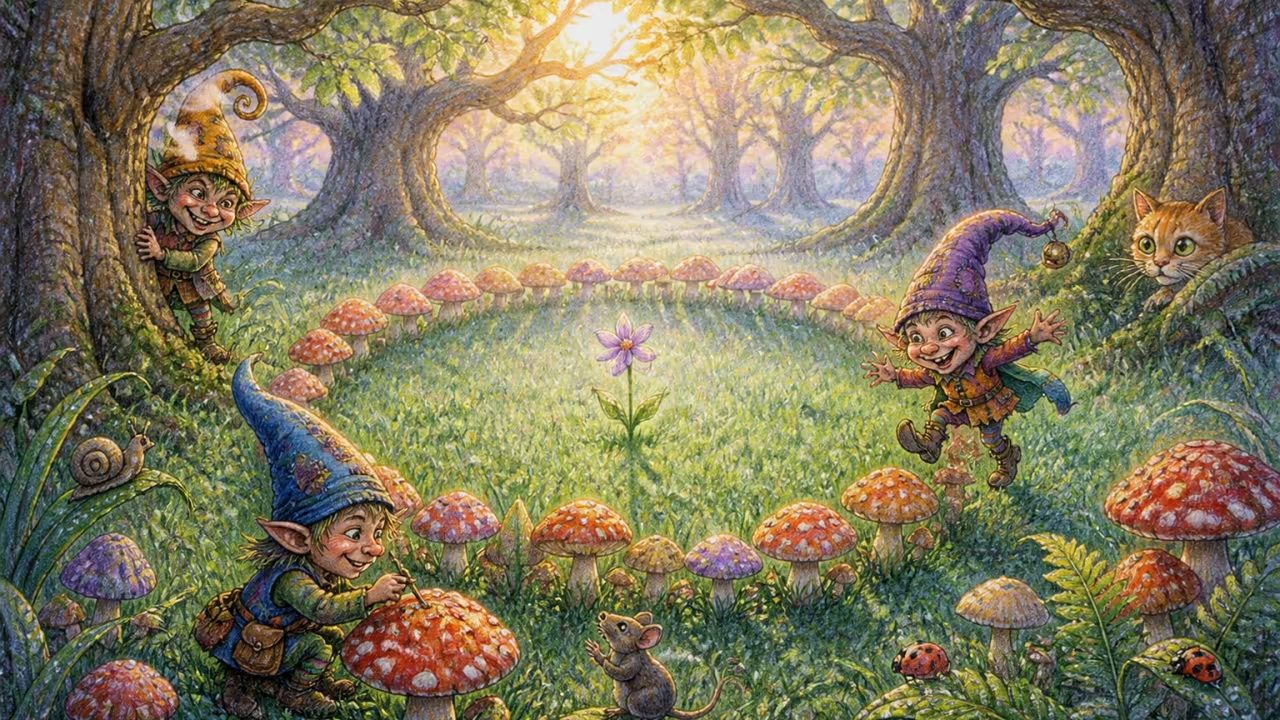
Folklore isn't just stories. It's accumulated observation, passed down through people who actually watched. And for centuries, those living near meadows and forests documented something that biology took a long time to explain on its own terms: perfect circles of mushrooms.
Round, complete, appearing overnight in fields that were bare the evening before. Across Britain, Ireland and Europe they had one name: fairy rings. The place where fairies dance. Don't step inside. Science caught up eventually with its explanation: the expanding edge of a fungal mycelium growing outward from a central point. Accurate. But the question folklore had been asking for centuries wasn't "how do these mushrooms grow?" It was "why do they grow like that?" Biology is still looking at the ceiling on that one.
Then there are the lights. Will-o'-the-wisps. Small floating flames appearing over marshes and meadows on humid nights, vanishing if you get too close. Chemistry has its version: spontaneously igniting methane gas. Folklore has its version: it's the fairies, leading you exactly where they want you to go. Both can be true at the same time. The world is large and sometimes plays games.
Do fairies really exist?
We exist the way everyday joy exists: undeniably real to anyone who feels it, invisible to anyone who hasn't learned to pay attention. We're a presence documented in every human culture that lived in genuine contact with nature. We're not a metaphor, but we're not photographable either. Both things can be true at once without anything breaking.
What we can say, with the calm of something that has been around long enough to know: the cultures that stopped believing in us also stopped listening to themselves in forests. We don't think that was a good trade.
Why children can see us and adults mostly can't
That question has its own article, because it deserves the room: why children can see us and adults can't covers it properly. The short version: it's not that adults are smarter. They've learned to filter. Some filters are useful. Some are a loss.
How do you know if a fairy is near?
The signs folklore documents across every tradition are consistent: small flowers appearing where you didn't plant anything, the smell of damp earth indoors when it hasn't rained, objects that shift and then quietly return to their place, and that particular warmth in a room that the thermostat can't explain. These aren't coincidences stacking up. They're a language.
What no tradition disagrees on: fairies don't announce arrivals. If we're near, you feel it in the texture of the ordinary, not in any dramatic appearance. Real magic rarely gives warning.
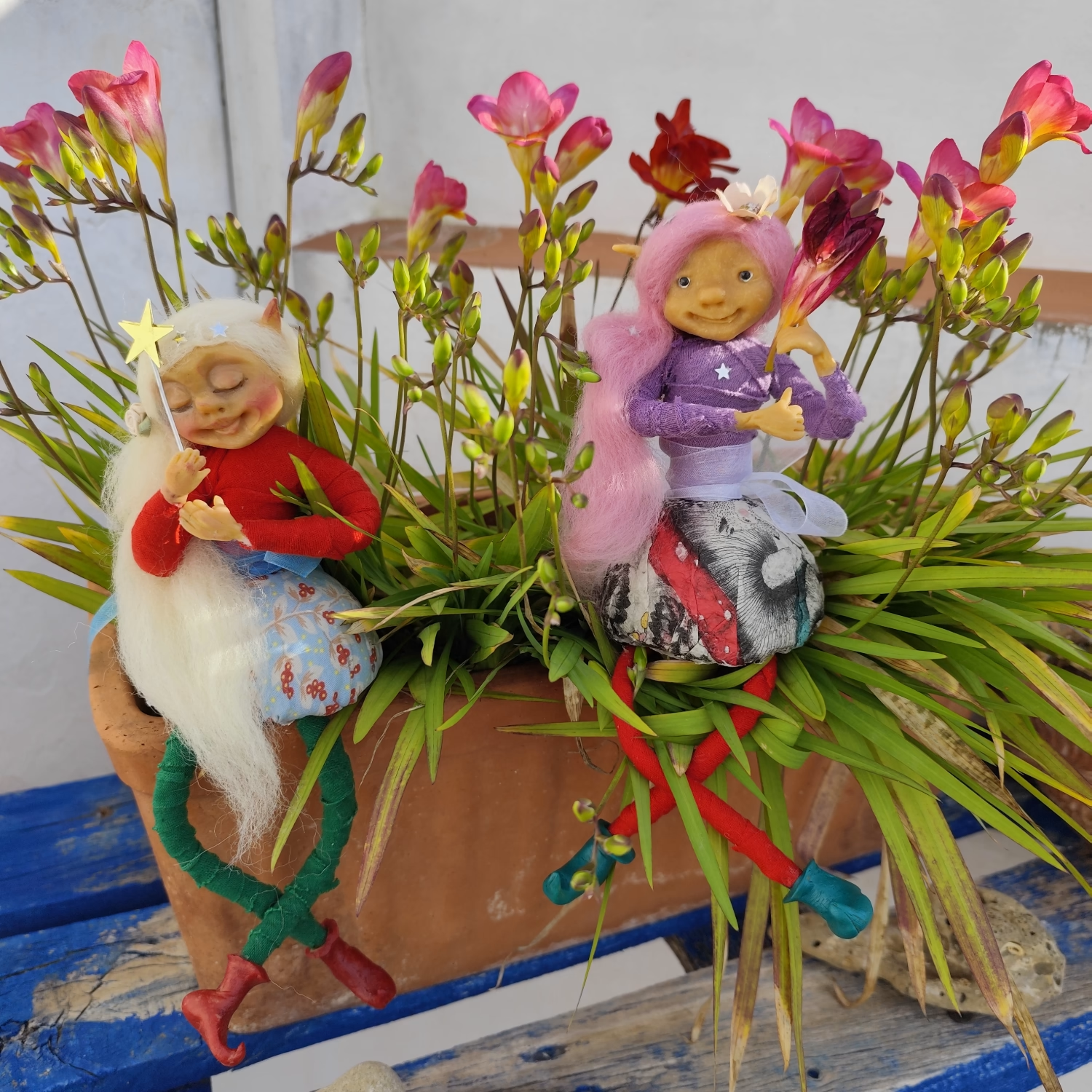
If you want to understand what kinds of fairies exist and how they differ from each other, the article on the differences between Brownies, Fairies and Magikitos gives you the full picture. And if you want that presence to have something tangible to look at, in our fairies section you'll find the companions Carmen crafts by hand in Taramundi, one at a time, with the patience that lets each piece carry something real.
Do we exist? Completely. We just prefer it when you ask while looking up rather than typing into a search bar at three in the morning.