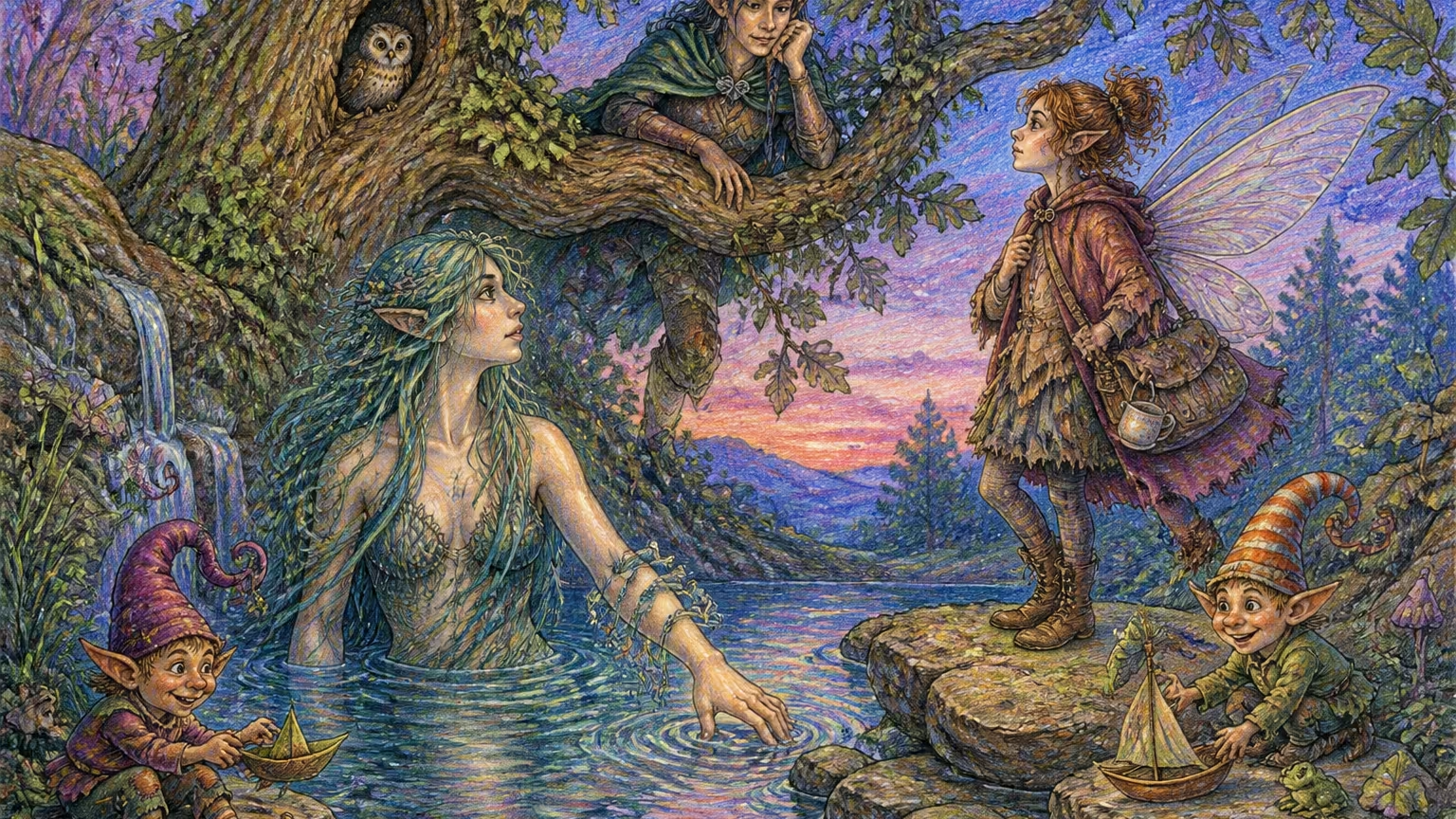
People call us nymphs. They call us elves. And sometimes, for good measure, they call us mermaids.
We understand that anything feminine and magical tends to get lumped into the same drawer of the collective imagination. But here, warmly and without hard feelings, we are going to set a few things straight. A nymph is not a fairy. Confusing them is like confusing Greek food with Celtic food because both use herbs.
There is a real difference. And it is actually interesting.
What a nymph actually is
In Greek mythology, a nymph is not an independent creature. She is a divine manifestation of nature. Every river, every tree, every mountain, every meadow has its own. When the tree dies, the dryad who lived in it dies too. When the river dries up, the naiad disappears. The nymph and her place are the same thing.
There were several families. Naiads governed fresh water: rivers, springs, lakes. Dryads lived in trees, especially oaks. Oreads were mountain nymphs. Nereids (fifty daughters of Nereus) inhabited the sea. And more: nymphs of valleys, pastures, marshes.
The key point: all of them were semi-divine. They belonged to the fabric of Olympus, though on a lower rung. Zeus summoned them, gods courted them, heroes encountered them on journeys. They were not autonomous. They had no court of their own, no laws of their own, no decisions independent of the Greek divine order. They were, in that sense, extensions of divinised nature. Beautiful, powerful and fascinating, but without their own agenda.
Fairies: where they come from
Fairies come from an entirely different place. Their lineage is Celtic, specifically Irish and Welsh, though they later spread across Western Europe and absorbed local traditions along the way.
The Tuatha Dé Danann, the tribe of the goddess Dana, ruled Ireland before humans arrived. When humans (the Milesians) came and defeated them, they did not disappear. They withdrew under the hills, into the síde, and continued to exist there. With their civilisation intact. With their kings and queens, their courts, their laws, their internal conflicts, their alliances and their grudges.
That is what fundamentally separates the fairy from the nymph: autonomy. The fairy has her own civilisation, her own conflicts, her own sense of honour. She is not tied to any place, not subordinate to any external pantheon. She is free to move, to meddle in human affairs when she chooses, to reward or punish according to her own judgement. The Seelie Court (generally benevolent) and the Unseelie Court (capricious and dangerous) are fairy government. There is no equivalent in the world of nymphs.
What sets fairies apart from nymphs?
The main difference is cultural origin and degree of autonomy: nymphs are Greek divine spirits tied to specific places (every river, tree or mountain has its own), while fairies are beings from Celtic folklore with their own civilisation, royal courts and a will independent of any god.
Three key differences that almost no one explains:
First: the nymph is about nature as divinity. The tree is sacred because the dryad lives in it. The fairy does not represent nature. She lives alongside it, inhabits it, knows it intimately, but has her own agenda apart from any forest.
Second: nymphs are almost always feminine and fairly predictable in their role. Fairies include beings of all kinds, with radically different personalities, from the domestic Brownie who cleans the kitchen at night to Queen Mab who leads armies.
Third: encountering a nymph in Greek mythology is generally a nature experience, sublime and impressive. Encountering a fairy in Celtic folklore can mean anything: they help you, trick you, carry you to their world for a hundred years, or teach you something that changes your life. Fairies are unpredictable. Nymphs, not so much.
How they got mixed up (and who is to blame)
The real mess started during the Renaissance. Italian humanists and English poets of the fifteenth and sixteenth centuries were great admirers of classical Greek and Roman literature, full of nymphs and satyrs. At the same time, fairy folklore was very much alive in the oral traditions of Ireland, Wales and England.
When Renaissance poets wanted to write about magical feminine creatures of nature, they used classical and folkloric vocabulary interchangeably. Edmund Spenser in "The Faerie Queene" mixes Celtic elements with classical aesthetics. Shakespeare does the same. The result: two completely distinct traditions started speaking with the same vocabulary and the same visual imagery.
The Romantics of the nineteenth century finished the job. They loved everything mysterious and supernatural and did not much care about mythological precision. A water nymph and a river fairy seemed like the same thing to them. And when Disney came along and turned everything into animation, there was no going back: the line between nymphs, fairies, elves and mermaids was erased for the generations that followed.
The elf question (and why they end up in the same drawer too)
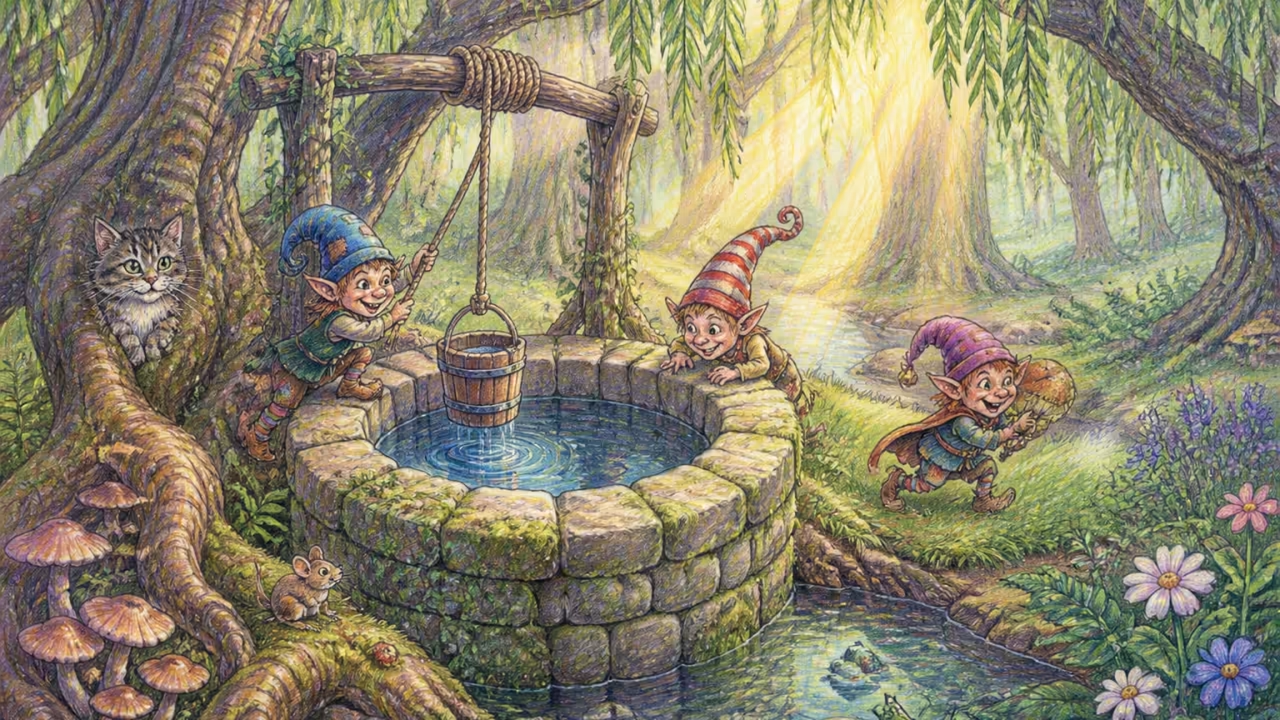
The Norse álfar are yet another separate category. In original Scandinavian mythology, elves were beings of light (ljósálfar) or darkness (dökkálfar), with a status close to divine and a nature similar to the aesir gods. They were not small or mischievous. They were majestic and powerful.
The problem came in medieval England, where "elf" and "fairy" began to be used as synonyms in popular texts. By the sixteenth century they were practically interchangeable in common language. Tolkien, who read all of this with a philologist's eye, knew this perfectly well, and that is why he spent decades building an elvish mythology that recovered the original Scandinavian grandeur. His Elves are tall, immortal and majestic. They are not Tinkerbell.
The distinction worth keeping: the original Norse elves are closer to gods than to fairies (more static, more divine, less mischievous). Celtic fairies are closer to a parallel civilisation running alongside the human one (more dynamic, more unpredictable, more involved in everyday affairs). Greek nymphs are nature itself made personal. Three different things.
Are Magikito fairies closer to fairies or nymphs?
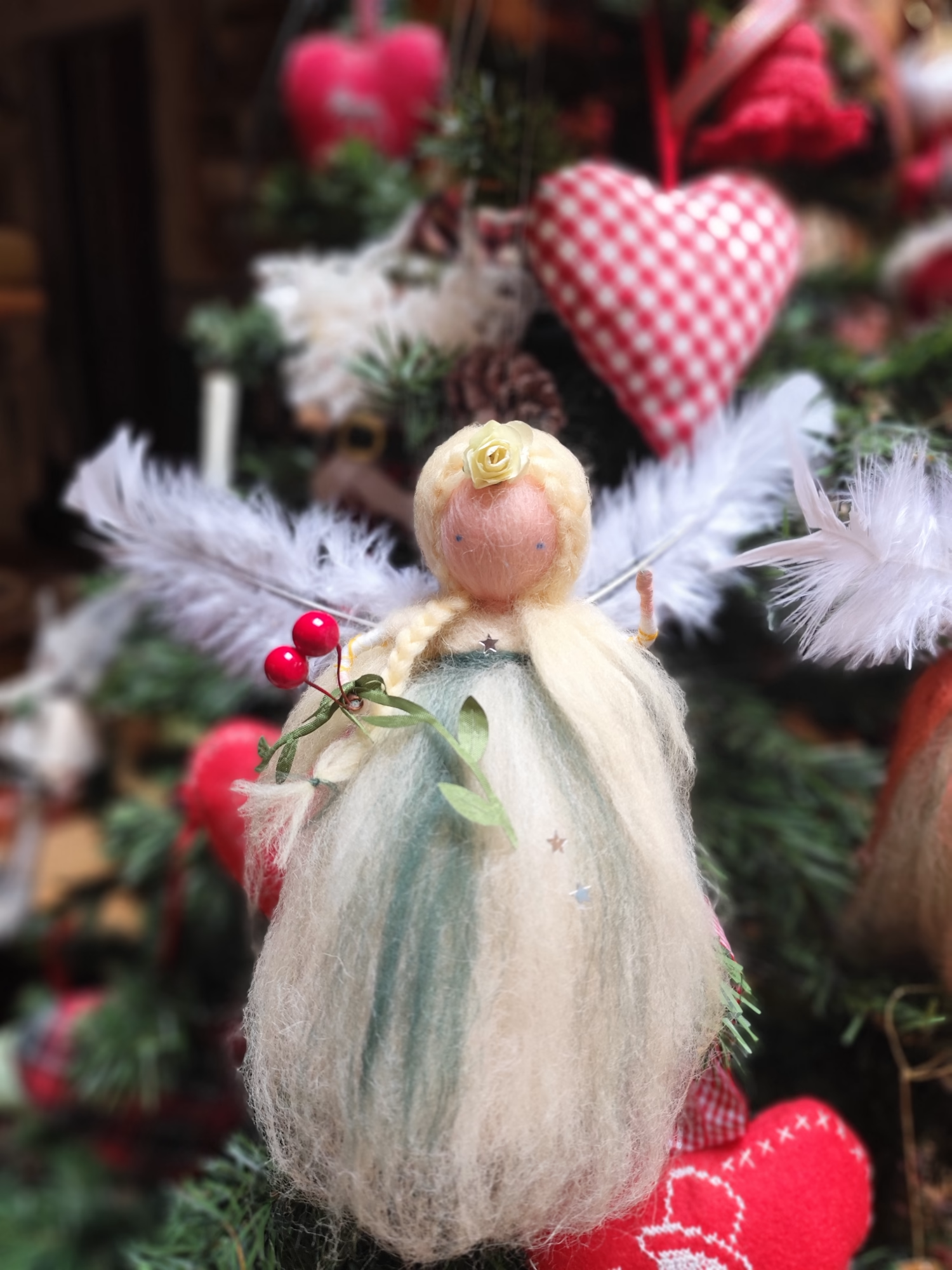
Magikito fairies are one hundred per cent fairies: they are not tied to any specific place, they have their own personality, missions, quirks and a character that answers to no Olympus. They are autonomous beings in the purest Celtic tradition, brought to life in wool and care by Carmen's hands in Taramundi.
Each one has her story, her name, her way of seeing the world. No two are alike. They are not bound to a tree or a river. They can accompany you in a city flat just as well as in a forest cabin. That level of individual autonomy and personality is a marker of the fairy, not the nymph.
What they do share with nymphs is the love of nature and a connection with living things. But in fairies, that connection comes from choice, affinity, personal character. Not from being physically bound to a place. It is the difference between living in the forest because you love it and being the forest.
What connects them all
Nymphs, fairies and elves are not the same thing. But they are not unconnected worlds either. All three traditions share something deep: the conviction that nature is not an inert backdrop. That there is something alive and intelligent in the trees, in the water, in the hills. That the world has more layers than we see at first glance.
The Greeks called it nymphs. The Celts called it fairies. The Norse called it álfar. The Japanese call it kodama. The name changes. The intuition is the same: nature has inhabitants. And it deserves respect.
If you want the full history of fairies, from the Celtic Sidhe to today, Fairies in History covers it in full. And if you're wondering what sets a fairy apart from a Brownie, this piece sorts that out. The Magikito fairies have been waiting for centuries. Without hurry. Which is another thing that nymphs and elves are not quite so good at.