Everyone knows the fairy godmother. The pale blue bubble gown, the star-tipped wand, the pumpkin carriage, the "bibbidi bobbidi boo" etched into every brain since age five. Disney painted her so clearly that we forgot she didn't invent her.
The truth is that we fairies have been attending births, blessing children, and weaving destinies long before cinema existed. Long before paper existed. And the original version is considerably more interesting than the carriage.
Where the fairy godmother tradition actually starts
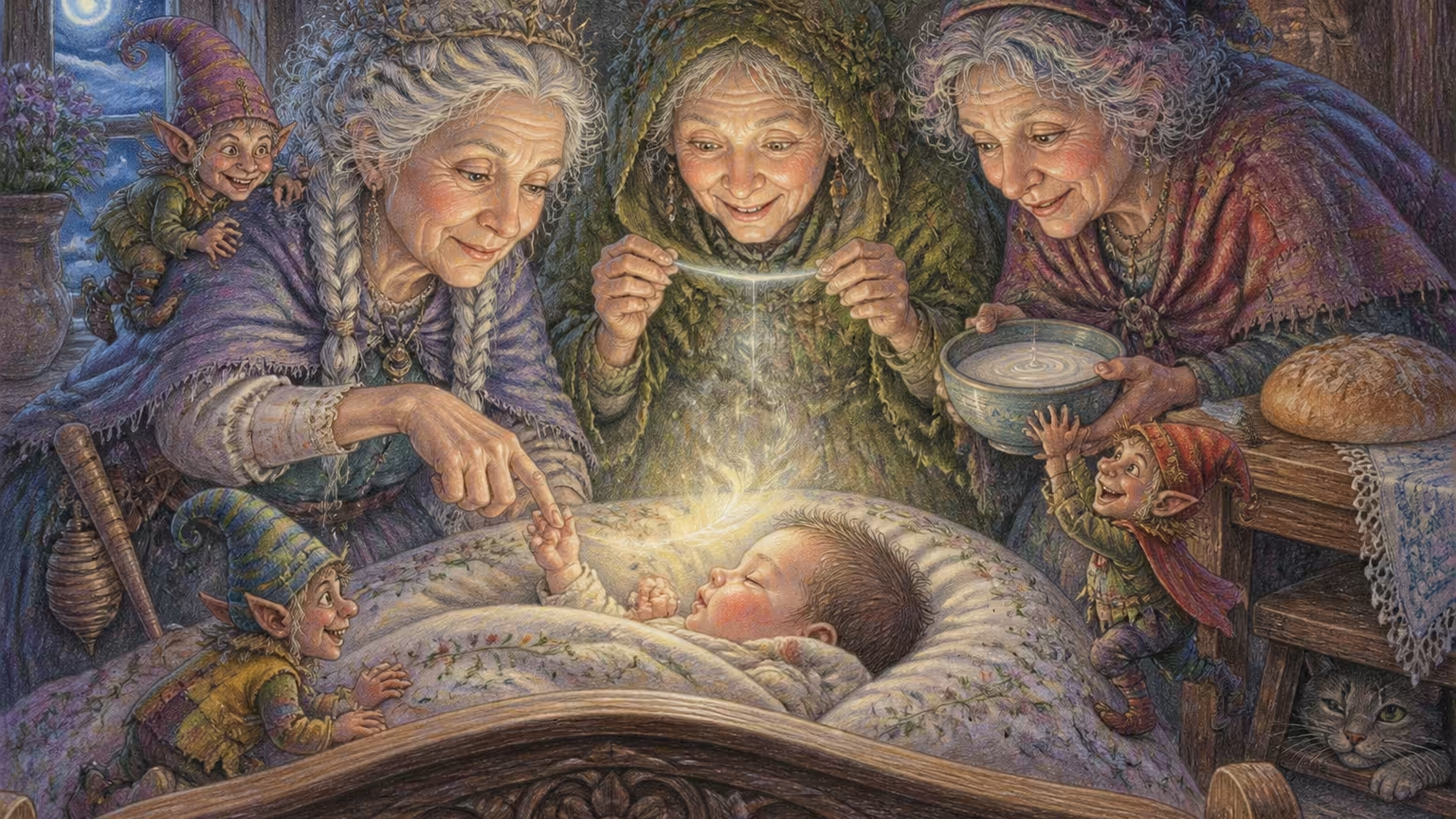
Long before Perrault and long before Disney, a remarkably consistent belief existed across Europe: on the night of a birth, mysterious women would come to visit the cradle. Not neighbours. Not midwives. Something else entirely.
In ancient Rome they were called the Parcae: three figures who spun, measured, and cut the thread of every life. Their visit to the newborn was the most important the child would ever receive, and receiving those ladies well was not optional. The Romans understood that fate doesn't negotiate, but you can at least honour the moment it arrives.
In Celtic tradition, the beings who appeared at births had different names by region: fadas, dames, the Good Ladies. In the British Isles there were fairy women who attended royal births. In Welsh tradition, the Tylwyth Teg. In Irish mythology, the Tuatha Dé Danann. In every version the mechanism was the same: these beings arrived when the child was born, bent over the cradle, and gave gifts, destinies, or curses, depending on whether the host had had the basic courtesy to leave food and wine on the table for them.
Being polite to fairies isn't superstition. It's long-range contractual protocol.
What linked all these traditions was one idea: the birth of a human being is too important to let pass without someone with more perspective than the parents having a look. Someone who can see beyond the immediate. Someone who knows what this child brings with them.
Who actually invented the fairy godmother as we know her?
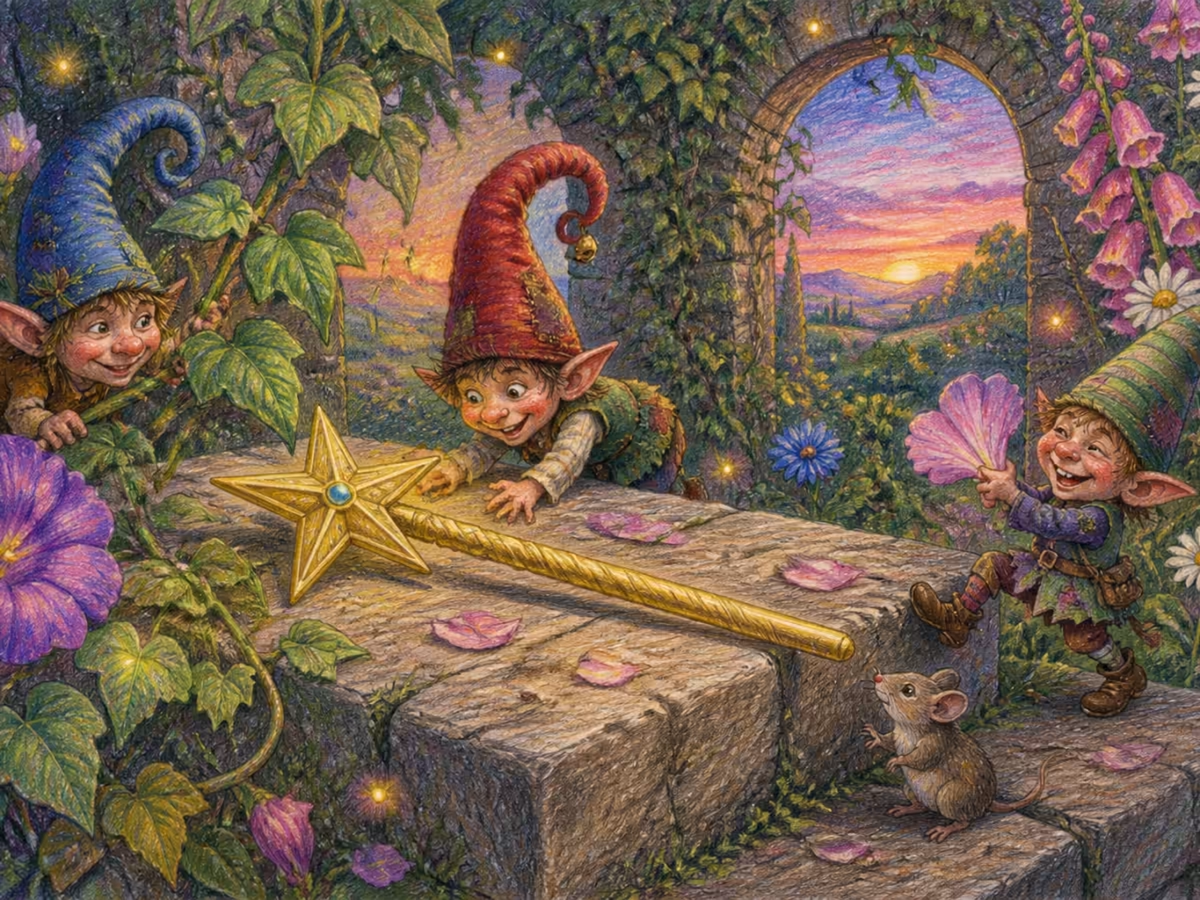
Charles Perrault, in 1697, with his tale Cendrillon. Before Perrault there were fairies who attended births, gave gifts, and shaped destinies, but the exact combination of "godmother + wand + transformation + carriage" is his work.
Perrault was a French writer of the seventeenth century with the literary instinct of someone who knows that oral folk tales have been floating without anchor for centuries. His work was to gather them, polish them, decide what to keep and what to invent, and fix them in writing. In Cendrillon appeared for the first time the godmother as a dispenser of magical gifts, the transforming wand, and the "at midnight the magic ends" mechanism. Perrault didn't invent Cinderella, who already had versions centuries old. But he did invent the godmother with the wand.
What came before him was stranger. In Giambattista Basile's Italian version from 1634, La Gatta Cenerentola, there is no fairy godmother at all. The role is played by the spirit of the dead mother, who guides and protects her daughter from the other side. Before Perrault's wand arrived, the magical power was the love of the dead. The protection came from the bond, not from applied magic.
The sixteenth-century Spanish version of Cinderella doesn't have a fairy either. There's a little calf that helps the protagonist, following the logic that animals can also be guardians. Middle Eastern versions of the same story featured a tree planted on the mother's grave. The oldest known Chinese version, from the ninth century, has a fish. The starting point is always the same: a being in need who has someone or something watching over them from beyond the visible. What exact form that someone takes depends on the culture telling the story.
What Disney did to the godmother (and why we get it, even if we mourn it)
The fairy godmother of the 1950 film is the perfect synthesis of the twentieth century. Plump, cheerful, kind-hearted to a fault, with a wand that obeys at the first touch. Nobody further from the Roman Parcae who decided mortal fates with Olympian indifference. Nobody further from the Celtic fadas who could bless or ruin a birth depending on whether anyone had thought to leave them a bowl of milk.
Disney needed a character useful to the plot: someone to solve Cinderella's second-act problem, give her what she needed to go to the ball, and create the clock tension. The fairy godmother as a wish machine is a flawless narrative device. As a description of what fairy godmothers actually are, it stopped a little short.
What got lost in that simplification is the most interesting part: in the oldest tradition, the godmother doesn't come to give you what you ask for. She comes to recognise you. To see who you really are and make sure the world sees it too. The magic isn't the pumpkin. The magic is the moment when someone with perspective says "this creature matters" and the universe begins to agree.
Do fairy godmothers have real powers?
Yes. Just not the powers Disney taught you to expect. The fairy godmother's magic isn't about transforming pumpkins: it's the magic of being seen by someone who truly looks at you. Recognition. Presence. The attention of a being who has been around long enough to know the value of what you have.
In folkloric terms, the power of fairy godmothers always had to do with the gift of perspective. Not strength, not wealth, not wands. The long gaze. The Parcae didn't do favours casually. The Celtic fadas didn't arrive at the cradle to please the parents. They came because the birth of a human being deserves to be witnessed by someone with no particular hurry.
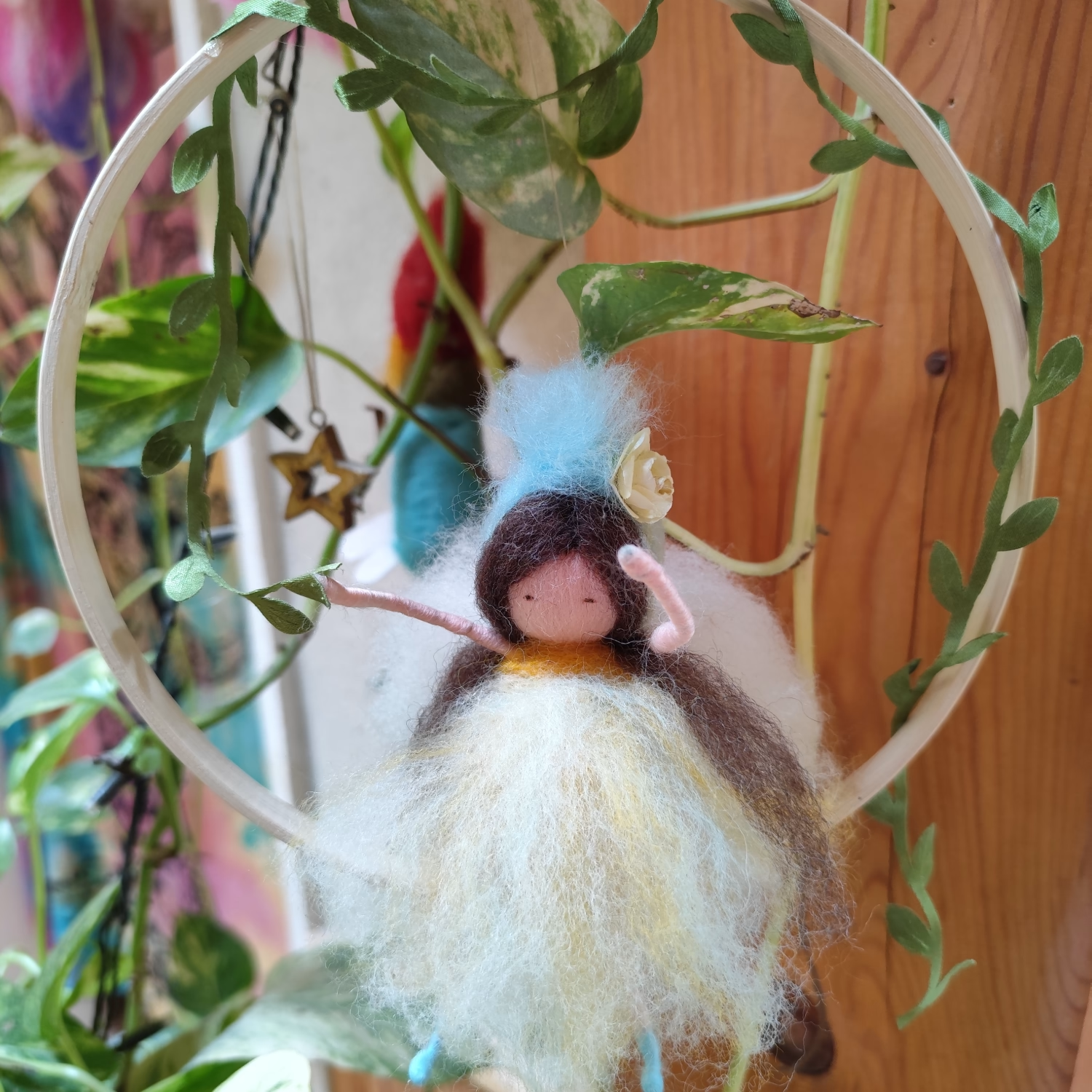
We, the Magikito Fairies, are heirs to that tradition. Not in the sense that we can turn anything into a carriage. But in the sense that we believe, with the conviction of beings who've been doing this for millennia, that the presence of something that looks at you with intention matters. That having something watching over the good energy of your daily space isn't superstition. It's ancestral memory of what actually works.
And if you want the full story of how we got here, from Celtic forests to the shelves of homes, the article on the history of fairies has quite a bit to say about it.
The name that says it all
The word "godmother" combines "god" (in the spiritual-bond sense of godparent) with "mother". A second mother. The one who is there when the mother can't be. It isn't a decorative title. It's a function.
In medieval Christian Europe, the baptismal godmother was a legal and moral obligation. If the parents died, the godmother raised the child. She was the safety net of the extended family, the guarantee that no child was left alone in the world. The idea that the fairy godmother comes to protect and guide isn't a metaphor. It's the literal description of what a godmother does, elevated to the magical plane.
The magic that fairy godmothers have is precisely this: not creating something from nothing, but being there when it matters. Being the constant, quiet, completely solid presence that doesn't leave even when the story gets complicated in the second act. Pumpkins are a minor detail.
If you'd like to explore the fairy world further, and perhaps have one at home who doesn't require you to be punctual for midnight, you know where to start. There are also fairy colouring pages, for when the artistic impulse of the moment needs expressing.