There are circles drawn in the earth that predate every map, every field guide, every rational explanation. We know them well. You call them fairy rings, and you have spent centuries standing at their edge, caught between wanting to step inside and some older, wordless part of your brain that says: do not.
Listen to that part.
Fairy rings are rings of mushrooms that appear without warning across meadows and forest clearings throughout Europe. The folklore that surrounds them is one of the oldest and most geographically consistent in Western tradition. What happens inside a fairy ring, according to every culture that ever told the story, is the same: time stops being yours.
What Is a Fairy Ring
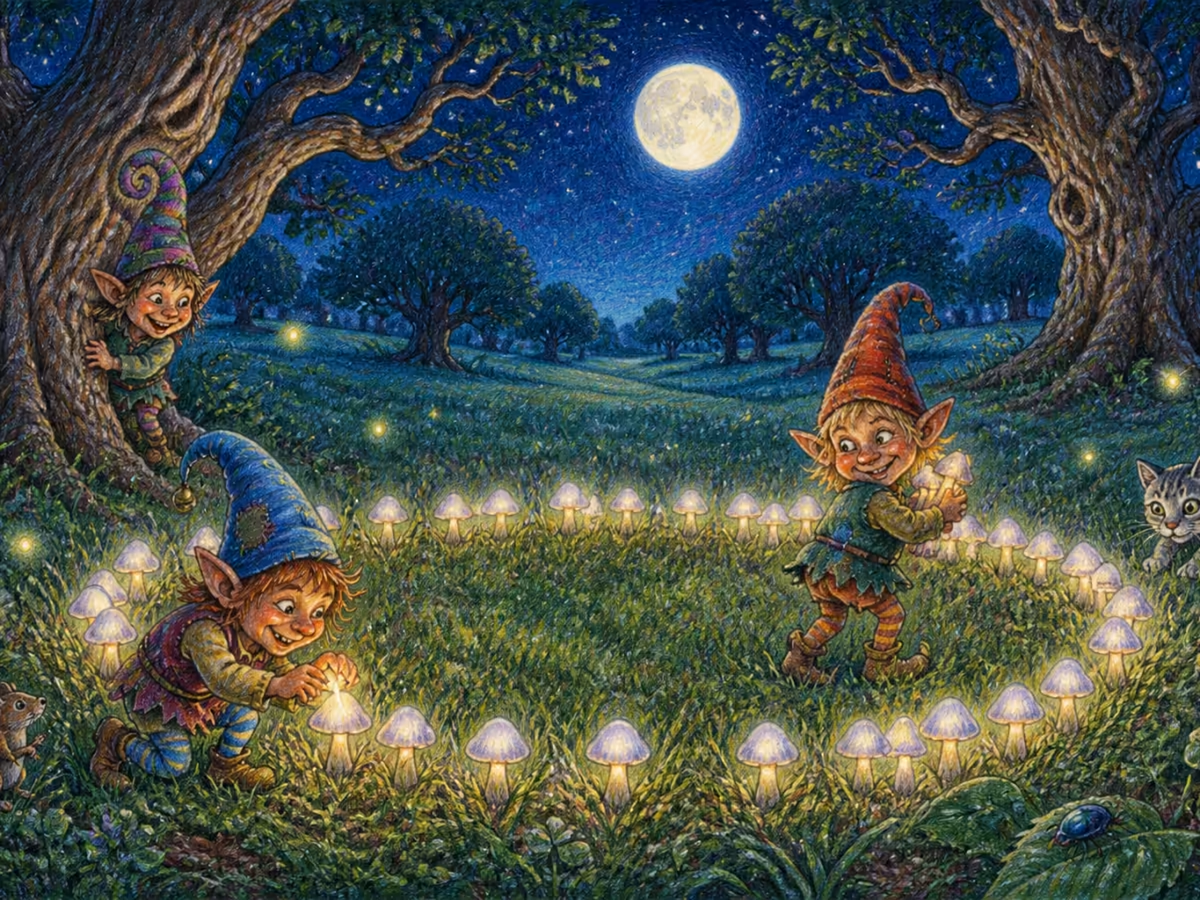
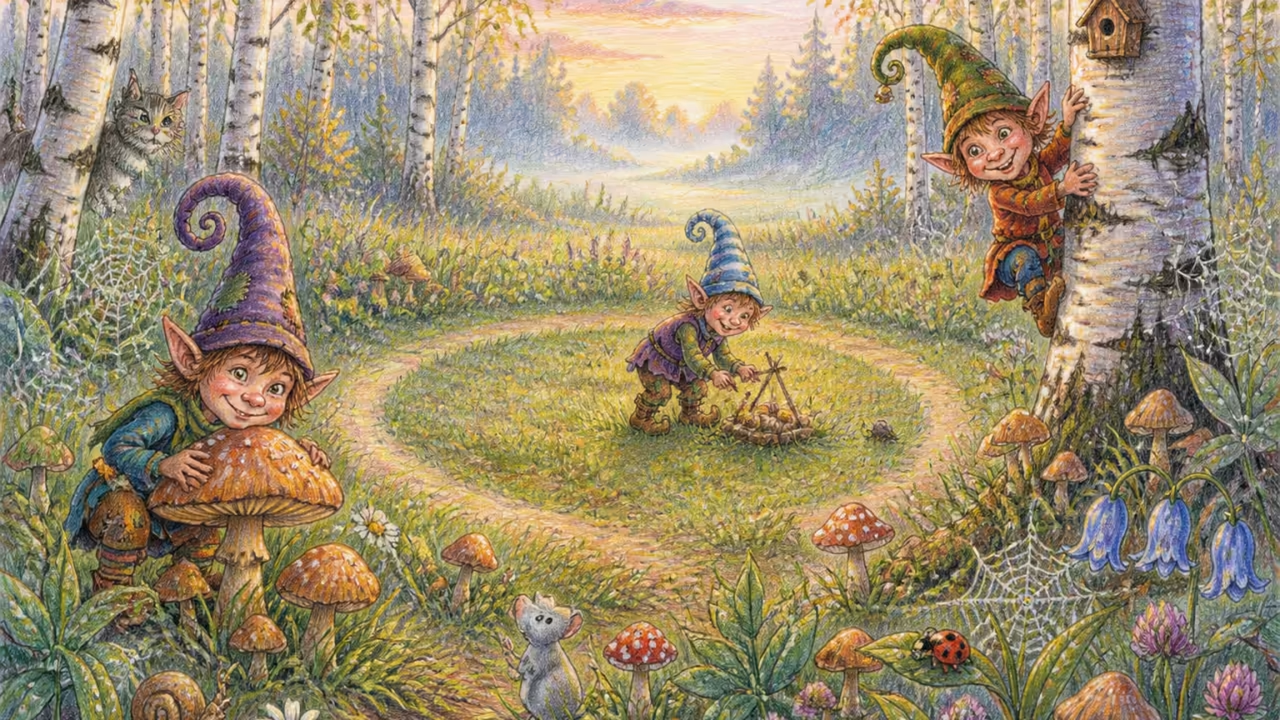
A fairy ring is a circular growth of mushrooms (sometimes a few meters across, sometimes large enough to enclose a house) that appears with a geometric precision that feels wrong for something you call spontaneous nature. The rings can persist for decades, expanding slowly outward as the inner section ages and dies. Some of the largest documented rings in Europe are estimated to be several centuries old.
The mycological explanation exists and is genuinely interesting: the mycelium of certain fungi (Marasmius oreades is the most common culprit in European meadows) grows radially outward from a single origin point, depleting nutrients inward as it expands. The visible mushrooms appear only at the active outer edge. The inner grass is often darker or more lush due to nitrogen released during decomposition.
That is what biology says. Folklore was saying something else, centuries earlier, and with far more urgency.
The European Map of the Forbidden Circle
The breadth of fairy ring folklore across Europe is one of those facts that earns a second look. We are not talking about a regional myth that survived through geographic isolation. We are talking about a belief system that runs from Ireland to Italy, from Scandinavia to the Iberian Peninsula, with minor variations but the same essential warning.
In the British Isles, the fairy ring is where fairies dance at night. Entering the ring means being compelled to join the dance, unable to stop, until either someone pulls you out or time does what it always does inside: stretches, compresses, and eventually steals years you were not planning to give away.
In Germany, Feenringe carried associations with both fairy dances and witches sabbaths, a doubling of supernatural significance that kept them reliably avoided. The Scandinavian älvdanser (elf dances, in Swedish tradition) left exactly these rings as evidence of their passage, and the prohibition against entering applied just as strictly.
In France, the ronds de fées were zones specifically kept away from livestock, not out of blind superstition but because animals that grazed the inner grass became ill. Folklore attributed this to magical contamination. Mycology would eventually explain it with the chemistry of active mycelium. The observation predated the explanation by approximately a millennium.
Southern European traditions, Italy prominent among them, connected mushroom circles with nature spirits and temporary portals between states of time. The consistency of this belief across cultures that had limited contact with one another is not something we would ask you to ignore.
What Happens Inside
The most consistent warning in European fairy ring folklore is not death. It is time.
Thomas the Rhymer, the semi-historical Scottish figure from the thirteenth century, reportedly spent seven years in the fairy realm. He believed it had been a few days. Oisín, the Irish warrior who visited Tír na nÓg, lived centuries among the fair folk before returning to find his world had aged three hundred years in the moment he touched mortal ground.
These are not literary coincidences. They are the same warning encoded in narrative across independent traditions: inside the ring, time operates differently. A dance that feels like one night may be a year. An afternoon may be a century.
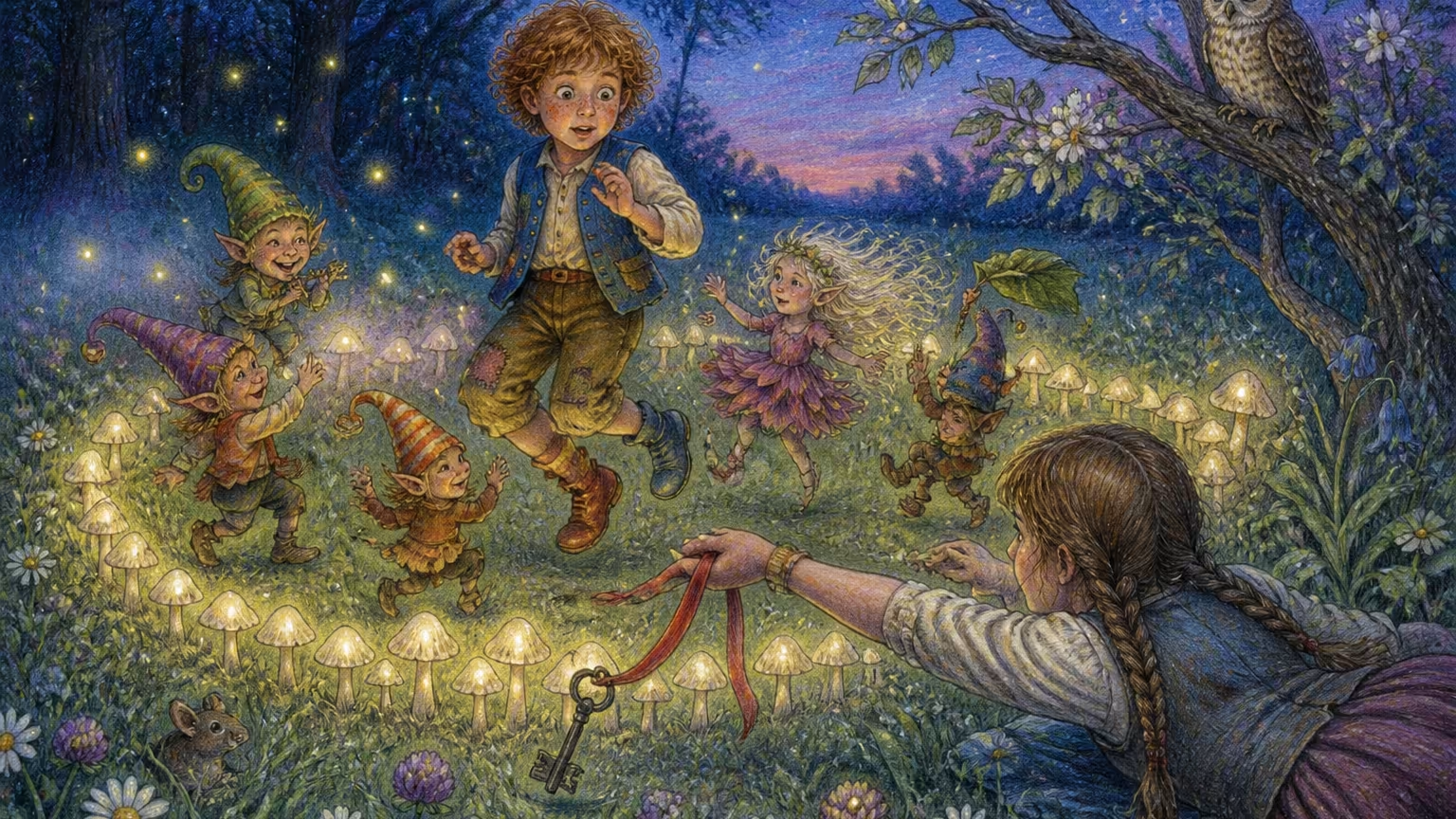
Welsh tradition adds a detail we find particularly elegant: a person trapped inside the ring can be freed if someone standing outside extends a hand, a rope, or any object that bridges the two states. The physical connection to the world outside the circle breaks the enchantment. Alone inside: held. With an anchor to the outside: free.
The Mushroom Connection
To understand fairy rings, you need to understand something about our relationship with mushrooms. It is not decorative. It is not accidental. And it is not something we are going to explain fully here, because that deserves its own space entirely.
For the deeper history of why magical forest beings and fungi appear together across every tradition that paid attention to the forest floor, the article on mushrooms and Brownies covers the symbiosis in detail. Fairy rings are, in a certain sense, the visible signature of that relationship written on the surface of the earth.
Why Do Mushrooms Grow in a Circle Inside a Fairy Ring?
The mycelium of certain fungi (Marasmius oreades being the primary culprit in European meadows) grows outward radially from a single origin point, consuming the organic material in the soil as it expands. Once the inner area is depleted, only the active outer edge produces visible mushrooms. This outer edge advances between 15 and 50 centimetres per year, which means the largest rings you encounter may be decades or centuries old. The notably greener, lusher grass sometimes visible at the inner edge or border of the ring comes from the nitrogen released as the mycelium breaks down organic matter. Folklore noticed before science: something invisible is working in there.
The Stories That Did Not Fade
There is something in the survival of these stories that earns a genuine pause. The fairy ring narrative persisted not because people were credulous but because the rings themselves kept appearing, kept behaving oddly, kept producing the same effects on livestock and vegetation that needed some kind of explanation. Folklore is the science of what does not yet have a name.
Anne Jefferies of Cornwall in 1645 is one of the most detailed documented cases: she claimed to have been taken by six small beings from a fairy ring, transported to a luminous realm, and returned, after which she reportedly developed healing abilities she used for the rest of her life. She was arrested for witchcraft. Her documented cures, according to records of the period, continued regardless.
Folklore is the science of what does not yet have a name. The fairy ring is one of its oldest, best-preserved theorems.
The mathematical certainty of the rings themselves (their geometry, their expansion rate, their effect on surrounding vegetation) sits in an interesting position between the biological explanation and the folkloric one. Both describe something real. They are simply describing different layers of the same thing.
How to Recognise One
Identifying a fairy ring in the field is straightforward if you know what you are looking at. The ring of mushrooms is the most obvious marker, but there are subtler signs: the inner grass may be darker or more exuberant than the surrounding meadow. The border zone sometimes shows a notably greener strip. In spring, before mushrooms appear, you may notice the colour difference in the turf before you notice anything else.
What European folklore consistently recommends when you find one: do not enter. What it recommends having on hand if for any reason you do: cold iron. The iron repellent against fairy enchantments runs through both Celtic and Germanic tradition with remarkable consistency. A nail in the pocket, a horseshoe in the hand. We say this without irony.
For a fuller guide on how to conduct yourself when you encounter us in the wild, the article on fairy deals and why you must never say thank you is the most honest guide you will find on this side of the veil.
What Happens to Someone Who Enters a Fairy Ring?
According to folklore: they become caught in fairy time, a state in which human hours and fairy hours do not correspond. One night of dancing may equal decades in the outside world. The return, if it occurs, typically brings disorientation, accelerated ageing, or an inability to separate what was real from what was not. The most widely documented folkloric remedy is intervention from outside: someone who has not crossed the ring's threshold extends a hand, a rope, or an object made of iron toward the person inside. That contact breaks the fairy bond. Without outside intervention, the person inside continues dancing. Cold iron, whether carried into the ring or thrown toward it, acts as a disruptor of the enchantment in both Celtic and Germanic tradition, and is the most commonly cited way to interrupt the hold of the ring and allow someone to leave.
The Ring as a Threshold
Everything these stories describe is ultimately about a border. Not danger in the violent sense. A threshold between two ways of experiencing time, space, and what you call reality. We do not draw those circles as traps. We draw them as markers.
And like all markers, what you do with them is up to you.
If fairy rings have opened something in you about how the forest world works, the forest fairies have much more to share about how we live, what we tend, and what we hope for from those who enter our territory with genuine respect.