Here's a question nobody quite asks. When someone helps you, what do you say? Thank you. When someone holds the door, what do you say? Thank you. It's the most automatic social reflex there is, so deep in the muscle memory that you don't even think about it anymore.
With fairies, that's exactly where things go sideways.
Not because we're rude. Not because we've decided to make life difficult. It's that "thank you" functions, in your economy of favours, as a closing seal. And we don't do closing seals. Once you get that, everything else falls into place on its own.
An Economy Without Currency
Humans have been refining exchange for centuries: barter, markets, money, contracts with signatures. A favour comes in, a favour goes out, someone's in debt, the debt gets settled, the account closes. Efficient and reassuring for beings who need things to have a defined beginning and end.
Fairies operate by a different logic. What you call a "favour" we call "being present in someone else's world." There's no favour that starts and no favour that ends. There's a coexistence that works or doesn't, depending on how you inhabit the space you share with us. When that space is tended, quiet, and open to everyday magic, things flow. That's not payment, not service. That's the natural rhythm of a relationship that's going well.
"Thank you" introduces the idea of a completed transaction. And a completed transaction is a closed relationship. We don't close relationships. We tend them, feed them, or let them quietly die out when a space no longer has room. But never with a handshake and "we're even."
What the Folklore Always Left in the Right Place
Folklore isn't entertainment literature. It's the accumulated record of generations watching what worked and what didn't. And what they noticed, from Ireland to Italy without coordinating, is remarkably consistent: if you want to keep the relationship going, leave something where we can see it. No witnesses, no words, no waiting to see if it was received.
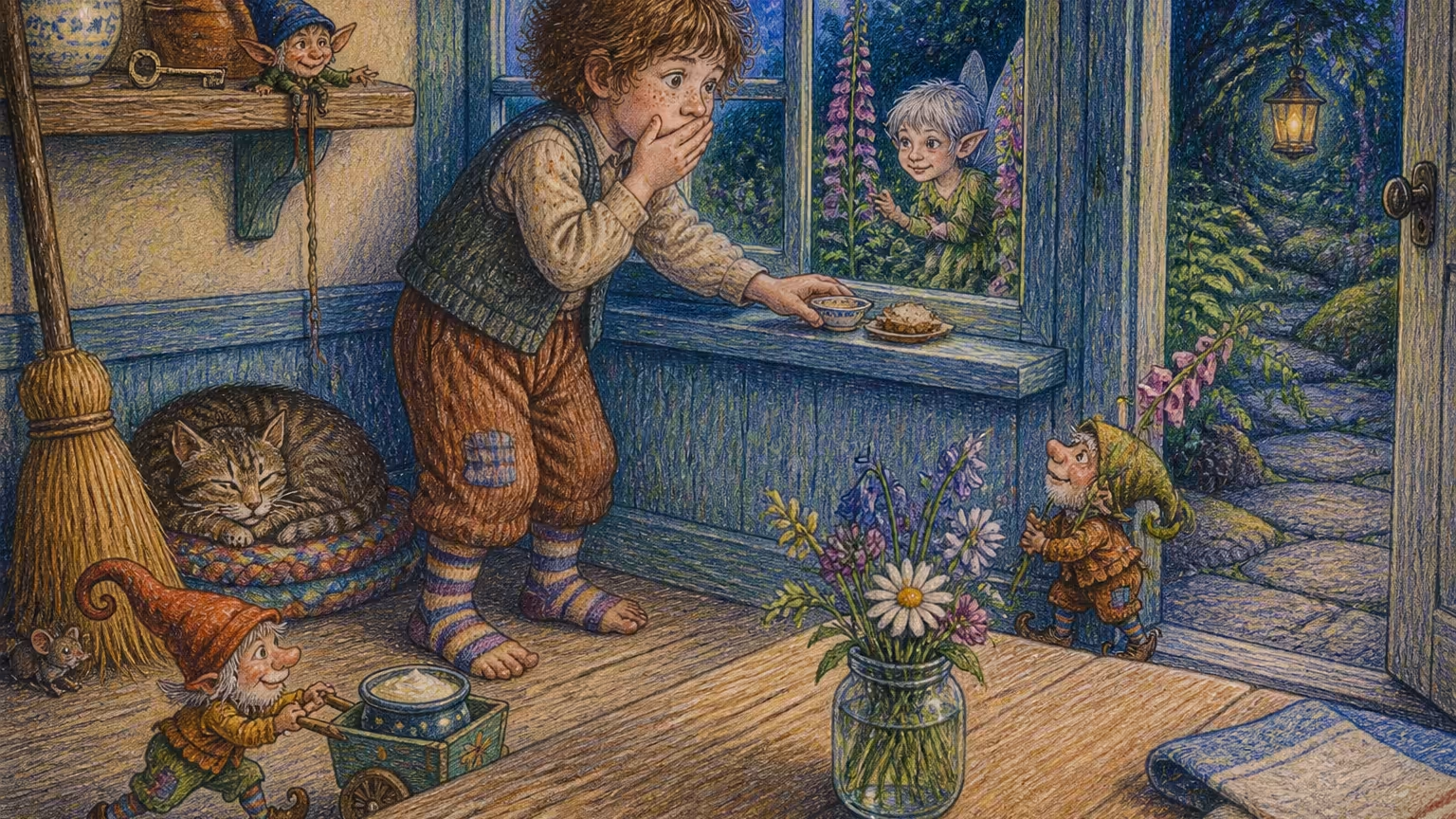
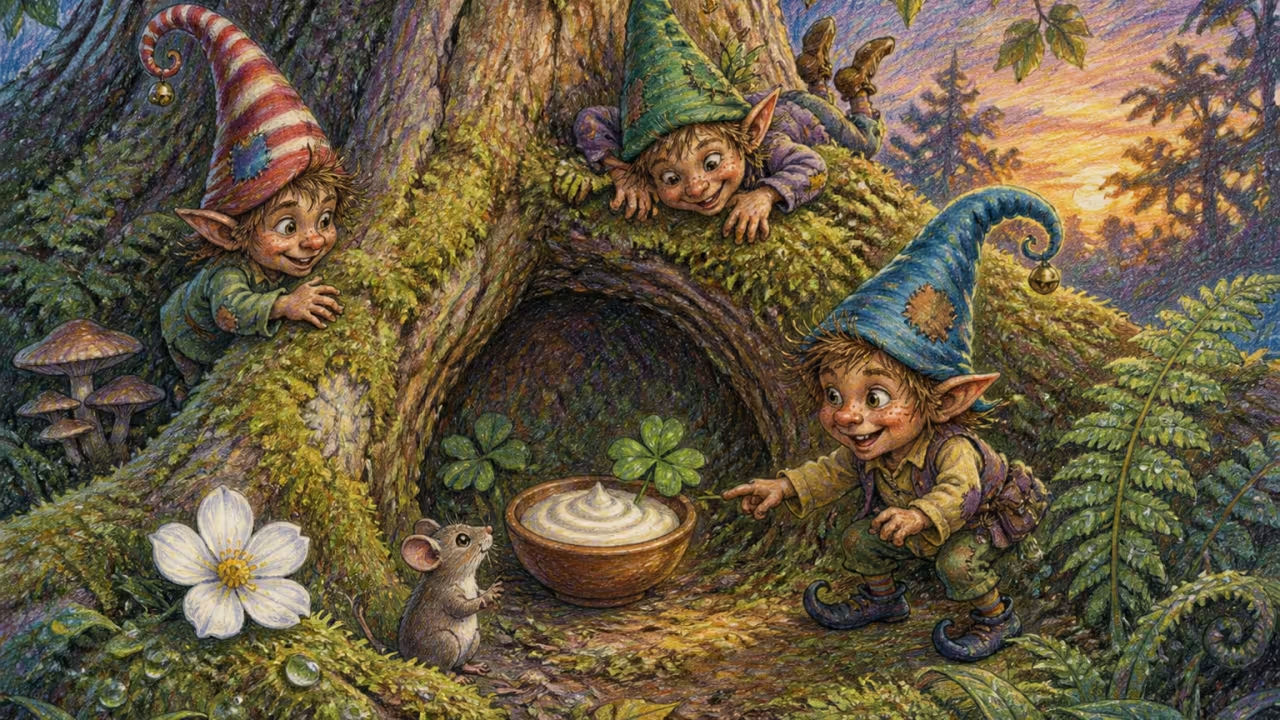
Fresh milk. Cream. A piece of unsalted bread. In Celtic, Scottish, Anglo-Saxon and Scandinavian folklore, the same offering menu appears again and again, with a consistency that already says something. In Scottish tradition, Brownies who helped quietly around the house would work overnight in exchange for a bowl of cream left on the hearth — and were deeply offended by formal thanks or any attempt at payment. In France, small wild-flower posies left at the threshold after dark. In Italy, the fate and household spirits have always preferred what in Naples is called "un gesto gentile": something pretty, placed with care in a discreet spot, no sender attached.
The common thread in every tradition: it's done in silence. No explanation, no expectation of an answer, no checking whether it arrived. That's the difference between an offering and a transaction. Transactions get confirmed. Offerings simply exist.
What's Worth Avoiding
The folklore also has its list of what breaks an otherwise working relationship. Not as threat — more as a map of what concretely gets in the way.
Cold iron first. Appears almost everywhere in Europe: unworked iron interferes with something that the word "magic" tries to name without quite getting there. Salt next: it preserves, fixes, closes. The opposite of what you want in a living space. Sustained synthetic noise. Active expectation that turns a space of coexistence into something that feels like surveillance. And the direct "thank you" delivered as a receipt, which we've explained.
None of this has to do with anyone's character. It's about frequencies. If you want to understand why different kinds of fairies react differently to these elements, the article on types of fairies: Seelie, Unseelie and the rest covers it with the depth it deserves.
Why Should You Never Thank a Fairy?
In most of European fairy folklore, saying "thank you" directly to a fairy closes the deal from the wrong side. The fairy wasn't helping you to finish a favour: she was choosing to be in a relationship of coexistence with you. A "thank you" signals that you read that as a service rendered and completed. The moment a fairy catches that interpretation, the relationship has a different quality to it. One that doesn't invite continuation.
What the folklore proposes instead isn't total silence — it's quiet reciprocity. You tend the space, you leave what you can, and you trust the relationship to run its course without needing to be named or sealed. In the language of fairies, that's worth infinitely more than any "thank you."
Fairy Godmothers Before Disney (How the Real Deal Works)
There's a reason the fairy godmother of real folklore doesn't appear when you call her. She appears when the relationship was already built, when the space had been tended long enough, when the person who needed help had already shown — without words — that they understood the deal.
The modern fairy tale version is a shortcut to fit the story on a page. The real tradition, which the article on fairy godmothers before Disney explains properly, speaks of a presence that has been in someone's life long before the moment of need. Not a service. A long relationship.
What Do Fairies Actually Like and Dislike?
Fairies are comfortable in clean, quiet spaces with unprocessed natural materials, soft light, and the kind of silence that isn't the absence of sound but the absence of urgency. What makes a space difficult is active expectation, materials that interrupt the natural flow of things (cold iron is the most documented case, salt the second), and above all the feeling of being watched with the intent to get something. Magic in an actively transactional atmosphere gets so uncomfortable that it prefers not to be there at all.
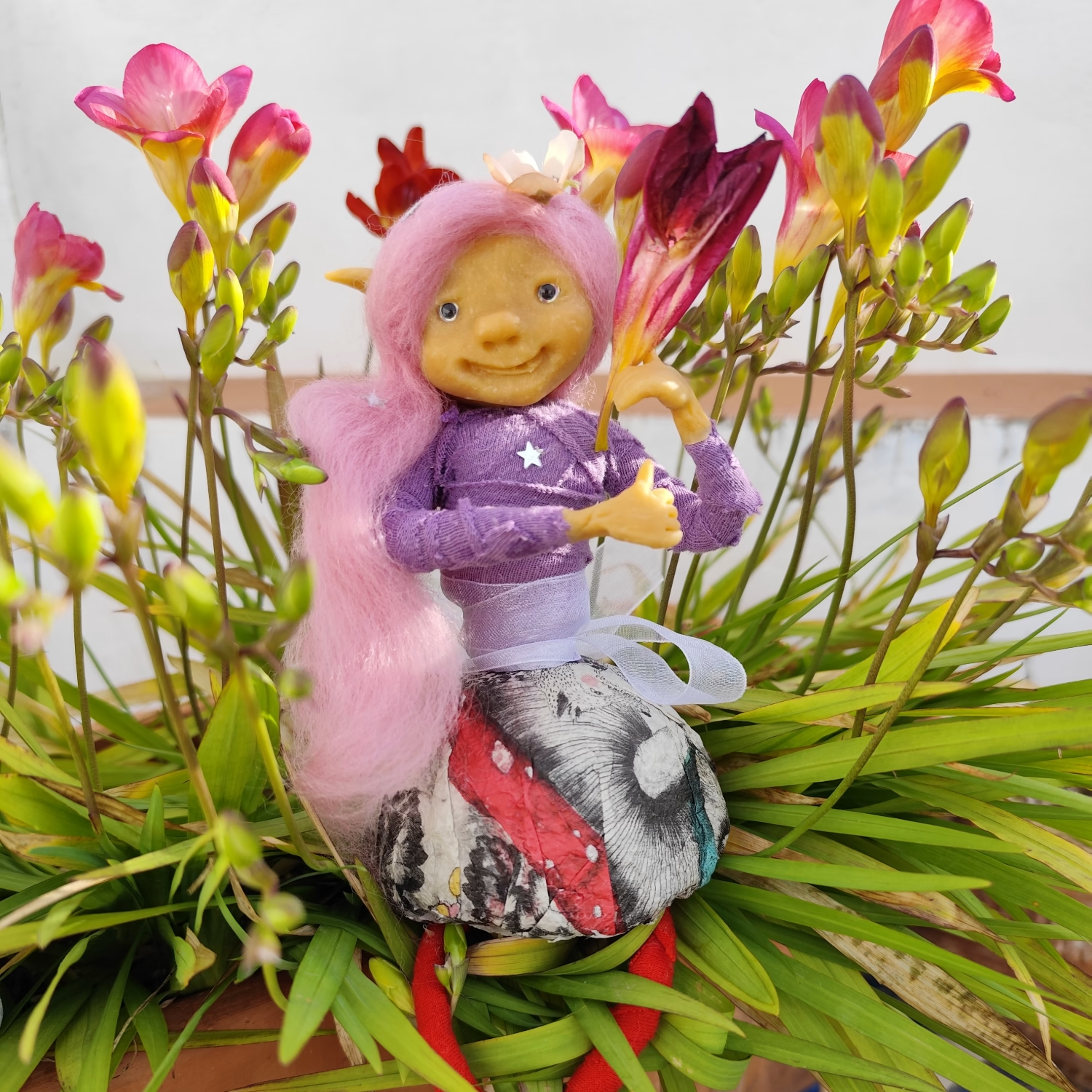
The Magikitos who live in homes are the tangible version of something that's been invisible for millennia: the presence of a fairy who chose that space not because it was perfect, but because it had something worth being around. If you're curious about which companion might feel at home with you, the Magikitos fairies section has the ones Carmen makes by hand, one by one, in Taramundi, where the deal with the forest has been held for centuries without anyone ever needing to say thank you. And if you want to fix that magic on paper, the magic fairies colouring collection is the deal made with coloured pencils.