The word "fairy" carries too much. It's a tiny container trying to hold centuries of European folklore, dozens of creatures with their own personalities, their own peculiarities and their own reasons for showing up or vanishing from your life. It's like putting "dog" on a bloodhound, a chihuahua and a wolf and expecting them all to behave the same. They don't. Two of them bite.
Celtic, Scottish, Irish, Welsh and Germanic folklore built a vast unwritten taxonomy of fairies over millennia. Nobody published it with an alphabetical index. It lived in oral tradition, in the names that grandmothers whispered to children so they'd know which kinds of fairies to greet respectfully and which to avoid without provocation.
Today, we're laying that taxonomy out for you. Because knowing the types of fairies isn't just folklore trivia: it's understanding that nature has always had more nuance than "good" and "evil".
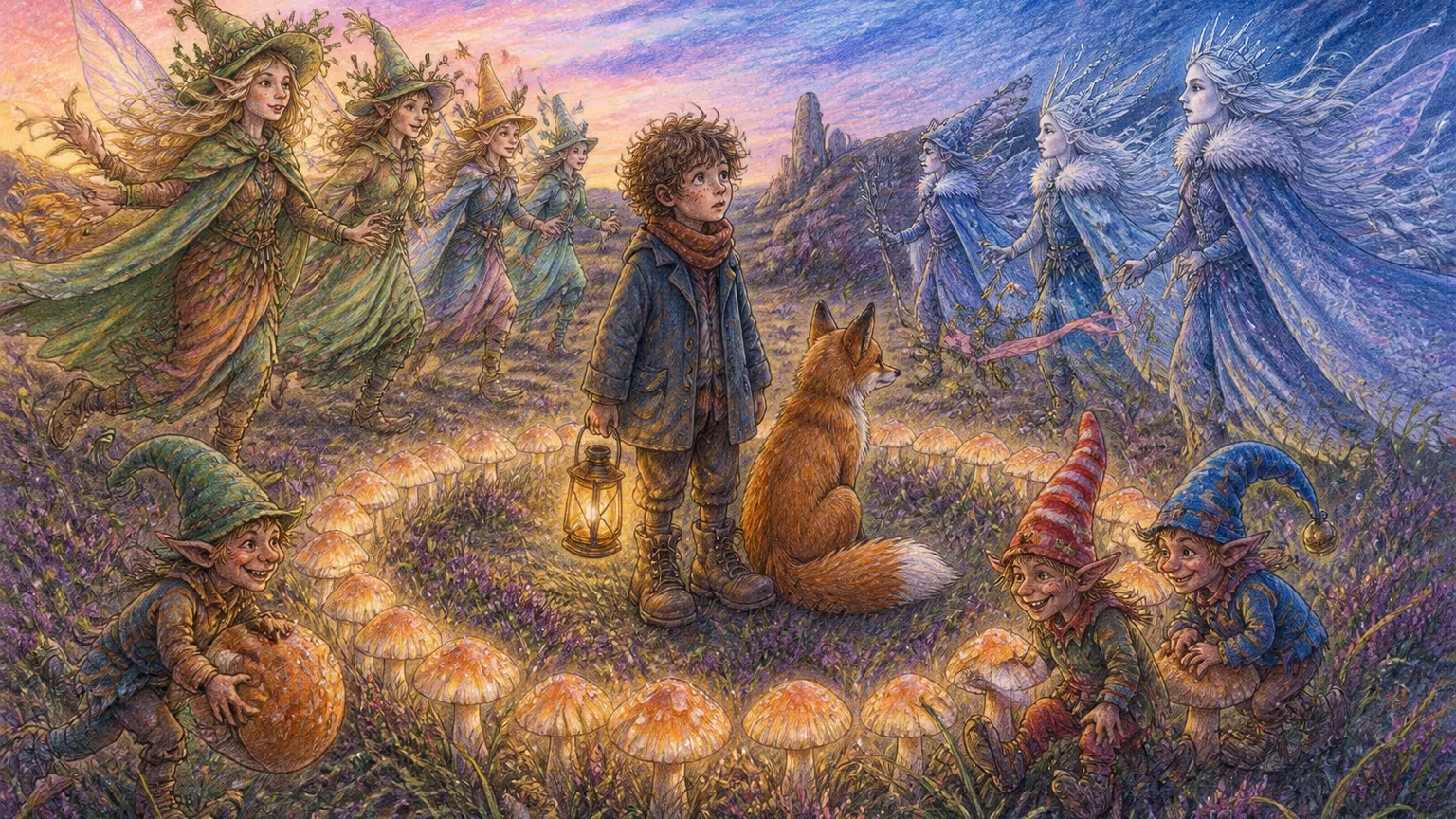
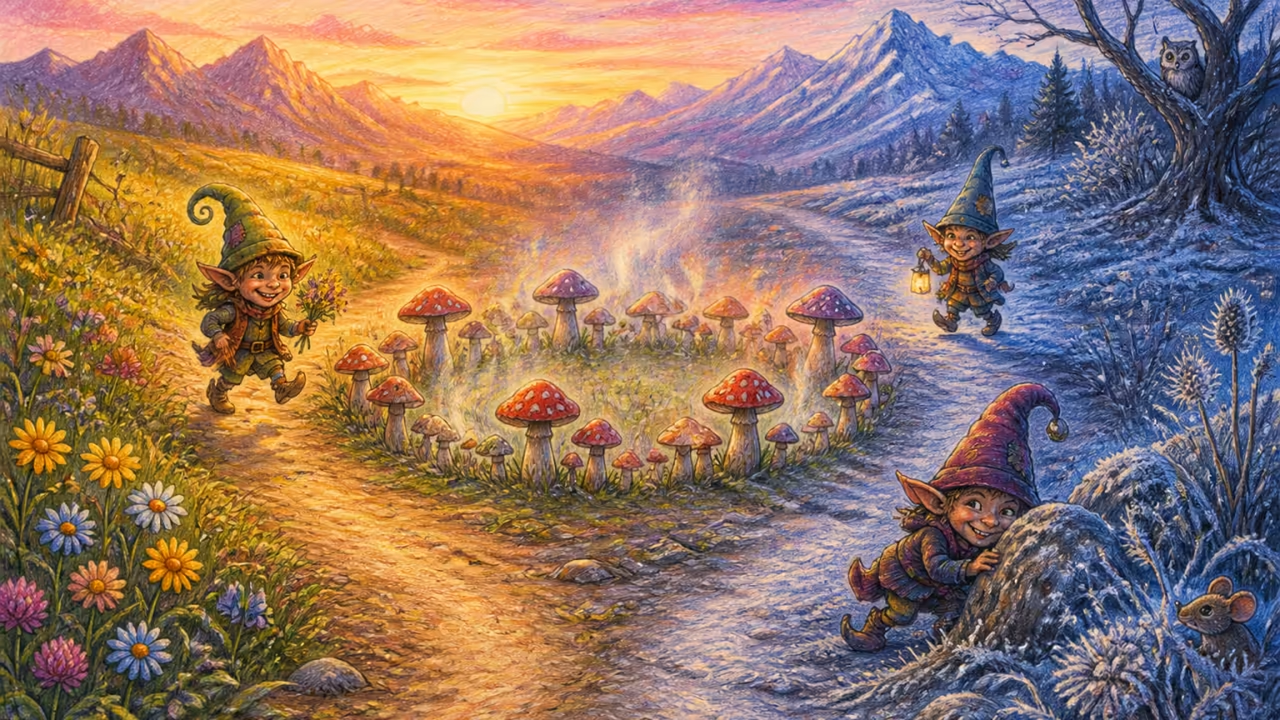
The Seelie Court (the summer-loving ones)
The term comes from Scottish Gaelic seelie, meaning something close to "blessed" or "fortunate". The fairies of the Seelie Court were what Celtic folklore associated with summer, light and a broadly favourable attitude toward humans. Note: favourable doesn't mean harmless.
Seelie fairies might help you find a lost path, bring good harvests or protect your animals. But if you insulted them, wandered into their territory without proper acknowledgement, or simply rubbed them the wrong way on the wrong day, they'd shift moods with the ease of Scottish highland weather. And Scottish highland weather shifts a lot.
Their nature is spring itself: generous, luminous, capricious. They owe you nothing. If you choose to deal with them, you do it on their terms.
The Unseelie Court (the ones who make winter last longer)
"Unseelie" means "unblessed", and Scottish oral tradition described them as dangerous by nature, no provocation required. They're the fairies of winter, of darkness, of the year's coldest and longest nights.
The most unsettling element of the Unseelie Court is the Sluagh: the restless dead who ride the winter winds in a sweeping mass. Not exactly cosy companions. Other Unseelie creatures include the Redcaps, who dwell in ruined towers and maintain their red caps by a method you'd rather not investigate. The idea of "a bit naughty" fairies is a modern comfort. The original folklore wasn't so cosy about it.
What unites both Courts is that neither operates by human morality. Seelie fairies can be generous or cruel by their own measure. Unseelie fairies can harm you whether you've done anything wrong or not. They're forces of a different nature, running on a different logic.
Good fairies or bad fairies (the wrong question)
For centuries, folklore didn't split fairies into "good" and "bad". It split them into favourable and dangerous. And that, though it sounds similar, isn't the same thing at all.
A creature can be dangerous and generous at the same time. It can protect your home fiercely and turn on you if you move its things. It can guide you through the forest and leave you in the fog if it gets bored. Nature has no moral intent: it has cycles, moods and territories.
The oldest folklore treated fairies as part of that nature: not angels, not demons, but something more honest and more uncomfortable. Beings with their own rules in a world that existed before humans and will exist long after.
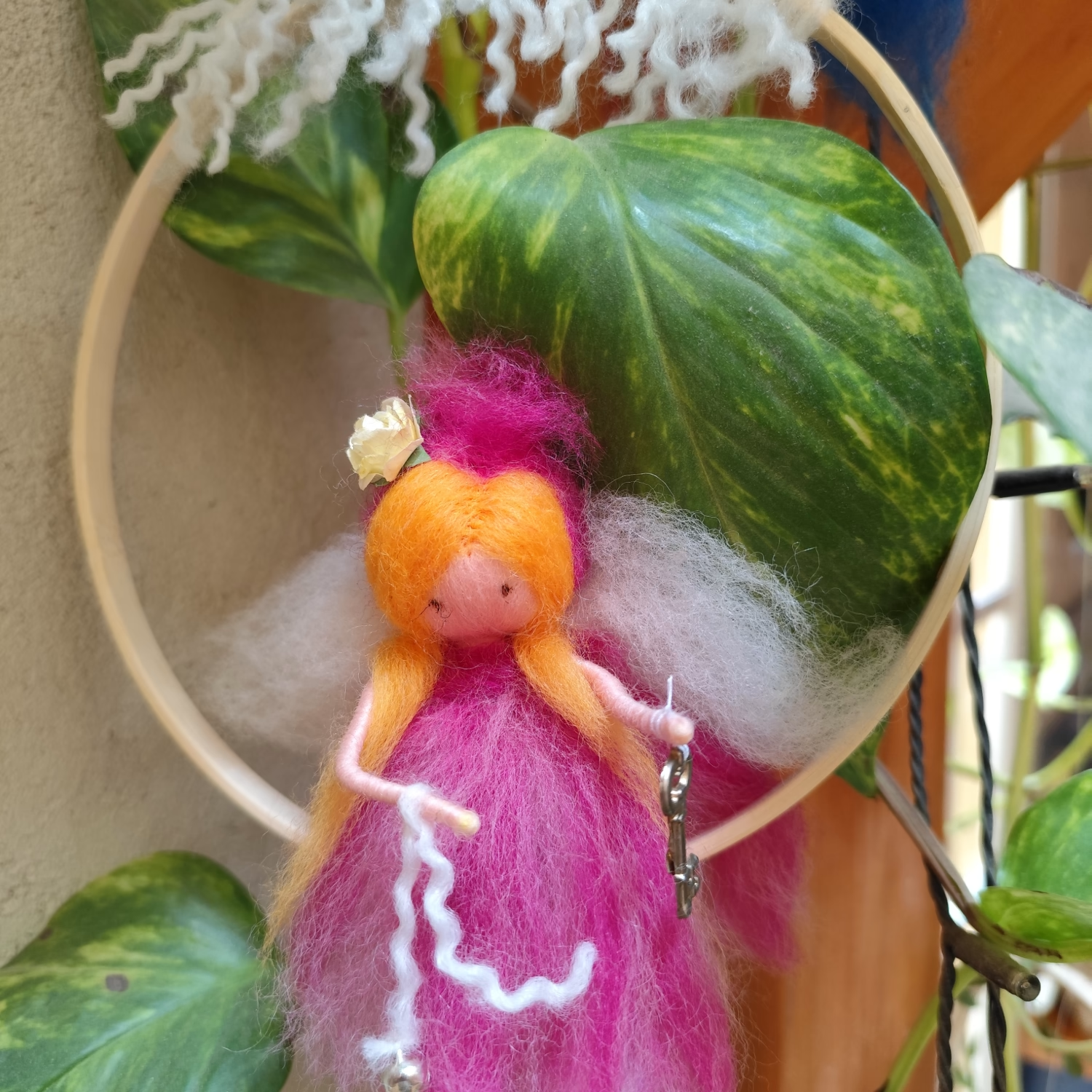
The "kind fairy with a wand and a pink dress" version is essentially an editorial decision of the last two hundred years. The actual folklore is considerably more interesting. If you want to see where the cultural split between fairies and witches came from, we have that article waiting for you.
What is the difference between the Seelie Court and the Unseelie Court?
The Seelie Court gathers the "favourable" fairies of Scottish folklore, tied to summer and light: they can be capricious or even dangerous if offended, but they're generally well-disposed toward humans who treat them with respect. The Unseelie Court is their winter opposite: always dangerous, regardless of how well-behaved the human who crosses their path might be. Dividing the fairy world into these two Courts was Celtic folklore's way of explaining that nature has a generous face and a brutal face, and that both deserve equal respect.
In Magikito terms: the Seelie Court is the August sun at the beach, warm and lovely and perfectly capable of burning you. The Unseelie Court is the December storm that doesn't ask if you're ready.
Water fairies (the ones who chose rivers and seas)
The world of European water fairies is vast, running alongside the fairies of air and the household fairies. The Undines are freshwater fairies of Germanic origin: beautiful, given to singing, capable of enchanting anyone who lingers too long near the river. The Selkies of Scottish and Irish folklore are seals that can shed their skins and take human form. Their stories are full of captivity and longing, of seas too cold and coasts that refuse to let go.
The Nordic nixies are more ambiguous water fairies: river guardians or capricious water lords depending on the day. What all water fairies share is the nature of the element that defines them: changeable, deep, capable of drowning you or carrying you to territories you didn't know existed.
Household fairies (the ones who chose to stay)
And here we arrive at our favourites: the fairies who decided to stay.
While the Seelie and Unseelie Courts haunted moorlands and rivers, there was a type of fairy that chose homes instead. The Scottish Brownies, the German Kobolde, the Italian Folletti, the French Lutins. Creatures who found something worth staying for in human domestic life: the warmth of a hearth, the smell of fresh bread, the energy of a household that works.
Household fairies are mischievous, yes. They hide things, rearrange drawers, make time fly when you're in a good place. But they protect. And that carries enormous weight in folklore: among all the categories of fairies, household ones are the only type who actively chose the human world. For a deeper look at how they spread across Europe, the real story of household Brownies in Europe and the same being with twenty different names are excellent next reads.
We're not strangers to that tradition. Far from it.
How many types of fairies exist in European folklore?
European folklore records hundreds of distinct fairy types, grouped by their relationship with nature, their cultural origin or their attitude toward humans. The main groups are: Seelie Court fairies (summery, favourable, Celtic), Unseelie Court fairies (wintry, dangerous, Celtic), water fairies (undines, selkies, nixies), elemental fairies (of air, earth, fire and water) and household fairies (Brownies, Kobolde, Folletti, Lutins), which are the group most present in daily life and the most documented in each region's oral tradition.
The diversity is the whole point. Folklore didn't create a single type of fairy because nature doesn't have a single type of anything. Each culture developed the beings it needed to name what it couldn't explain, and the result was an atlas of extraordinary creatures worth knowing properly.
If you're curious about the chapter where humans tried to photograph them, the Cottingley fairies hoax is essential reading. And for the full sweep of fairy history across European culture, fairies in history is waiting with open arms. We have much more to tell.