There's a question that makes us grin and wince at the same time: "so are you a fairy or a witch?" Costumed kids ask it, blokes at medieval fairs ask it, and plenty of people ask it into a search bar at three in the morning. And every time, we have to bite our tongue to keep from blurting out the awkward truth too fast.
Here's that truth. For an awful lot of centuries, fairy and witch weren't two opposing things. They were nearly the same figure, lit by two very different lanterns. A woman who knew things. And depending on who told the story and who stood to gain, that woman got painted in light or painted in soot.
Today we'll tell you who split the two apart, when, and exactly who it suited. With warmth, a pinch of cheek, and zero tidying-up of anybody to make the story look nicer.
The Woman Who Knew Things
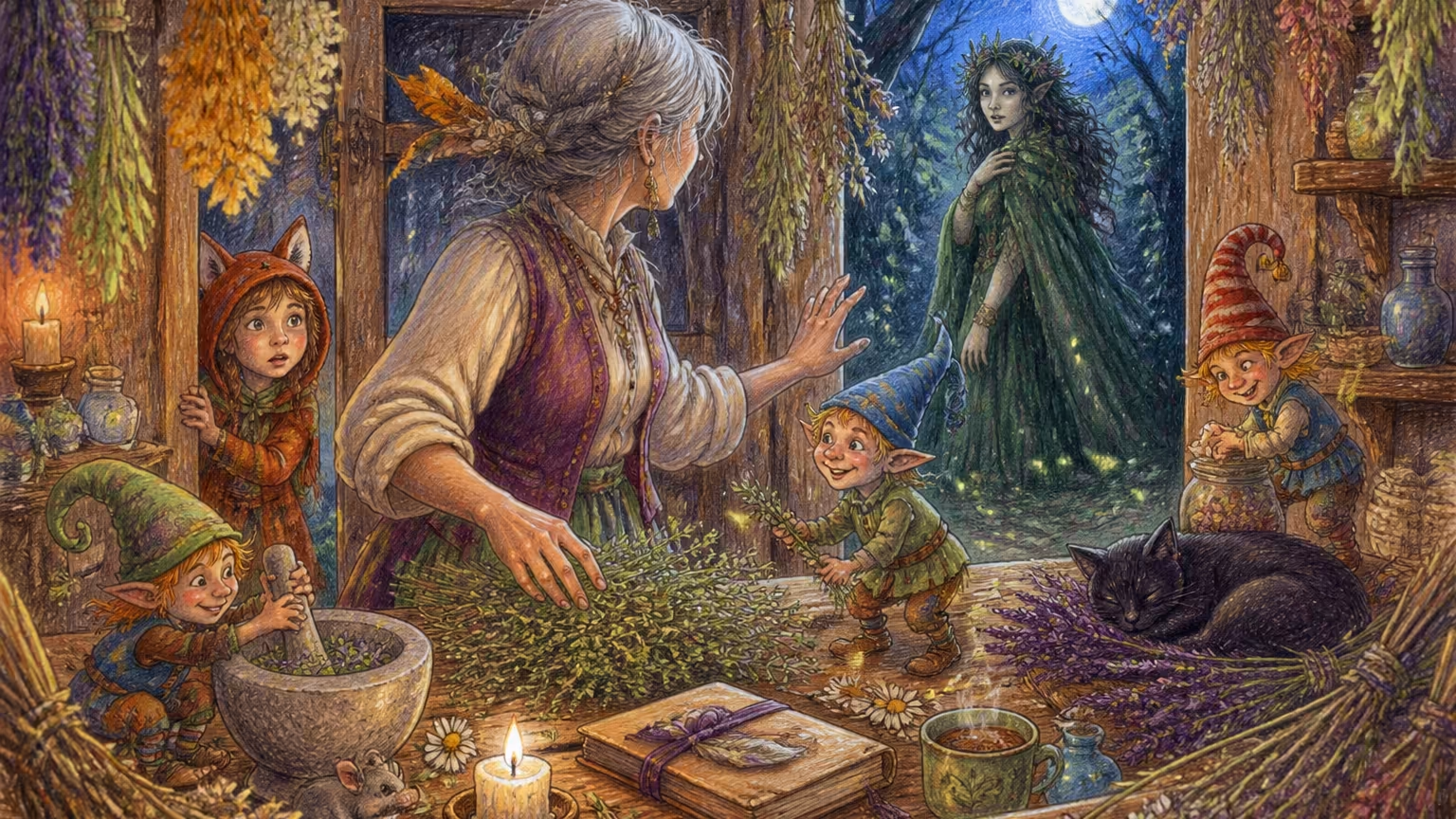
Before there were hospitals, pharmacies and wellness podcasts, every village had a woman you went to. She knew which herb broke a fever and which one turned the milk. She brought babies into the world and sat with the dying. She read the sky, the smoke and the entrails of animals. She had no certificate on the wall, because her knowing came from her mother, who'd had it from hers, in a chain that never passed through a single university.
People called her all sorts of names. Wise woman. Cunning folk. Howdie. Herb-wife. And in a great many places they said she was "away with the fairies," that her gift came from dealings with the other world, ours, the one of the folk who live alongside you and a little below. Rural Ireland and Scotland even had a proper job title for it, the fairy doctor, who cured exactly the things the fairies had tangled up.
Here's the bit that matters: that figure was neither a fairy nor a witch. She was a human being with one foot in each world. The fairy and the witch came later, from cutting that woman straight down the middle.
The fairy and the witch are the same story, told by two narrators who couldn't stand each other.
What's the Real Difference Between a Fairy and a Witch?
A fairy is a creature of the other world: not human, born magical, belonging to a separate people with their own courts, laws and moods. A witch, in the older folklore, is a human person who works magic, almost always learned or inherited. That's the clean line, no sleight of hand: a fairy is magic, a witch uses magic. Everything else, the whole one-is-good-one-is-evil business, came along much later and was carried in by people with very particular agendas.
Hardly anyone tells you this, and it's such a simple thing. A fairy doesn't learn to be a fairy anywhere, the same way you didn't learn to be a mammal. She just is. The witch, on the other hand, does: she gathers, mixes, recites, bargains. Her power is a craft, not a species. That's why in the old tales fairies are feared or courted, while witches are accused. You can't put a species on trial. A neighbour, though, you can.
Who Drew the Line (and When)
For centuries the boundary was a smudge. The old nature spirits of Europe, the creatures of the other world, and the women who knew how to deal with them all lived in the same stew. Then came the notion that there could be only one rightful source of the sacred, and everything left outside that door had to be one thing or the other: harmless, or dangerous.
That's when the sorting began. The beings of the other world were too ancient and too loved to erase, so they got tidied away into the pretty and the harmless. Fairies went from formidable ladies of the hills to garden damsels with dragonfly wings, a makeover the Victorians finished off and the cinema shrink-wrapped forever. Meanwhile the human woman who knew herbs and births got handed the other sack entirely. Between the fifteenth and seventeenth centuries half of Europe went looking for witches with a zeal that still gives you chills, and the village wise woman became, almost overnight, an accomplice of the devil.
The strange part is that the people dragged before the courts were rarely the ones claiming to have seen a fairy. They were the women who healed, who knew, who lived without a husband or had a tongue that was a touch too loose. The charge of witchcraft was hardly ever really about magic. It was about power, and about who was allowed to hold any.
And here's the most bitter twist of the lot. The very same gesture switched sides depending on the century you happened to live in. The words a healer whispered over a feverish child were a prayer, a comfort, almost a caress. Under the witch-hunter's gaze, those same words became an incantation. What the woman did with her mouth and her hands hadn't changed. What changed was who held the power to decide what it meant. And that, dear reader, is the whole distance between being left in peace and being pointed at. One word from the priest, and a whole lifetime spent mending fevers, easing births and sitting with the dying could be weighed up as evidence against her, never once as a reason to thank her.
Fairy and Witch, Side by Side
Set the Disney version aside and go back to the real folklore, and the two figures sort themselves out. Here's the map, no fog:
| The Fairy | The Witch | |
|---|---|---|
| What is she? | A creature of the other world, not human | A human person |
| Where does her power come from? | Her own nature, born with it | Knowledge learned or inherited |
| Can she be put on trial? | No, she's another species under other laws | Yes, and tried she most certainly was |
| How was she repainted later? | Sweetened: wings, glitter, garden | Demonised: wart, cauldron, shadow |
| What was feared about her? | That she'd carry you off to her world | That she knew more than the priest |
The Line Always Had Holes in It
However hard they pressed the ruler down, the line never quite closed. The English "white witch" healed and undid hexes for centuries without anyone lighting a fire under her, right up until the wind changed. The cunning folk were paid, consulted and trusted by the very communities that, on a bad year, might also turn on them. Midwives were respected and feared in equal measure. And the fairy godmother who leans over the cradle handing out destinies comes, without the slightest disguise, from those same women who turned up at births to bless or to curse depending on how you'd treated them.
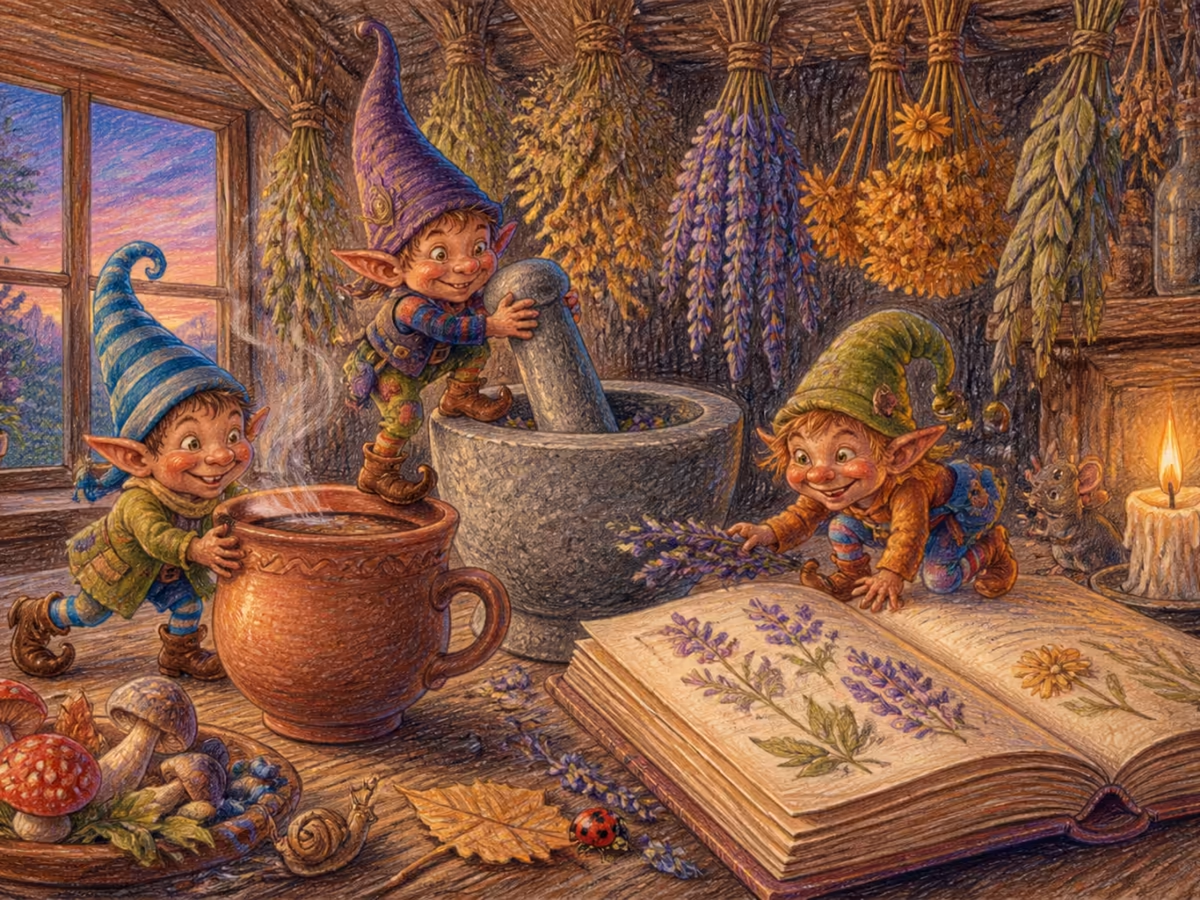
The gap between a blessing and a curse was always thin as a hair, and which one you got often came down to manners. Leave a bowl of milk out and the household thrived. Slight the wrong woman and the cream wouldn't churn. Whether you called her a fairy's friend or a witch depended less on what she did than on whether you'd kept on her good side, and on what century you happened to be standing in.
If you fancy the kinder face of that same coin, the full story of the fairy godmother before Disney pulls the same thread from the other end.
Are Fairies Good and Witches Evil?
No, and that's exactly the trick they slipped past us as children. In the real folklore fairies aren't good: they're unpredictable, with their kindly Courts and their dangerous ones, and they'll reward you or wreck your year depending on the day. And witches, at the root, weren't evil: they were women with a knowledge that made people uneasy. "Good fairy versus wicked witch" is a modern invention, wonderfully handy for bedtime stories and ruinously expensive for the historical truth.
If you want to see just how unpredictable we really are, we lay it all out in whether fairies exist and in the difference between fairies and nymphs, where it gets very clear that "magical and female, therefore sweet" is a mental shortcut with many centuries on the clock.
The Side the Magikito Fairies Take
We come down on the side of the woman who knew things, and we won't apologise for it. We're fairies to the bone, creatures of the other world with minds of our own, but we carry the inheritance of all those wise women whose names got changed so they'd be easier to fear. Neither sugar damsels nor cauldron hags. Something a good deal more interesting than either.
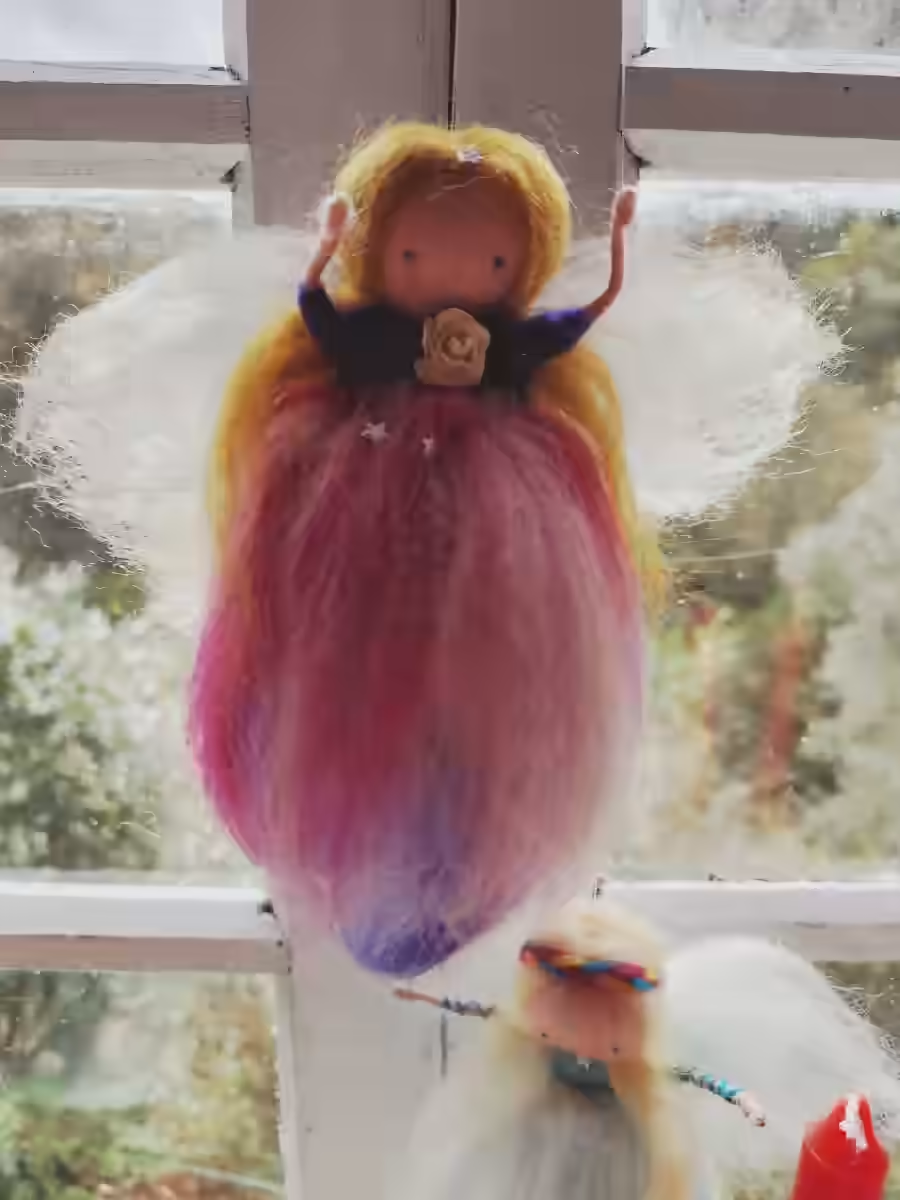
Every fairy that comes from Carmen's hands in Taramundi carries that memory inside: of when knowing things was a gift and not a crime. If you'd like to meet them, the Magikito fairies are waiting in their corner, made by hand one at a time, with the calm of someone who's spent millennia owing nobody an explanation. And to understand where we come from properly, the long history of fairies tells the whole journey, from the Celtic hills to your living room.
So the next time someone asks whether you're a fairy or a witch, you'll know what to say. That the question is wrong. That for a long time they were one and the same, and that the mess was made by whoever was frightened of women who knew too much. We, for what it's worth, still know plenty. And we're still in no hurry at all.