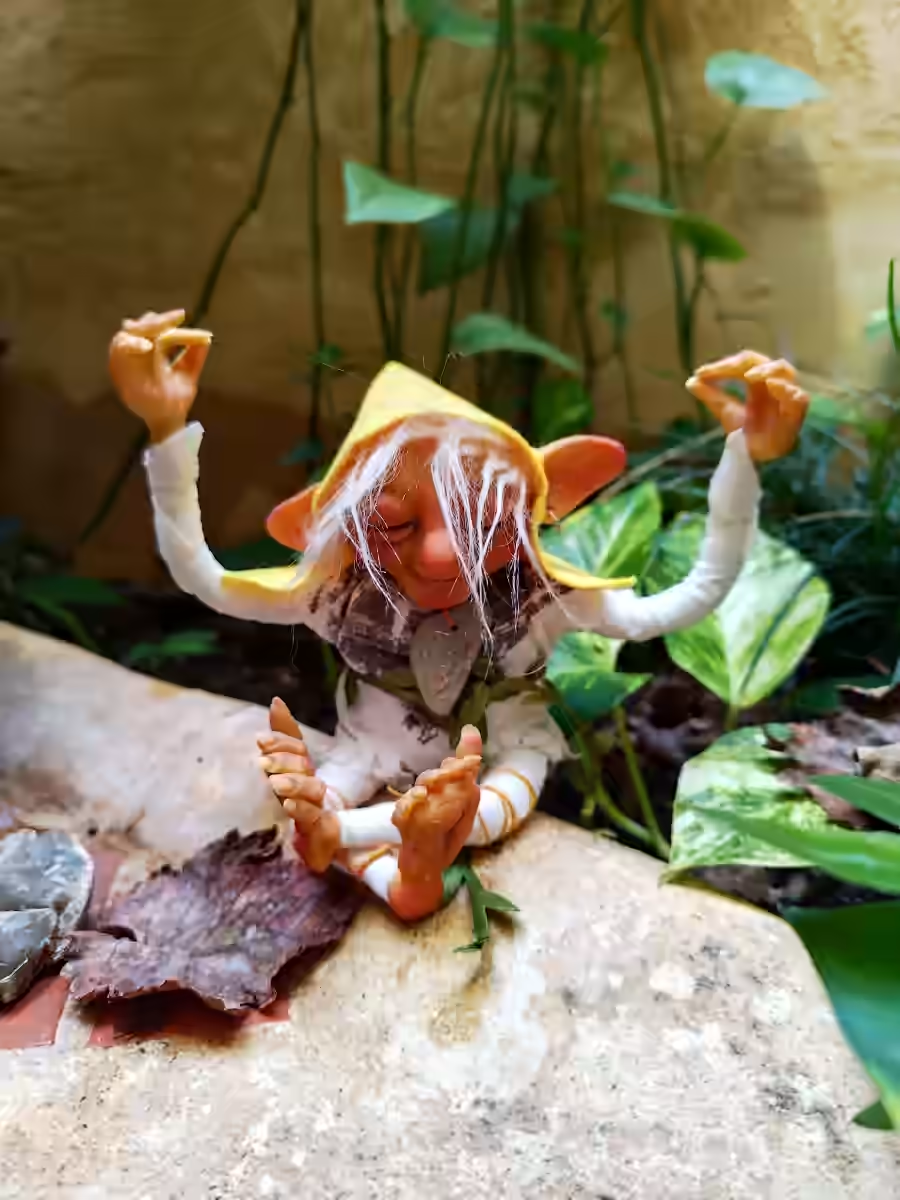
Look, we didn’t totally make this up. Okay, maybe a tiny bit. But only a tiny bit.
The tradition of household Brownies is real. It goes back thousands of years. And it’s spread all over Europe, from the Scottish Highlands to the mountains of Asturias, with a stop in Germany’s Black Forest and up through the Italian Alps. Every place gave them a different name, blamed them for different quirks, and left different offerings. But everyone agreed on one thing: there are small creatures living alongside us in our homes. And you’d better treat them right.
And heads up, we’re not talking about the cutesy, sparkly stuff from kids’ colouring books. This is the good kind of folklore. Proper stories, written records, and the kind of oral tradition grandmas have been passing down forever. Today, we’re telling it like it deserves.
Scotland’s Brownies: the originals
We’re starting with Scotland because, let’s be real, Scots were talking about household Brownies long before anyone bothered to print a book. Brownies (yes, like the chocolate squares, but way more interesting) are home spirits that have lived in Scottish farms and rural houses since forever.
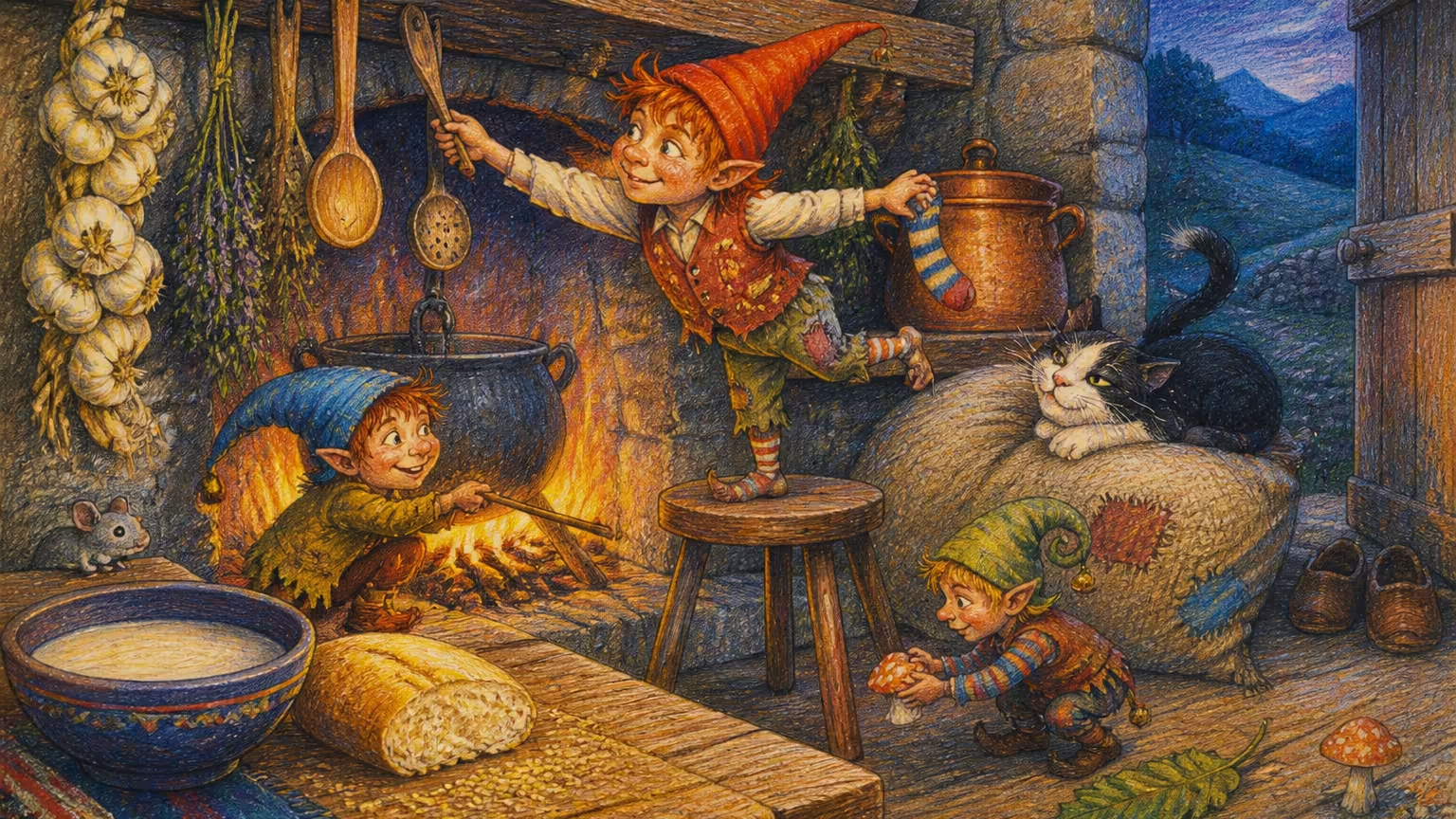
How did it work? Like this: the Brownie moved in without asking. Nobody invited it. It just showed up. And in exchange for a bowl of fresh milk and a piece of oat bread left by the fireplace at night, the Brownie would take care of the house while the family slept.
Swept. Scrubbed. Tidied up. Fed the animals. Quietly. At night. Without anyone seeing a thing.
But listen. There were rules. Proper rules.
- Never offered clothes. Leave clothes out for a Brownie and it took it as an insult, then it was gone for good. You’ll see this in loads of Scottish tales from the 1600s and 1700s.
- Never thanked it out loud. Too much gratitude felt patronising. The Brownie helped because it wanted to, not because you begged.
- Never criticised the job. Complain about the sweeping and it stopped helping, then the mischief started.
Sound familiar? A tiny helper who’s got a temper, a few quirks, and absolutely does not take orders. Yep. Brownies are family.
Germany’s Kobolds: order, with a little chaos
In Germany, household Brownies are called Kobolds. They’re sort of the German cousins of Brownies, but with very German flavour.
Kobolds were said to live in houses, mines, and ships. The home ones (Hausgeister) were the most loved. Any family worth its salt had “their” Kobold, and medieval chronicles are packed with little mentions of these small beings.
The best part about Kobolds is their two-sided vibe. They could be unbelievably helpful (cleaning, cooking, warning you about danger) or seriously prank-happy (hiding things, making noises at night, knocking stuff off shelves). It all depended on how you treated them.
The deal with a Kobold was simple: you left food in a corner of the kitchen (usually porridge or beer), and it looked after the home. Forget the offering and, well, trouble moved in. Things vanished. Doors opened on their own. Noises you couldn’t explain.
There’s a 14th-century story about a Kobold named Hinzelmann, who lived with a family in Lower Saxony for years. He spoke with them, gave advice, and warned them about betrayals. But when a servant tried to mock him, Hinzelmann threw every plate in the kitchen. “Personality,” as they say.
And here’s a fun one: the word “cobalt” comes from Kobold. German miners blamed mine Kobolds when they found ore that looked valuable but turned out poisonous. “Kobold stuff,” they’d mutter. The name stuck.
Italy’s Folletti: Mediterranean mischief with extra drama
Italy gives you exactly what you expect from Italy: household Brownies with big personalities, big feelings, and big chaos.
Folletti are creatures from Italian folklore, from the Alps all the way down to Sicily. Every region has its own version, the Folletto itself, the Monachicchio in the south, the Mazzamurello in the centre. One thing they all share: they’re wildly mischievous.
The Italian Folletto doesn’t stop at hiding socks. No, no. It trashes your kitchen, tangles your hair while you sleep, moves furniture around, and if it really likes you, it pinches your feet at night.
Yep. You read that right. Foot pinches. That’s its way of saying “I’m fond of you.”
In southern Italy, the Monachicchio (its name means “little monk,” because of its hood) is the star of the show. It’s playful, loves hiding objects, and has a soft spot for kids, who it protects. Tradition says that if a Monachicchio gets attached to your home, you’ll never go without.
What’s lovely about Italian folklore is how casually people talk about these creatures. In some southern villages even today, ask about Folletti and they’ll tell you stories the same way they’d talk about the neighbour upstairs. No fuss, no spooky theatre. “Yeah, there’s a Folletto here. Hid my glasses the other day. Happens.”
France’s Lutins: elegance, with a twist
France, of course, brings its own elegance to the tradition. Lutins are the French household Brownies, especially loved in Normandy, Brittany, and the centre of the country.
The French Lutin is a bit more refined than its European cousins. It looks after horses (braids their manes at night, very French), keeps an eye on stables, and guards wine cellars. Priorities, honestly.
But under that polished vibe, the Lutin is a top-tier prankster. Its speciality: tangling horse manes into impossible knots. French farmers called those tangles “tresses de lutin” (Lutin braids) and took them as a sure sign a Lutin was living in the stable.
The classic offering for a Lutin was bread with butter and a glass of cider. Leave it out and it cared for your animals like they were its own. Skip it and it set up chaos. Stylish chaos, sure. French chaos.
In Brittany, Lutins blended with the Celtic tradition of Korrigans (Brittany’s woodland spirits), creating a ridiculously rich folklore where every stone, every spring, every house had its own guardian presence. Brittany was basically Brownie-land. What a dream.
Asturias’ Trasgu: the cousin we care about most
And now we’re coming home. Because if Magikitos have a direct ancestor, a spiritual grandparent, the one that really matters, it’s the Trasgu.
The Trasgu is the household Brownie of Asturias, Cantabria, and part of Galicia. And it might be the most loved creature in the folklore of northern Spain.
What’s a Trasgu like? Tiny. Red-haired. A pointy red cap. A limp in the left leg (important detail). And a grin that screams, “I’m about to cause trouble.” It lives in homes, especially near the kitchen and the fireplace. And its whole thing is mischief.
Not nasty mischief, though. The Trasgu breaks a plate now and then, moves things around, makes little noises at night, hides objects. Annoying, yes. Dangerous, no. And if you treat it well, it helps too. It cleans the kitchen while you sleep, looks after the animals, and gives you a warning if something’s off.
The problem is, the Trasgu never leaves. Move house and it comes with you. Try to kick it out and it gets mad, then the pranks get worse. Tradition says the only way to get rid of a Trasgu was to give it an impossible task: fill a basket with river water, pick up millet grains with the left hand… Jobs its limp and impatient nature just couldn’t handle. It would get fed up and storm off.
But honestly, who’d want to send a Trasgu away? That’s like ditching a slightly clingy friend you still love to bits.
If you want more on the Trasgu and its northern pals, we’ve got a whole article on the creatures of northern Spain that’ll blow your mind.
What do all these creatures have in common?
Notice something pretty wild. Scotland, Germany, Italy, France, Asturias. Different times, different languages, different beliefs. The pattern stays the same:
- A small, unseen creature settles into your home
- In exchange for an offering (food, milk, respect), it helps with chores
- If you ignore it or treat it badly, it pulls pranks
- If you treat it with care, it becomes a protector of the family
- It has its own personality and it doesn’t take orders
So, coincidence? Not really. People have been studying this for ages, and there are a few ideas. Some think household Brownies reflect how families relate to their homes, the feeling that a house is alive and needs caring for. Others see them as a way to teach kids respect for shared spaces. And some just reckon old houses creaked a lot and people needed a story that made sense.
We like to think there was more to it. That imagining a friendly, mischievous presence at home answers something deeply human: the need to not feel alone.
How do Magikitos keep this tradition alive?
When Carmen started crafting the first Magikitos in her workshop in Taramundi, she wasn’t inventing something new. She was picking up a thread that’s been woven across Europe for thousands of years.
Magikitos are direct heirs of the Brownies, the Kobolds, the Folletti, the Lutins, and above all, the Trasgu. Each one with its own personality, its own mood, its own little quirks. Every one different. But all with the same mission: keep you company, bring you a bit of joy, and remind you that everyday magic is a real thing.
We don’t leave bowls of milk by the fireplace anymore (though hey, nobody’s stopping you). But we still need what a Scottish family in the 1500s needed, or an Asturian household in the 1700s: to feel there’s something magical in our home.
Brownies cleaned the house. Kobolds watched over the kitchen. Folletti made you laugh. Lutins protected the animals. The Trasgu reminded you life gets boring without a little mischief.
Magikitos do all of that. In their own way. From your shelf, with that smile that you just know means something.
If you’re curious about the secret life they live when you’re not looking, get ready. Because the tradition of cheeky household Brownies is still very much alive.
One last fact to drop at dinner
Next time someone tells you Brownies are “kids’ stuff,” tell them this: the School of Scottish Studies has recorded hundreds of Brownie stories from well before the 1800s. City archives across Germany include mentions of Kobolds in official records. And in Asturias, the Trasgu even shows up in legal texts from the 1500s as an explanation for property damage.
Household Brownies aren’t childish fantasy. They’re European cultural heritage. And we, the Magikitos, are proud to be their heirs.
Although, yeah. We still steal socks. Some traditions are sacred.