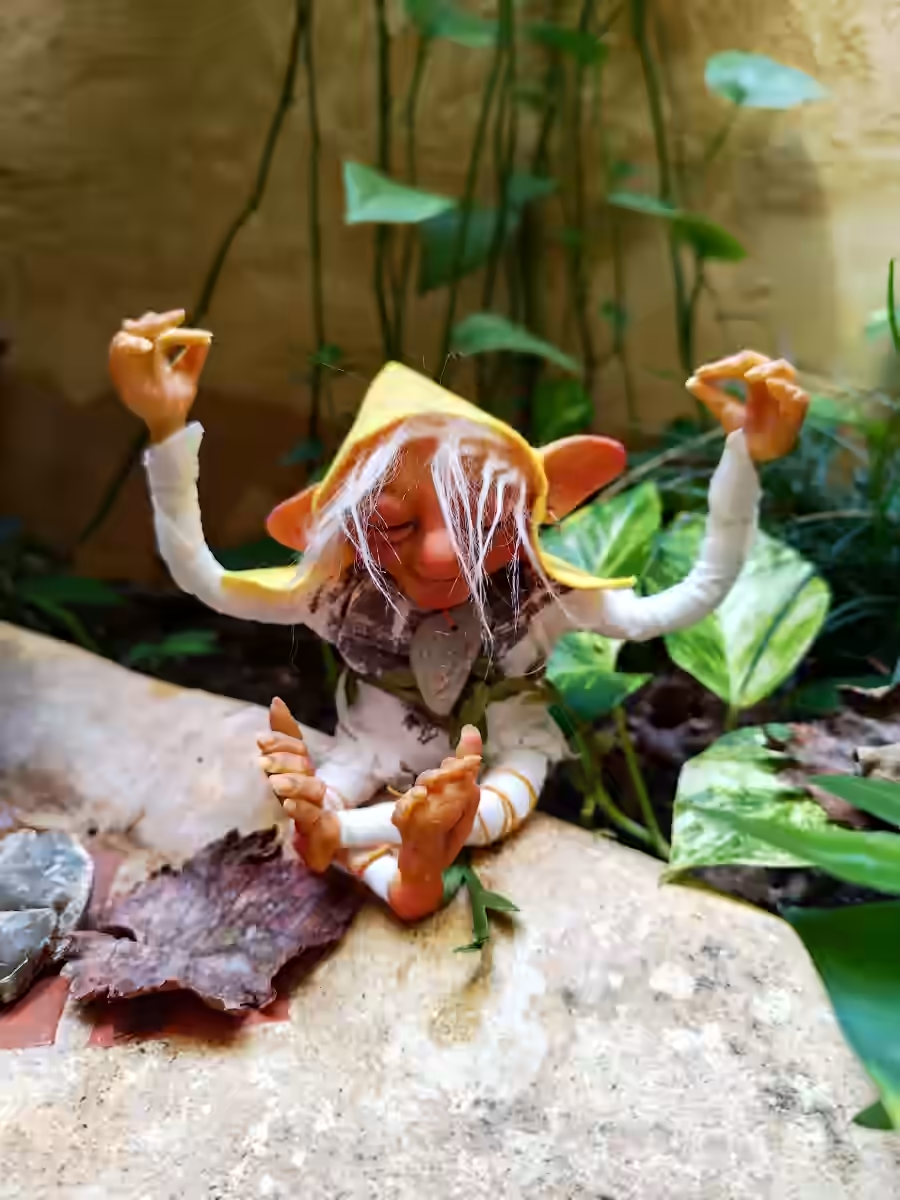
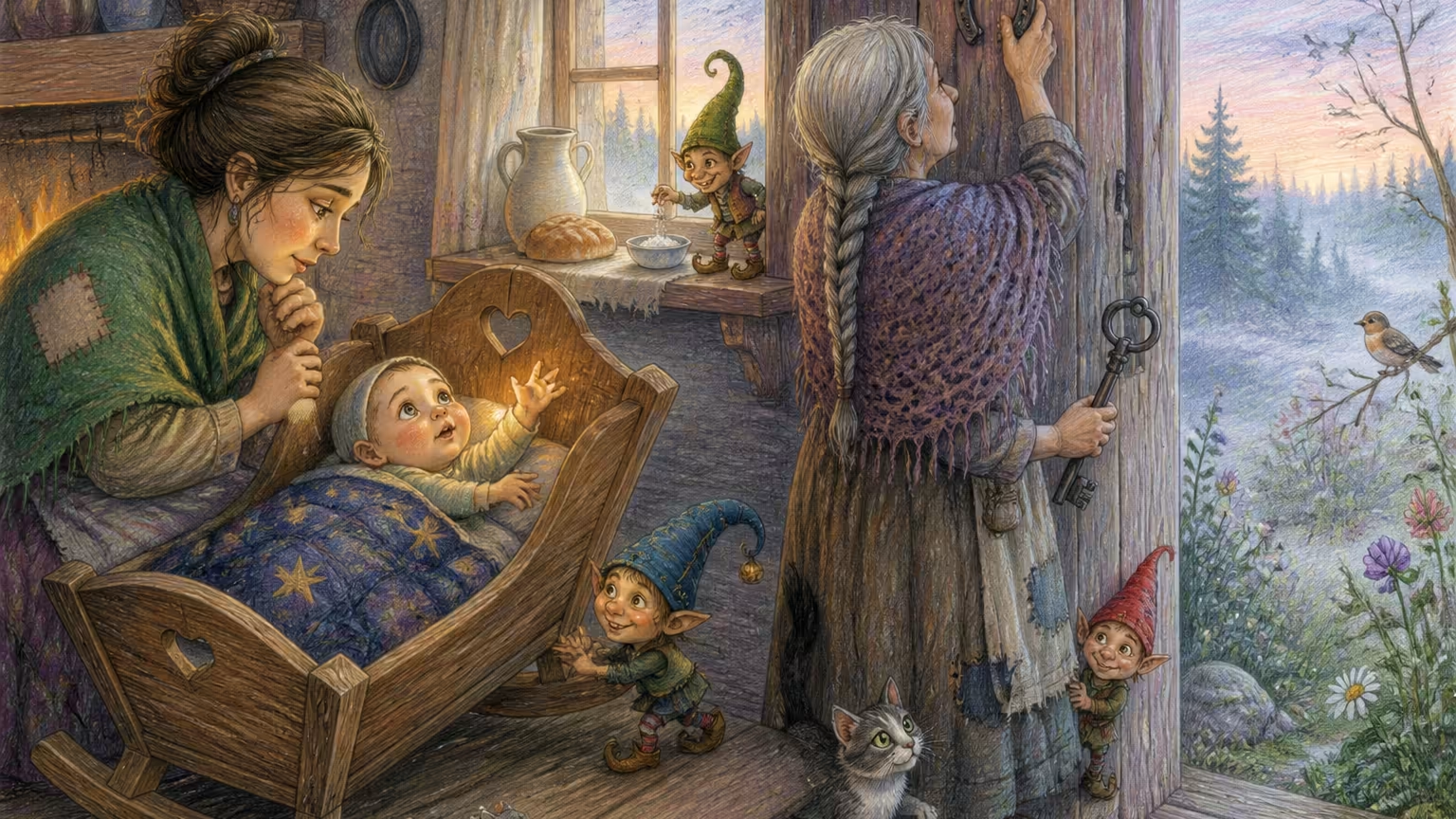
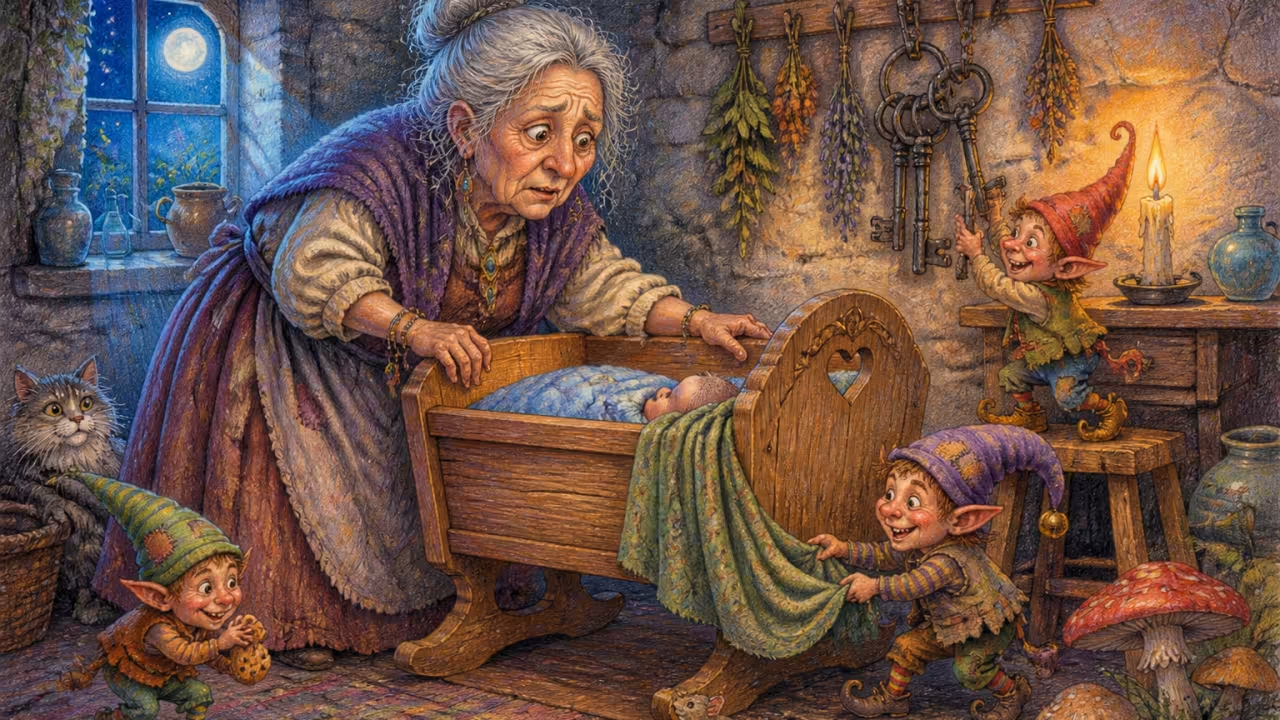
Right, let's get one thing straight. Fairies have been blamed for swapping babies since before anyone thought to write it down. Changelings. That word has followed us across centuries of European folklore, always with the same accusation: we come in the night, take a healthy human baby, leave something else in the crib, and vanish before sunrise.
We're not going to deny the whole thing. What we will do is tell you what the folklore actually said, why this story showed up in every corner of Europe without anyone coordinating it, and what very human need it was quietly trying to meet. Good legends don't get invented out of boredom. They grow where reality leaves unexplained gaps.
What Is a Changeling?
A changeling is the fairy substitute left behind after fairies take a human baby. The original goes to the fairy realm. The replacement stays in the crib. The family doesn't know. And when something about the baby starts to seem different, folklore had the explanation ready.
The changelings of European folklore aren't monsters from pantomime. They can be several things: an elderly fairy wanting to live among humans for a while, a sickly fairy infant that the fairies themselves don't want to raise, or a piece of enchanted wood shaped to look like a baby for a few crucial days. The goal was always the same: buy enough time that the original baby couldn't be brought back.
How did you know? The folklore had a very specific checklist. The baby who suddenly cries without stopping, without reason, without comfort. The one who stops growing the way you'd expect. The one who shows strange abilities too early, or conversely, seems stuck where she was moving before. In short: anything a family in the twelfth century couldn't explain through the medicine available to them. And in the twelfth century, that didn't leave many options.
Every Corner of Europe Had One
One of the most revealing things about the changeling myth is that it appears all across Europe with no apparent coordination. Ireland and Scotland had theirs with the Seelie and Unseelie courts of fairy folklore. Wales had the Tylwyth Teg. Scandinavia had the bytting in Swedish and Norwegian tradition. Each culture had its own creatures, but the same story underneath.
In Germany, the term is almost bureaucratic in its precision: Wechselbalg. Literally "swap-baby". The Germanic tradition developed the most elaborate detection and reversal methods on the continent, which says a lot about how seriously the myth took root there. In France, enfants changés appear in medieval documents. In Italy, the fate had regional variations: in the south, the Neapolitan monaciello was the usual suspect when something strange happened near a cradle.
That geographical spread isn't coincidence. The changeling was the answer all these cultures constructed for the same question: why do babies sometimes not turn out the way they should? Before there were words for congenital conditions, autism, cerebral palsy or genetic syndromes, folklore offered an explanation that at least fit the available worldview. Not a good explanation. But an explanation.
Iron, Bread and the Threshold
Folklore didn't just describe the problem. It also had its catalogue of prevention. And the one that shows up in nearly every European tradition, from the Hebrides to southern Italy, is iron. Fairies and iron don't mix. It's a belief so old that nobody knows where it started, but it's everywhere: a horseshoe over the door, open scissors inside the crib, a nail hammered into the threshold. A baby sleeping under iron protection was, according to tradition, beyond the reach of any fairy exchange.
The other category was offerings. Unsalted bread, fresh milk, small bundles of wild flowers left at the threshold without witnesses and without expecting a response. The logic was the same as in any deal with fairies: if you maintain the shared space in good terms, if you give without turning it into a transaction, the balance holds. And when the balance holds, babies stay where they belong.
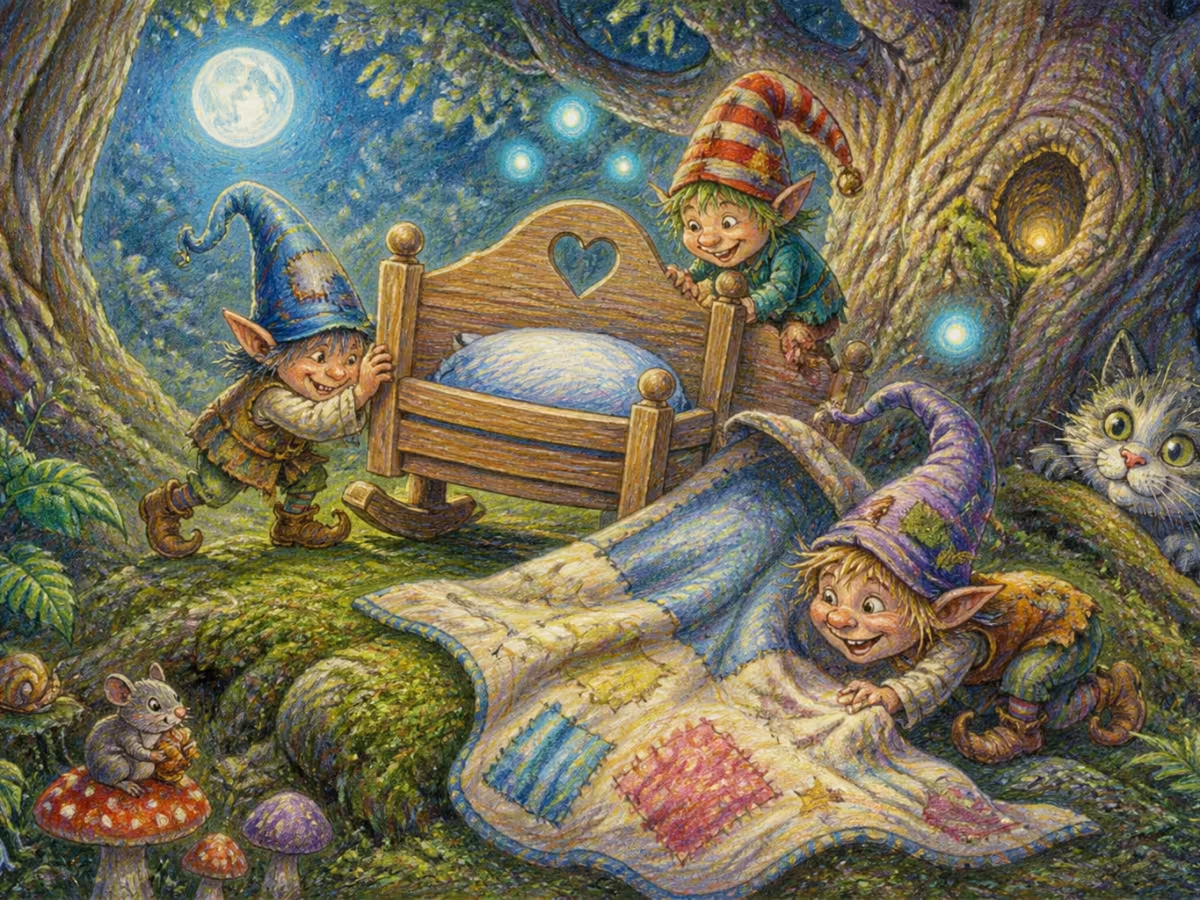
There were also high-risk nights to watch for. The solstices. Beltane and Samhain in the Celtic calendar. Certain full moons. On those evenings, cradles got double protection: iron and prayer, salt on the windowsill, fire kept burning through the dark hours.
What Was the Test for Spotting a Changeling?
European folklore developed specific tests for detecting a changeling. The most widespread was the eggshell test: you boiled water in an empty eggshell in front of the suspected changeling. The fairy creature, which could disguise itself as an infant but couldn't resist the absurdity of watching someone cook in a thimble-sized pot, would give itself away. It would say something unexpected, react with a surprise no real baby could have, or simply reveal knowledge that contradicted its apparent age. When it spoke, that was confirmation: real babies don't talk.
The Irish method was more direct: leave the suspect alone with twelve empty beer barrels. Come back and see if the barrels were full. If the changeling had also drunk all twelve, you had a problem with significant appetite on your hands.
There's something both desperate and accidentally funny about all these tests. The people who designed them weren't playing games. This was their way of handling what they couldn't understand. But seen from the outside, from right now, the idea of unmasking a centuries-old fairy creature by doing tiny cooking has a warmth to it that the grimmer parts of the legend don't quite manage.
The Truth the Legend Couldn't Say
Historians and folklorists have noted something that changes how the whole legend reads: the changeling was, in many cases, the only framework a medieval community had for what we now call autism, cerebral palsy, Down syndrome or other developmental and neurological differences. A baby who changed after birth, who cried differently, grew differently, seemed to plateau where others moved forward. Folklore offered a story that at least made the family's grief make sense.
We, as Fairies, have spent centuries being the villain of that story. We understand why. Cultures need agents for the inexplicable. They need creatures that can take away the beautiful and leave behind the difficult, because that turns an accident into a narrative, and narratives can be lived with when accidents can't. We're not offended. We just ask that the next time you meet this legend, you stay a moment with what it's actually carrying.
The changeling myth has been carrying much more than it lets on for a very long time. It's a story about the fear of losing children, about the limits of medical knowledge, about the human need for things to have an author even when no author exists. Folklore isn't superstition to be dismissed. It's the archaeology of what people felt before they had words for feeling it. And that, in our fairy opinion, deserves more than to be forgotten.