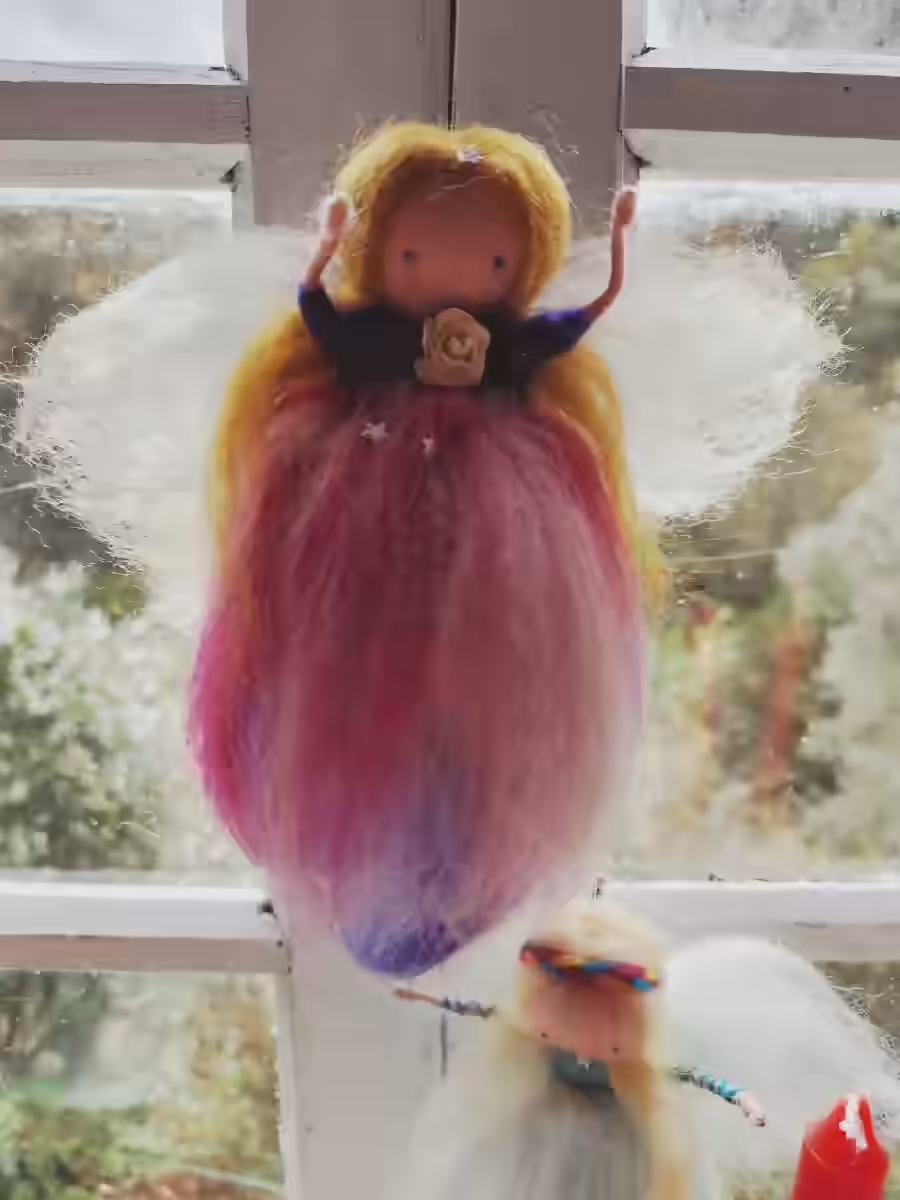
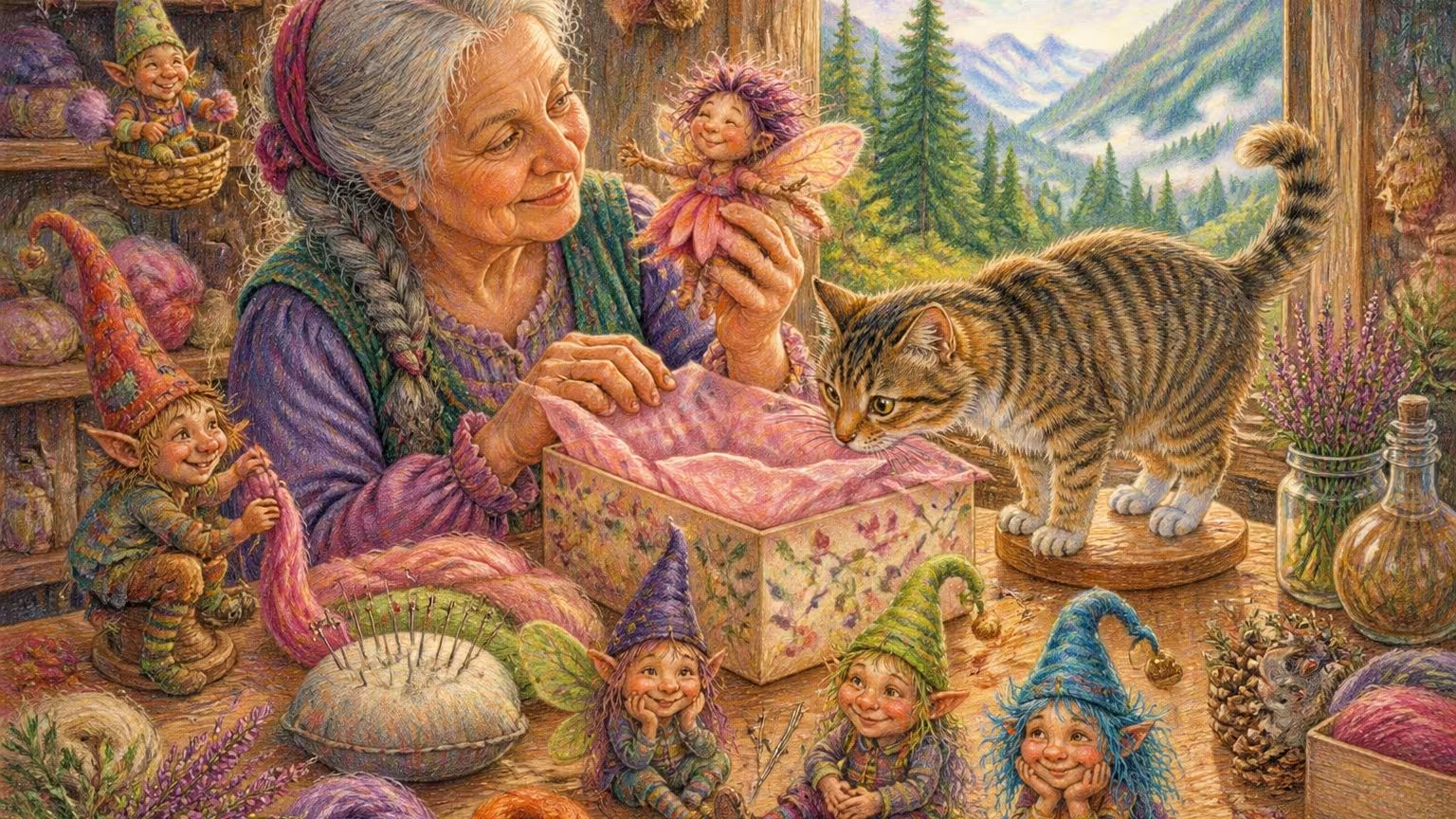
Some gifts arrive. Others land. When someone pulls off the last of the wrapping paper and goes very quiet for a moment — that's landing. A handcrafted felt fairy is the second kind. When you choose it well. Choose it badly and it ends up on the same shelf as the branded pen and the airport photo frame.
The thing is, "gifting a fairy figurine" can mean wildly different things. There's the resin version from a bargain shop that chips in three months. And there's a hand-felted fairy companion with a name, a personality and Magic Sparks of its own — the kind that makes the person receiving it feel like it was made specifically for them. The distance between those two things is enormous.
This guide exists for people who want to get it right. For those who've noticed someone's eyes light up when they talk about fairies, about everyday magic, about things with soul — and want to give exactly that. Not more. Not less. Just that.
Why Gifting a Fairy Figurine Works (When It Really Works)
Because some people don't need more stuff — they need stuff that means something. A handcrafted fairy figurine isn't mute decoration. It's a presence, a quiet reminder that the world has cracks where magic slips through if you know where to look. Giving one to someone is saying, without words and with a lot of warmth, that you see that in them too. That's a connection no Amazon voucher is ever going to make.
When a gift has its own shape, real texture, and the weight of something that took hours to make, the story it tells is completely different. Not "I thought of you while clicking." More like "I thought of you while this was being made." Our brains genuinely process objects differently when they carry time and hands in them. That's not romance talking — that's just how we work.
Which is why this gift works even for people who say they don't believe in magic. Because what they're receiving isn't fantasy — it's craft with intention. And everyone understands that.
Felt, Ceramics, Resin: Why the Material Tells Its Own Story
Different materials say different things. And when you're gifting something, what the material says is part of what you're giving.
Resin or plastic: reproducible, uniform, cheap to produce. Some have lovely designs, but every single one came from the same mould. Somewhere in a warehouse there are two hundred identical ones. The person receiving a resin gift knows this, even if they don't say so.
Handcrafted ceramic: more singular, more fragile, more expensive to do properly. When it's well made, it has a warmth that resin simply can't replicate. The catch is that "handcrafted" in ceramics can mean very different things.
Carded wool (needle felting): no two are the same. Natural wool fibres have their own variation, the needle creates textures that can't be programmed, and the hands of the maker have an unrepeatable style. What's in the box is genuinely one of a kind. That's what you're gifting — something that doesn't exist anywhere else in the world. For more on how different types compare, the piece on fairy figurines: types, materials and how to choose goes into proper detail.
Who Loves Receiving This Gift (and Who Doesn't)
The idea that fairy figurines are for eight-year-old girls has been outdated for twenty years but refuses to die quietly. Reality is far more interesting: this gift resonates with many more people than you'd expect.
It really lands with someone who has a house full of plants and talks to their succulents. With someone who already has a little altar on their desk but feels something's missing. With someone who collects things with soul — not to accumulate, but to surround themselves with objects that tell a story. With someone who works from intuition and emotion and wants companions that match that energy. With someone who loves handmade things just as much as they can't stand plastic merch.
It works less well for someone who wants a one-glance object and nothing more. Or for someone who collects brands rather than pieces. For that person, the most beautifully crafted gift in the world will still arrive cold. Knowing the person receiving it is half the work.
What Makes a Hand-Felted Fairy Special
Every Magikito is born in Carmen's workshop in Taramundi, a corner of western Asturias where forests hold the kind of quiet that can't be manufactured. They're needle-felted wool fairies made without moulds, each carrying Magic Sparks that define their character: calm, creativity, good luck, sweet dreams. They're not neutral decoration — they're companions with intention. The person who receives one isn't receiving "a pretty figurine." They're receiving a named presence.
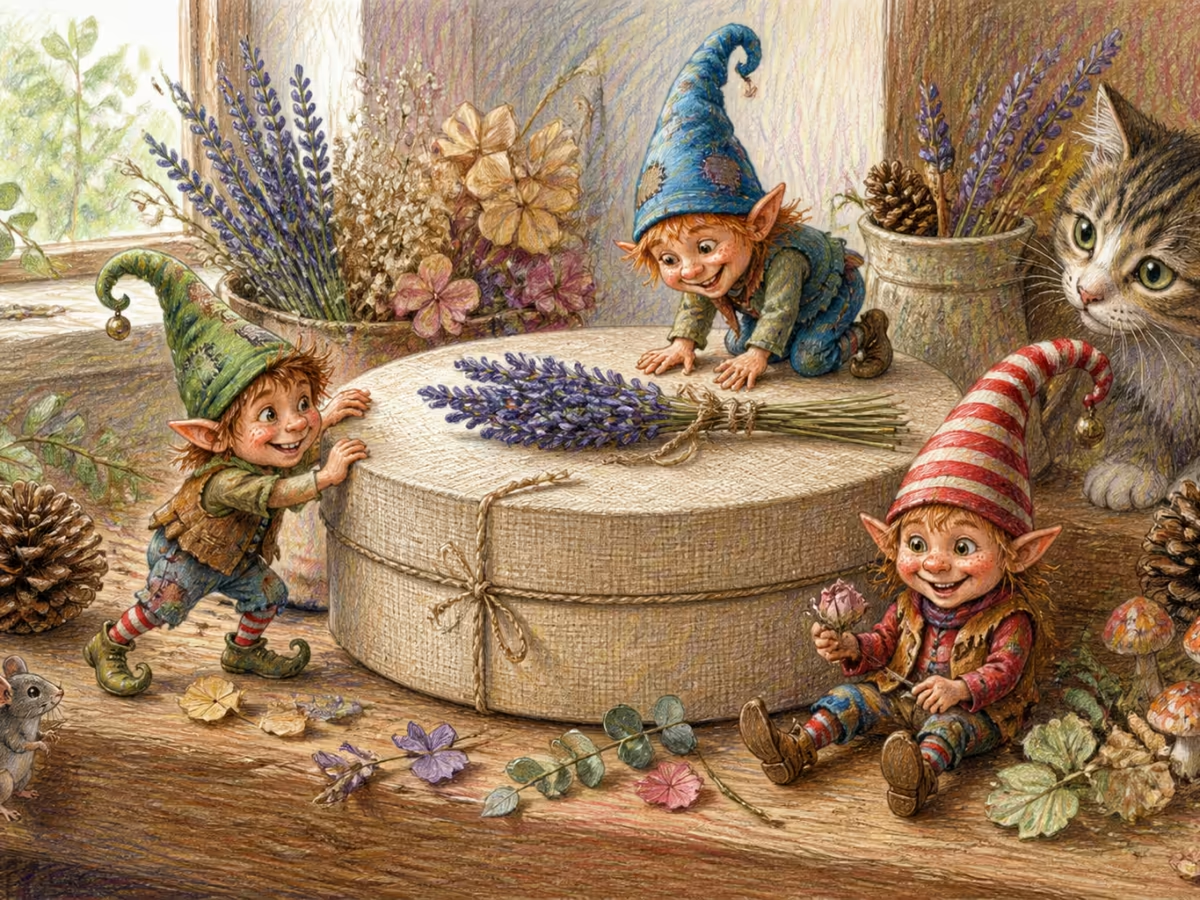
Magikitos Fairies each have a name, Magic Sparks and their own character. Whoever gives one can choose it based on what the recipient needs right now: calm, creativity, good luck, sweet dreams. That's something no Amazon box can do.
How to Choose the Right Fairy Without Getting It Wrong
First, look at who you're gifting. If that person already knows what they need in their life right now, start there: choose the Fairy carrying those Sparks. If you're less sure, fairies working with calm, creativity or good luck tend to work for almost everyone. And if you want something completely different — just ask them. Very few people say no to choosing their own magic.
Second, think about the space. A small fairy fits on any desk and in any emotional pocket. A larger one needs its own spot. If you don't know the person's home well, go with a size that can settle happily in any corner.
Third, the packaging. A felt fairy in a transparent plastic bag loses some of its magic on the way. Presentation is part of the gift. It doesn't need to be elaborate — just something that says "this deserves care from the very first moment."
The Perfect Moment Doesn't Need a Date
A birthday is an excuse, not a reason. The reason is that you want someone to know you think of them with warmth and notice them with care. A Magikitos Fairy works for birthdays, housewarming anniversaries, "I don't know why but I thought of you," "you seem really stressed lately," and "I know you collect things with soul and you had to have this one." It doesn't need a calendar date to land well.
What it does need is intention. For the giver to know why that one and not another. For there to be thought behind it. A gift like this isn't chosen in thirty seconds mid-scroll — it's chosen with the person in mind. And that difference shows. Every time.
What makes a fairy figurine gift actually good:
Do you know who made it and where?
If you've no idea of the origin or the maker, something important got lost along the way.
Does it have its own name and character?
Nameless figurines are decoration. Named ones with Sparks are companions.
Is it made without a mould?
No mould means no exact copy. The gift you're giving doesn't exist anywhere else.
Want to know more about why needle-felted wool has its own particular magic? The piece on Waldorf fairies and felt figurines gets into the details with a lot of joy. And if you already know you want one and just need to choose which — all of them are in our Magikitos Fairies section, with their Sparks and their stories.