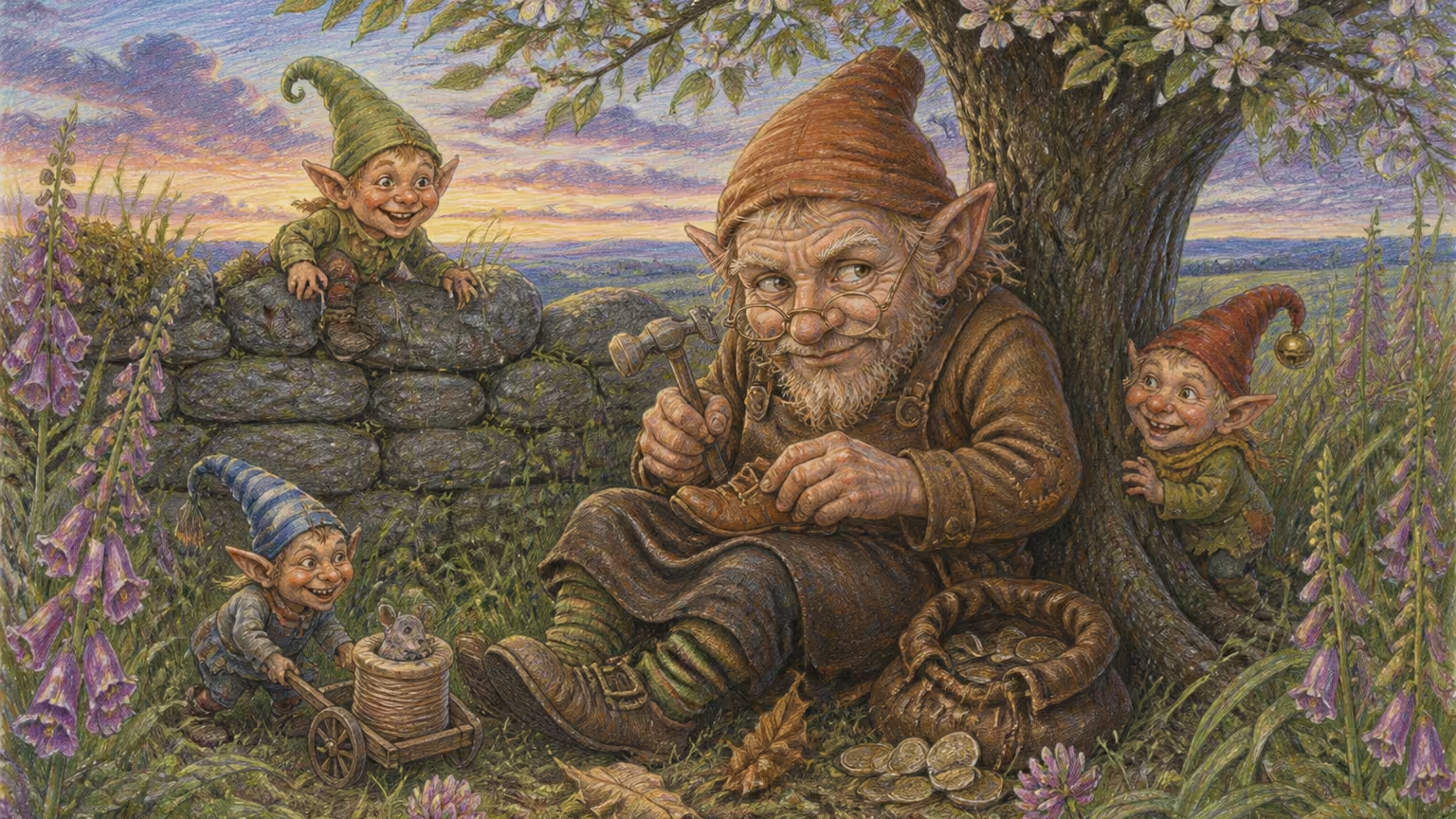
Forget the green-suited cartoon you see on cereal boxes every March. The actual leprechaun of Irish folklore is a small, solitary, brown-coated old man who sits under a hawthorn tree mending shoes with a tiny hammer, who never tells the truth about where his gold is buried, and who has been part of the cultural fabric of Ireland for at least a thousand years. He is not friendly in the household-helper sense of the British brownie. He is not malicious either. He is simply busy with his own work, and the moment you stop watching him, he is gone.
The leprechaun is one of the most internationally famous creatures of Irish folklore, and also one of the most misunderstood. The American Saint Patrick’s Day version (top hat, green coat, shamrocks, pot of gold at the end of a rainbow) is a heavy modern overlay on a much older and quieter folklore. We Magikitos have been telling the real version of the story in our workshop for years, partly because Carmen shapes leprechaun figures with the care the old Irish makers put in before the marketing took over, and partly because the folklore itself deserves to be told with care.
Today we will lay out what a leprechaun actually is, where the tradition comes from, why the leprechaun differs from his British cousins, where you can visit the National Leprechaun Museum in Dublin, and where the pot of gold story really comes from. If you have already read our pieces on the British brownie and on the wider household fairy family, you have the foundation. The leprechaun is the Irish cousin who lives off in his own corner with the gold he never lets you find.
What is a leprechaun in Irish folklore?
A leprechaun is a small, solitary, male fairy from Irish folklore, traditionally portrayed as an old shoemaker who lives alone in the Irish countryside, often under a hawthorn tree or by a holy well, and who is associated with a buried pot of gold. The word leprechaun comes from the old Irish word leipreachán or luchorpán, meaning small body, and the creature has been described in Irish literary sources since at least the eighth or ninth century. In his oldest forms, the leprechaun is a kind of solitary water sprite, but by the early modern period he had settled into the figure we now know: a small old man making shoes, jealously guarding gold he obtained from older fairy treasure hoards, and notoriously hard to catch.
The defining feature of the leprechaun in folklore is solitude. Unlike the British brownie or the Scandinavian tomte, the leprechaun does not attach himself to a household or a family. He works alone, lives alone, and considers the rest of the world a mild inconvenience. If you ever do catch one (the traditional way is to keep him in continuous eye contact, as he disappears the moment you blink), he is bound by the rules of his kind to lead you to his gold, but he will spend the entire time trying to trick you into looking away.
What does a leprechaun do in folklore?
Three things, in order of importance. First, he mends shoes. The leprechaun is fundamentally a cobbler, and his small leather hammer can usually be heard tap-tap-tapping if you stand quietly in the right Irish meadow at dusk. The sound is one of the traditional ways of locating a leprechaun, and the rhythm of the tapping is also said to be a way of distinguishing a real leprechaun from other small folk: it is steady, precise, and almost mechanical, never the irregular tapping of a bird or branch. Second, he guards a pot of gold. The gold is said to come from older fairy treasure hoards, and the leprechaun has spent his very long life moving it from hiding place to hiding place to keep it safe from human treasure hunters. Third, he tricks travellers. Anyone who manages to corner a leprechaun is in for an extended psychological battle, because the small old man will lie, distract, mislead, and only finally surrender his gold if the human shows uncommon patience and sharp eyes.
The shoe-mending detail is the most folklorically distinctive. Most fairy folk in the European tradition do not have a specific trade. Brownies tidy households generically. Pixies dance generically. The leprechaun is uniquely defined by his craft, and that craft (cobbling) ties him to a specific role in pre-industrial Irish society, when handmade shoes were a sign of solid family standing and an itinerant shoemaker was a familiar figure on the country roads. The leprechaun is, in a sense, the supernatural echo of the wandering Irish cobbler.
Is a leprechaun the same as a brownie?
No, the two creatures are folkloric cousins but they live very different lives. A leprechaun is solitary, Irish, male, attached to a place rather than a family, and primarily known for his cobbling and his gold. A brownie is similar in size and approximate temperament but is attached to a specific household, helps with quiet domestic work in exchange for a bowl of cream, and has no particular trade or treasure. The two creatures probably share a common ancestor in older Celtic and pre-Celtic European folklore, but they branched into different cultural traditions over the centuries: the leprechaun became the Irish countryside figure, the brownie became the British (especially Scottish and Northern English) household figure.
You can think of it this way. The brownie wants to live with you. The leprechaun wants you to leave him alone. The brownie is happy when the cream is set out and the hearth is tidy. The leprechaun is happy when nobody is watching him work. Different needs, different rules of engagement, different folkloric registers.
What is the National Leprechaun Museum of Ireland?
The National Leprechaun Museum is a small museum in central Dublin, opened in 2010, dedicated to Irish folklore with a particular focus on the leprechaun and other figures of the Irish supernatural tradition. Located on Jervis Street in the city centre, the museum is one of the few places in the world specifically devoted to the leprechaun as a folkloric figure rather than as a marketing mascot. Visitors are taken on a guided tour through themed rooms (including a giant-scale room where you feel leprechaun-sized, a tunnel of pots of gold, and an exhibition of traditional Irish storytelling), with a strong emphasis on the oral tradition. The museum is small, friendly, and quirky in the best Irish way, and it is one of our Magikitos-recommended visits if you are spending more than a day or two in Dublin.
What we particularly appreciate about the museum is its decision to take the leprechaun seriously as a folkloric figure rather than to treat him as a tourism cliché. The exhibitions explain the etymology of the word, the historical sources, the regional variations across Ireland, and the way the leprechaun has been transformed by twentieth-century American popular culture. It is, in effect, an act of folkloric reclamation, and we are grateful for it.
How does the leprechaun differ from British house spirits?
In four meaningful ways. First, geography: the leprechaun is exclusively Irish, while the British house spirits (brownie, hob, pixie) range across Scotland, northern England, and the south-west of England. Second, attachment: the leprechaun is bound to a place (his hawthorn tree, his hill, his particular meadow), while the brownie is bound to a family and follows them if they move. Third, occupation: the leprechaun has a specific trade (shoemaking), while the British house spirits do generic domestic or land-related work. Fourth, attitude toward humans: the leprechaun actively avoids and tricks humans, while the brownie quietly cooperates with them, and the hob mostly ignores them. The four creatures probably share an ancestor far back in Celtic and pre-Celtic European folklore, but they evolved into very different roles in their respective national traditions.
Where does the pot of gold story come from?
From the older Irish tradition of fairy treasure hoards, which predated the leprechaun figure himself. In early Irish folklore, the aos sí (the People of the Mound, or the Otherworld inhabitants) were said to guard great hoards of gold, silver, and precious objects in their underground halls. When humans dug into these hoards (often by accident, when ploughing or digging foundations), they were warned to leave the gold alone, because the fairy folk would always reclaim it. The leprechaun, who became one of the most popular figures in later folklore, inherited a role as the guardian of a small portion of this older treasure tradition. He carries one pot, not a whole hoard, and he carries it from hiding place to hiding place because the older fairy folk are still active and will reclaim it if he settles in one spot too long. The pot of gold at the end of the rainbow is a much later (probably nineteenth-century) addition to the story, and likely an importation from older European rainbow folklore rather than a genuine Irish element.
What do leprechauns look like?
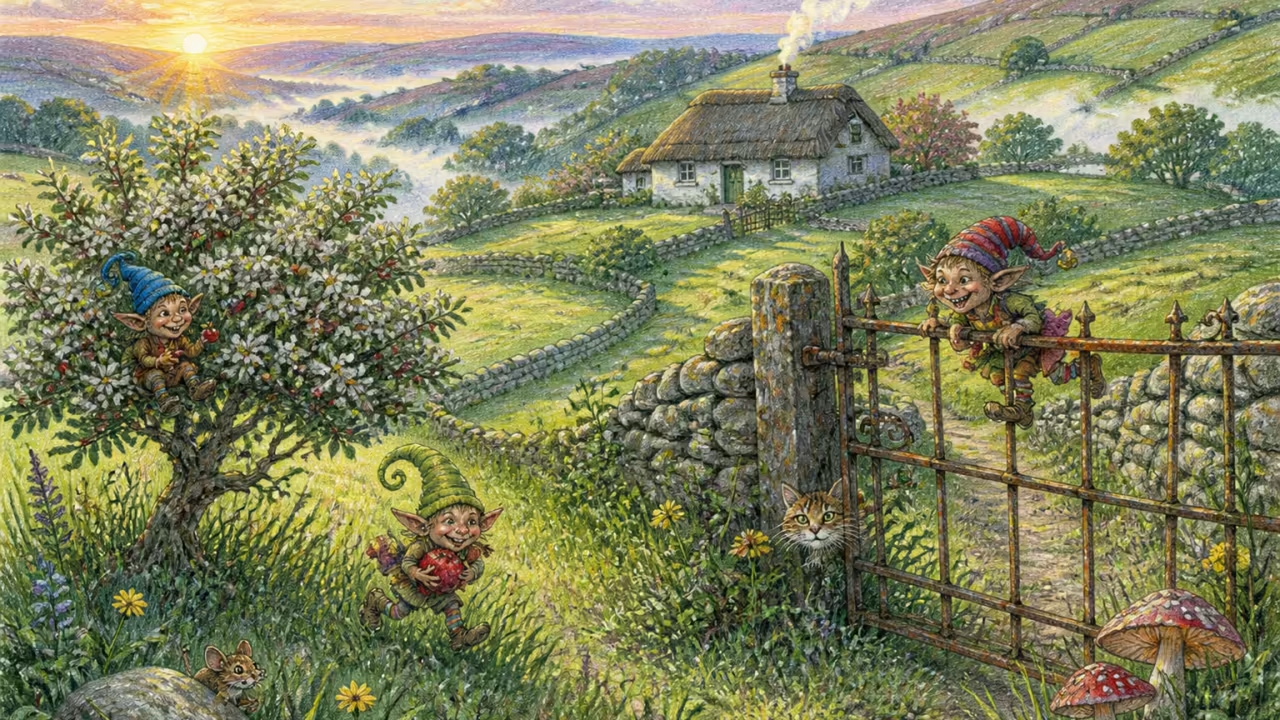
In genuine Irish folklore, a leprechaun is about the size of a small child or a large rabbit, with the appearance of an elderly man in his sixties or seventies. He typically wears a long brown or russet coat (not the modern bright green), a tall pointed hat (sometimes red, sometimes brown), worn leather breeches, a leather apron over his clothing for his cobbling work, and small handmade shoes of his own creation. His face is wrinkled, his beard is white or grey, his eyes are sharp and slightly mischievous, and he is rarely without his cobbler’s hammer and a small piece of leather. The modern green-suit-and-top-hat costume that you see on Saint Patrick’s Day merchandise is a twentieth-century American invention, drawn from theatrical conventions and marketing rather than from the original folklore.
If you ever see one in the wild (and Irish country people will tell you this in low voices), the giveaway is usually the sound of the hammer tapping before you see the figure himself. You follow the sound, you look very carefully, and somewhere in the long grass at the base of a hawthorn you find a small bent old man in brown working with great concentration. That is your leprechaun. He has already noticed you, but he is pretending he has not.
Are leprechauns real?
As real as any other figure of European folklore: real in the sense that they are part of the living cultural inheritance of an entire country, real in the sense that they are still believed in (in the soft, half-knowing way of country folklore) by a meaningful number of people in rural Ireland, and real in the sense that the landscape of Ireland is shaped by belief in them. There are still fairy forts (small ringed enclosures in fields) that no Irish farmer will plough up, and there are still hawthorn trees that nobody will cut down, even when they are inconveniently placed for modern roads or new houses. In County Clare in 1999, the route of the M18 motorway was actually moved to avoid cutting down a lone hawthorn locally believed to be a fairy thorn associated with the small folk. That is folklore exerting genuine, material force on twenty-first-century infrastructure. Real in any practical sense.
Whether the leprechaun is literally there, sitting under a thorn in County Clare with his hammer and his pot of gold, is a question we Magikitos leave to each reader. We have our own quiet view, but we know better than to insist. What matters is that the tradition is alive enough to bend motorway routes, and that is more reality than most modern beliefs achieve.
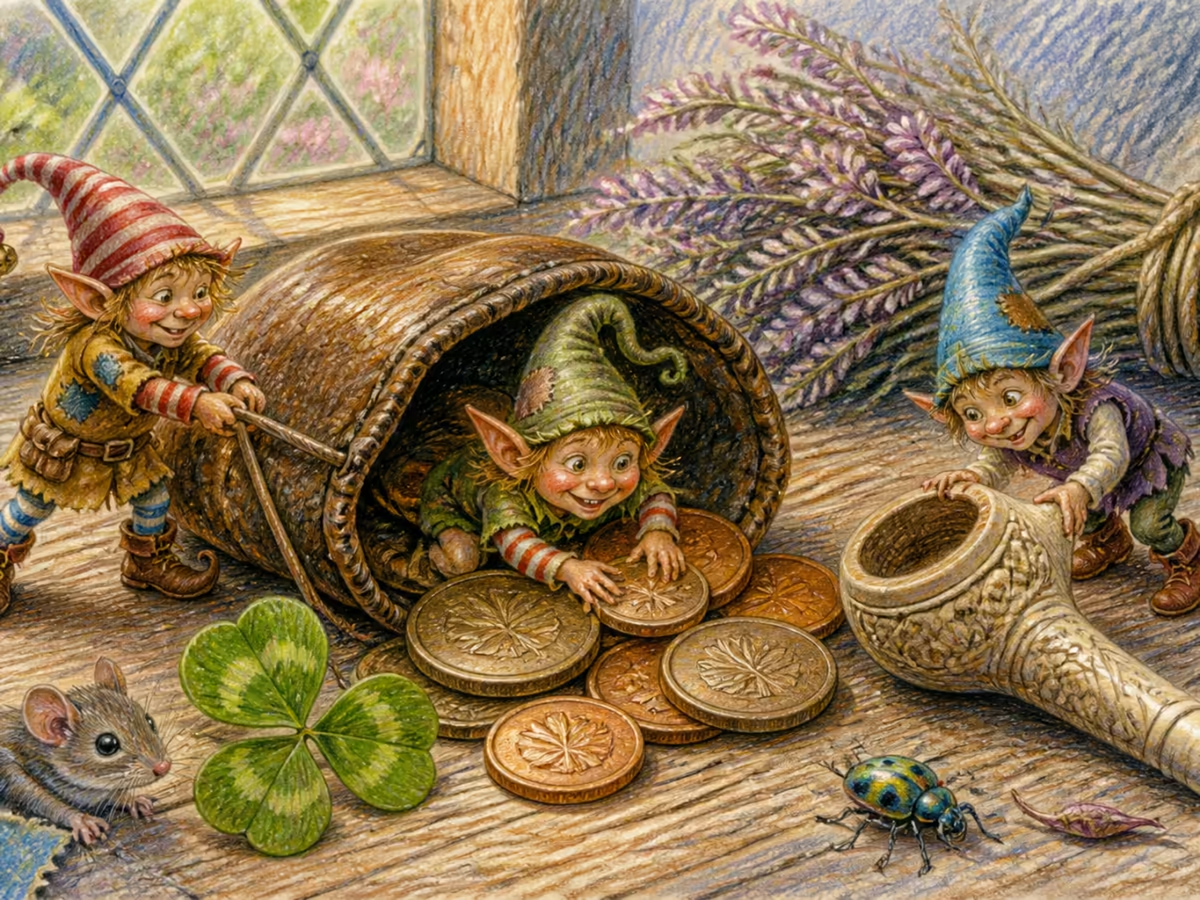
One detail that gets lost in the modern leprechaun story is the trick the gold itself plays. In genuine Irish folklore, fairy gold that is taken away from its owner does not stay gold. By the time you reach home, the pieces in your pouch have turned into leaves, pebbles, or simple buttons. The leprechaun is not the only safeguard on his treasure: the treasure itself refuses to leave the Otherworld.
This detail is older and more interesting than the rainbow, and it carries a quiet moral weight: there is no shortcut to riches in Irish folklore. Even the fairies will not let you keep what you have stolen.
Where can you see leprechaun figures handmade with respect?
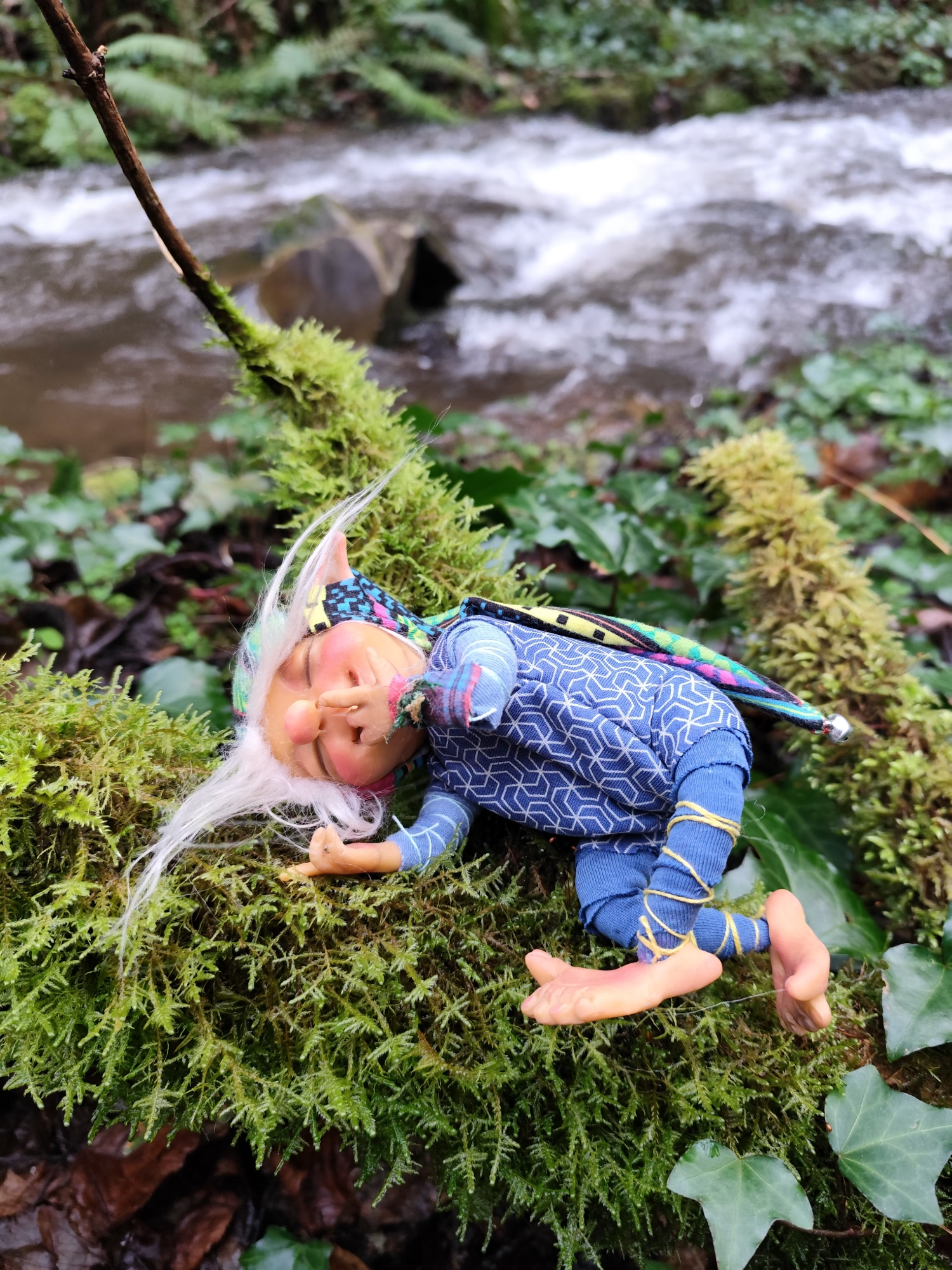
From a small number of Irish woodcarvers who still treat the leprechaun as a folkloric figure rather than as a tourist cliché, and from a small number of European workshops (including our own in Taramundi) that carve him with care. We Magikitos work with Carmen, who has spent years studying Irish folklore visual sources before shaping the first leprechaun in her studio. The result is a figure in russet wool and warm browns, no plastic, no overdone green, with an elderly bearded face and a small wooden hammer in one hand. You can see our leprechaun figures and other Irish-leaning pieces in our brownies collection (where the leprechaun lives alongside his British cousins, since the website organises by creature family rather than by nationality), and our smaller folkloric accessories in our treasures.
If you visit Ireland in person, ask in the smaller craft shops of County Clare, County Galway, County Cork, and County Wicklow. The big tourist shops in Dublin and along the Wild Atlantic Way sell mass-produced figures that look almost identical to each other. The small craft shops are where you find the real thing, often made by one or two local woodcarvers who have been doing this for decades.
The real leprechaun is brown, solitary, and busy with shoes. Everything else is marketing wearing a green hat.
The Magikitos, from the workshop in Taramundi
What other Irish supernatural beings should you know?
Several, and the leprechaun is only the most famous of a large family. The aos sí (pronounced roughly ees-shee, meaning the People of the Mounds) are the larger fairy folk of Ireland, who live in the Otherworld and emerge into our world through specific entry points (fairy mounds, ring forts, holy wells). The bean sídhe (or banshee, the woman of the mounds) is the most famous of the aos sí, a wailing female spirit whose cry warns of an upcoming death in certain Irish families. The phooka (or púca) is a shape-shifting creature, often appearing as a black horse, who can be dangerous if disrespected but generous if treated well. The dullahan is a headless horseman, the original of the more famous American Headless Horseman. The cluricaune is a leprechaun-like creature, smaller and more mischievous, who lives in wine cellars and protects the casks from theft. Each of these has its own folklore and its own regional variations, and together they make up a much richer supernatural tradition than the international fame of the leprechaun alone suggests.
If you are interested in going deeper into Irish folklore, the best starting points are the late twentieth-century scholarly work of Dáithí Ó hÓgáin, the older fieldwork of Lady Augusta Gregory and W. B. Yeats (who collected and published many of the foundational tales in the late 1800s), and the more recent visual and oral collections held at the National Folklore Collection at University College Dublin. Each of these is a doorway into a much richer world than the cereal-box leprechaun ever suggests.