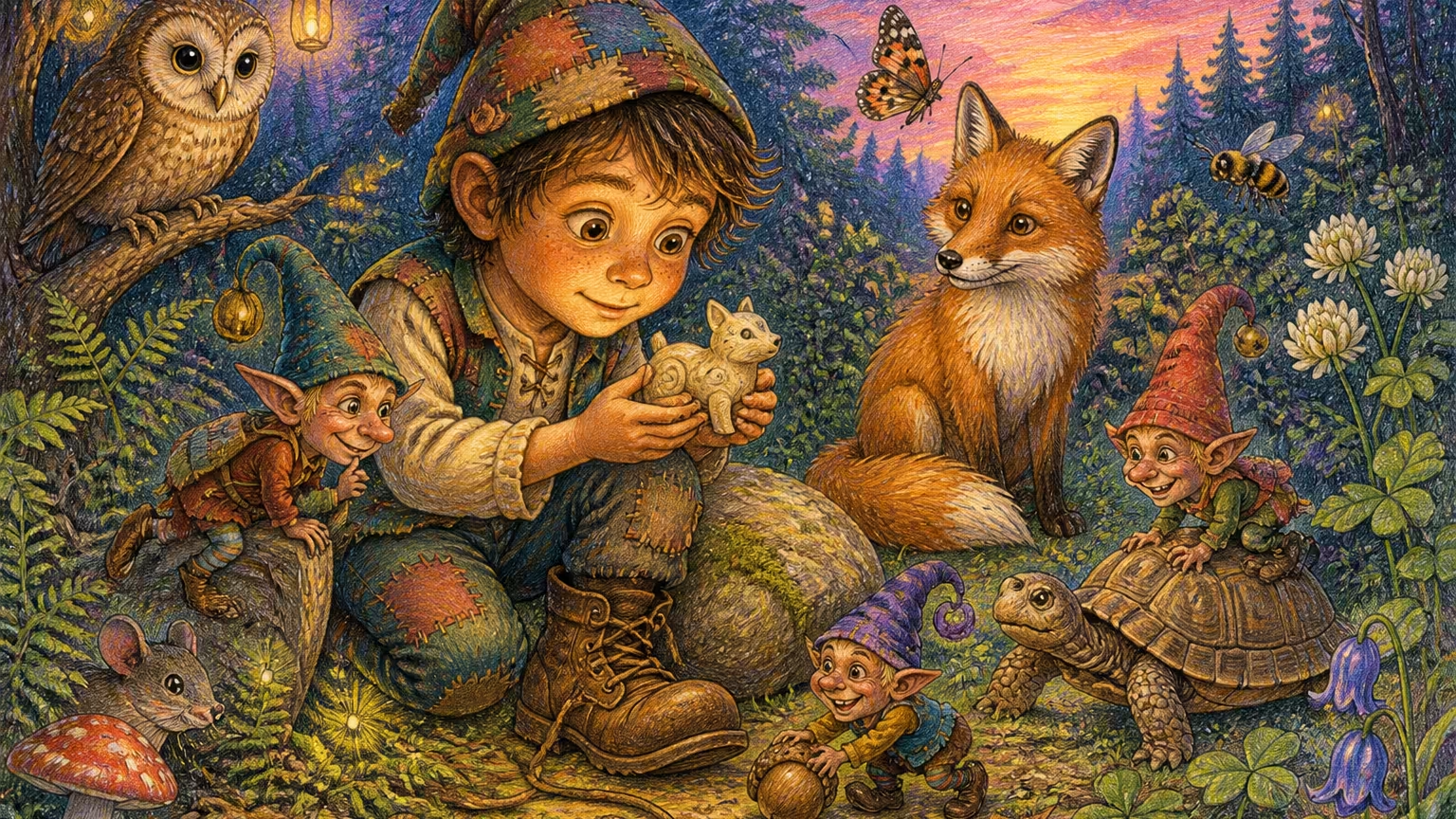
There's a very old conversation we've witnessed from beginning to end that humans only ever caught in fragments. It's the conversation between people and animals, the one that started when someone's ancestor peered at an owl in the dark and thought: this thing knows something I don't. And from that moment, without any coordination, forty separate cultures across the globe reached surprisingly similar conclusions.
Lucky animals aren't your nan's superstition. They're the earliest way humanity ever asked the universe for help while keeping its dignity intact. You slip a rabbit charm in your pocket and that's it: something out there hears you.
The logic that needs no explaining
When the first humans lived at the mercy of weather, hunger and darkness, animals were the closest thing they had to experts. The fox knew how to hide. The bee knew how to build community. The tortoise always arrived, eventually, with a serenity that comes from having weathered everything. The owl survived the night when everything else was afraid.
You didn't need a philosophy textbook to see that these animals had something. Something the human wanted for themselves. And the most direct way to ask for it was to get close to them, draw them on cave walls, carve them in stone, carry them around. Not because they believed in magic, but because the symbol is the first tool of the mind.
The British reflex of touch wood is so old most people can't explain it. You say something too certain, your knuckles find the nearest timber, and something in your nervous system relaxes. That's the same impulse that put the owl on a temple in Athens and the fox in a shrine in Kyoto: reach for the creature that carries what you need.
Why do animals bring luck?
Lucky animals carry good fortune because, in the collective imagination of every culture, each species represents a force of nature that humans have always wanted to borrow: the cunning of the Know-It-All Fox, the transformation of the Transforming Butterflies, the community of the Hardworking Bees, the wisdom of the Adventurous Owls. It's not empty superstition. It's the oldest way in the world of telling the universe what you need.
A biologist would say we project admired qualities onto animals. A neuroscientist would add that symbols activate the same circuits as the things they represent. A six-year-old would say it's because animals are brilliant. All three are right, and they're all saying the same thing in different vocabularies.
What's striking is the convergence. With no connection between them, cultures on every continent arrived at the owl as a symbol of wisdom, the butterfly as a messenger of souls, the bee as the emblem of work that pays off. That doesn't happen by chance. It happens when you observe the same creatures doing the same things for thousands of years, and when you're human, a pattern-recognising animal with an urgent need to make sense of everything.
For the deeper layer of this tradition, the one that predates lucky charms and gift shops, the piece on power animals and shamanic tradition is where it all begins.
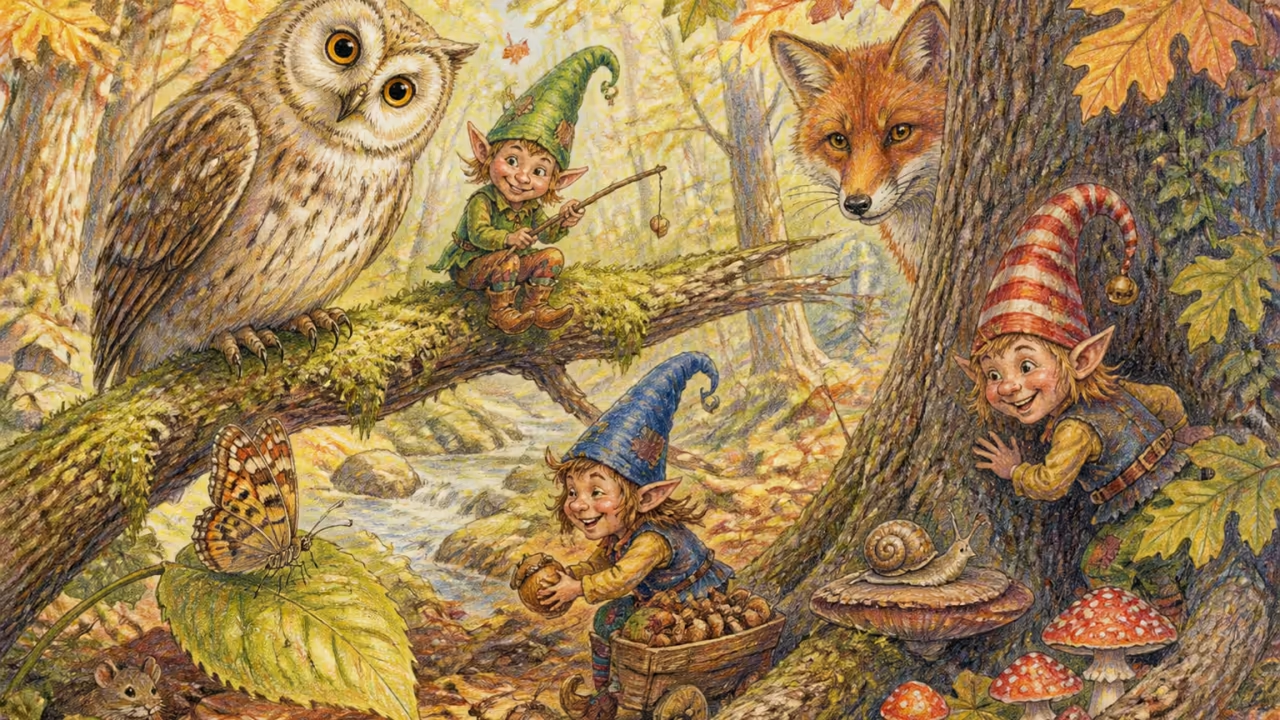
The luck bestiary: animals everyone wants nearby
Some creatures have crossed oceans without a passport. The owl might be the most democratic guardian of all: in ancient Greece it was Athena's emblem, the symbol of wisdom. In Japan, the fukurō brings luck and knowledge. In medieval Europe, the wise ones sought it as a night companion. Our Adventurous Owls carry that inheritance: they're the ones who go when nobody else will, the ones who navigate darkness without fuss.
The butterfly doesn't bring any old luck. It brings the luck of changes you need but haven't asked for. In Mexico, certain monarch butterflies are the souls of the dead returning for Día de los Muertos. In Japan, a butterfly in the house announces the arrival of someone you love. In ancient Greece, a single word covered both soul and butterfly: psyche. When you see a Transforming Butterfly on your shelf, you're inheriting four thousand years of good omen.
The fox is the cleverest of the group and knows it. In Japan, the kitsune is a supernatural being with powers of transformation, a messenger of Inari, the deity of fortune and harvest. In European tradition it's the trickster who always escapes, the one who shows that intelligence is the best charm of all. Our Know-It-All Fox carries that history: part cunning, part opportunity, part the kind of luck you make yourself.
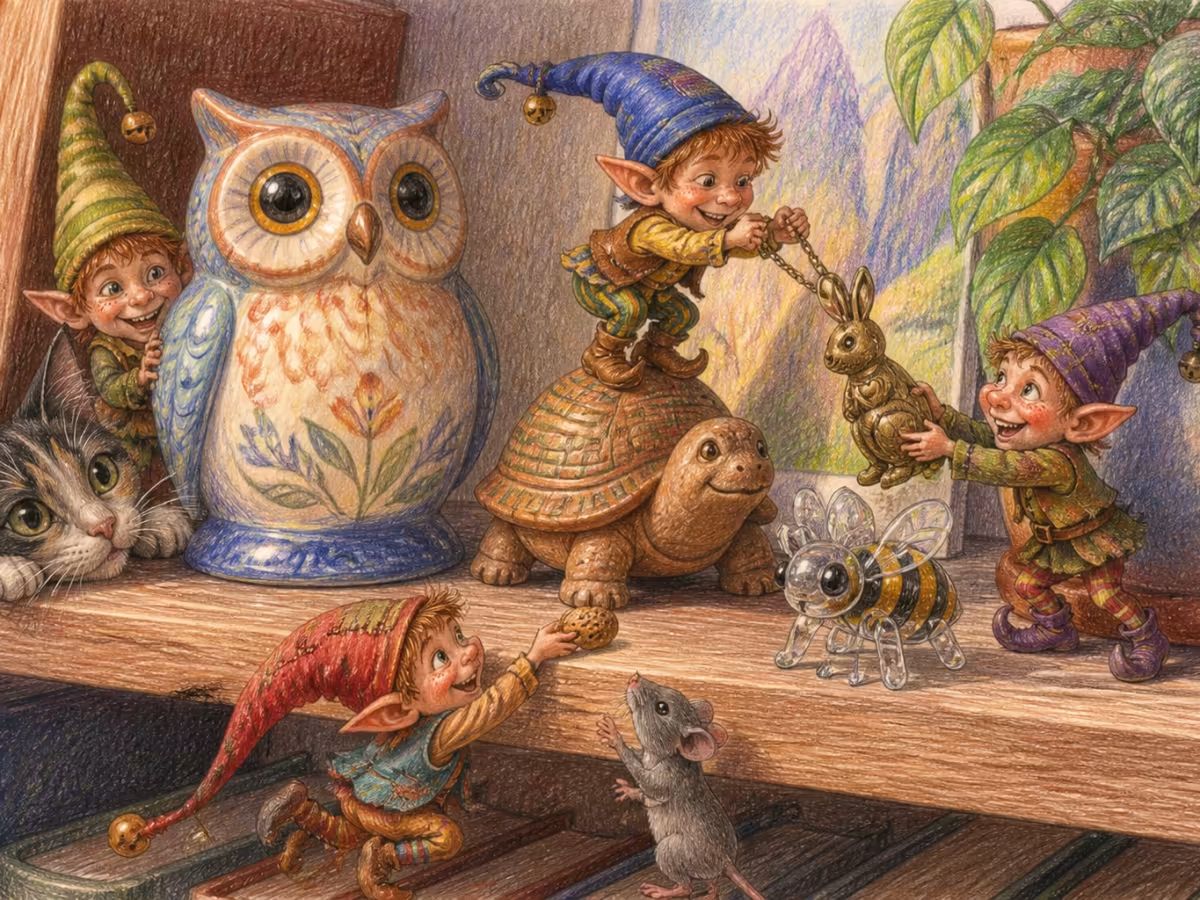
The bee is the lucky animal that earns it: in ancient Egypt it was a symbol of royalty and regeneration. In Celtic tradition, honey was the food of the gods. In many Slavic cultures, having bees nearby meant the house was prospering. Our Hardworking Bees carry that in their DNA: the kind of luck that arrives because somebody didn't stop working.
And the tortoise, the one who carries her house on her back with more elegance than anyone. In Hindu and some Native American cosmologies, the whole world rests on the shell of a cosmic tortoise. In China, it's a symbol of longevity, health and protection. Our Slow and Steady Turtles know something the others don't: the most lasting luck is the kind that takes its time.
Does the same animal mean the same thing everywhere?
Not always, and that contradiction is the most interesting part of the whole thing. The owl is wisdom in Greece and western Europe, but a messenger of death in some indigenous Mexican traditions and parts of the Middle East. The black cat is bad luck in Spain and Italy, but brings good fortune in Japan, Scotland and Ireland. The stork announces happy births across central Europe, but is seen as a sign of change in parts of Andalusia. The same animal, opposite readings, because animals don't carry meaning. We carry it for them, and every culture has loaded theirs differently.
This is what we love most about the whole thing, and we'll be the first to admit it: the meaning of a lucky animal isn't in the animal. It's in who's looking, from where, and with what need. That's why the Unbothered Cats can be simultaneously the most mysterious and most domestic creature in the world, the most independent and the most home-bound. It depends where you look. And that, at the end of the day, is a pretty good definition of luck.
To understand why animals pick up on things we miss entirely, why animals see what we can't has answers that'll stay with you.
A lucky animal doesn't change your luck. It changes how you look at it. And sometimes, that's the same thing.
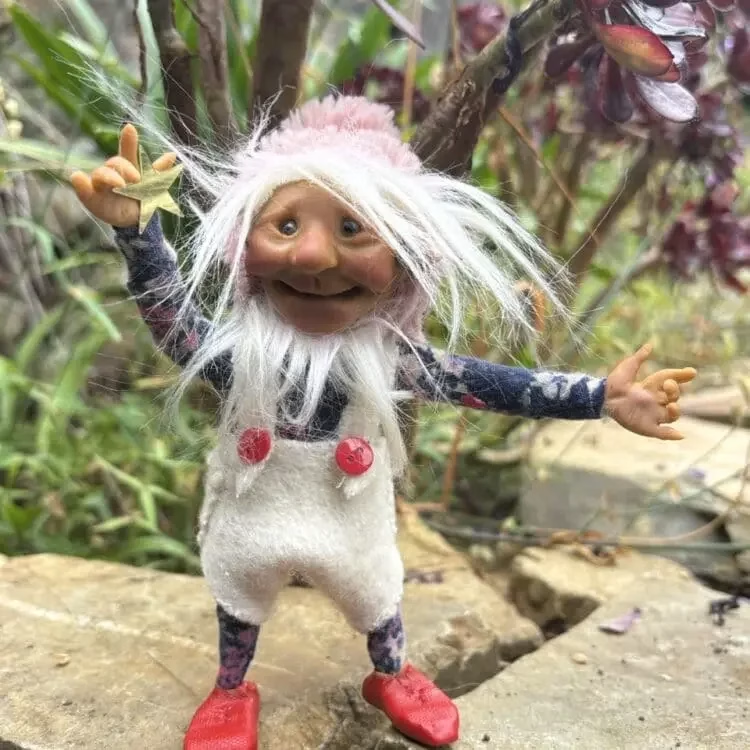
We Magikitos were born from exactly this: from the certainty that carrying a well-made creature, made by hand and with intention, is no different from what humans did when they painted bison in Altamira. It's saying something to the universe in the shape of a living being. It's putting nature on your side without asking anyone's permission. Wander into the forest and find the one carrying what you need.