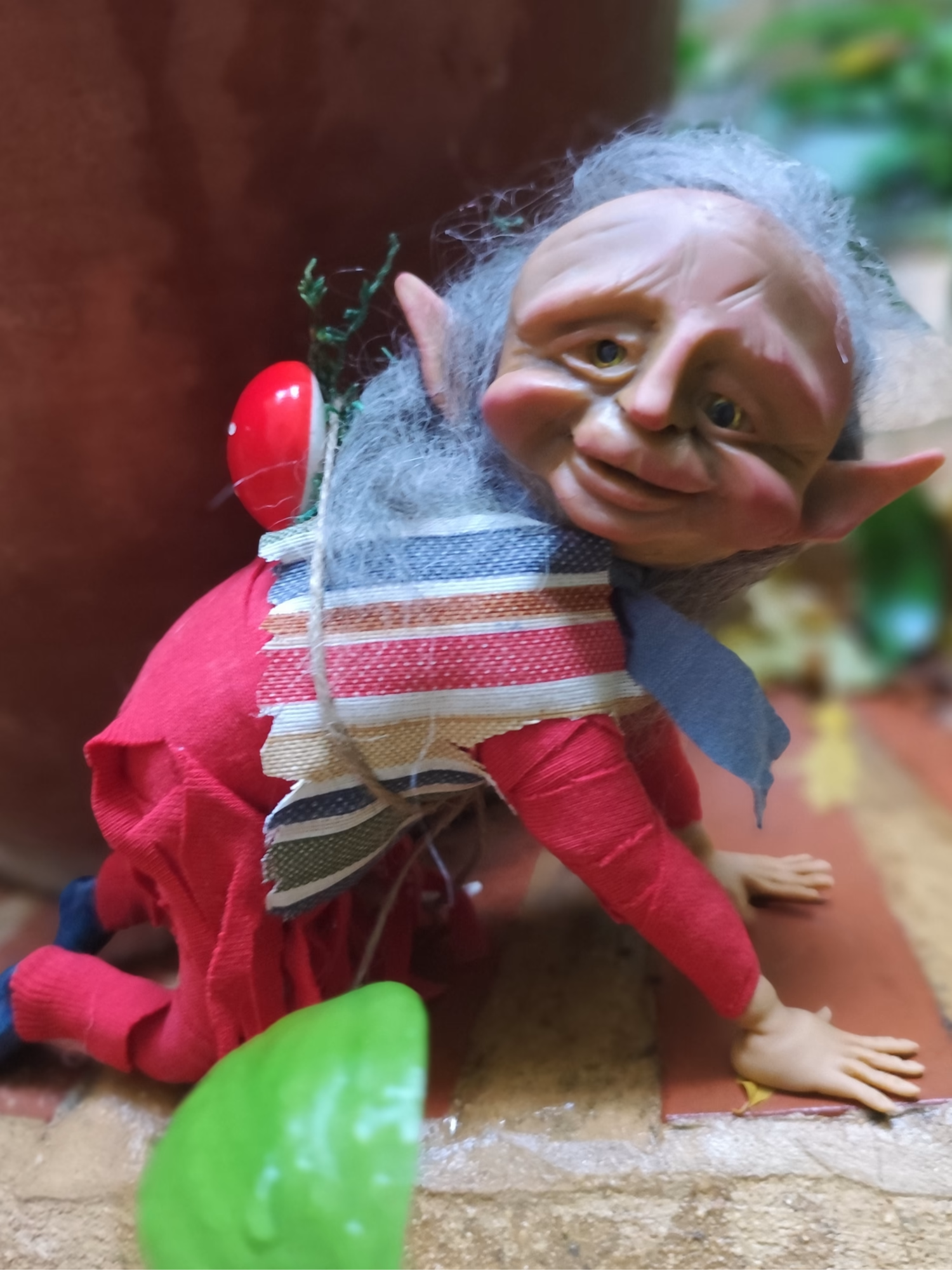
Here's something the folklore of every European culture figured out on its own, without ever comparing notes: the household brownie isn't a servant you can boss around, a ghost to be afraid of, or a decoration you can ignore. It's an arrangement. And like any arrangement that actually works, it has terms.
What people called superstitions about house spirits, leaving milk on the threshold, keeping iron away from certain corners, never saying the brownie's name out loud, wasn't magic for magic's sake. It was the vocabulary of a relationship. A relationship that ten unconnected civilisations independently worked out, in remarkably consistent ways. That's the real mystery.
Today we're opening the file. This is what the agreement says in the fine print.
Why does iron drive away a household brownie?
Because iron is the first material humans ever wrenched from nature by force, rather than finding or negotiating with it. Smelt the rock, hammer it into a tool, bend it to your will: that's pure human technology, and the household brownie belongs to the world that came before that conquest. The brownie lives in the pact between the wild and the domestic, where nature isn't dominated but negotiated with. Iron shatters that pact, because it announces, with all the bluntness of hot metal, that we're the ones in charge now.
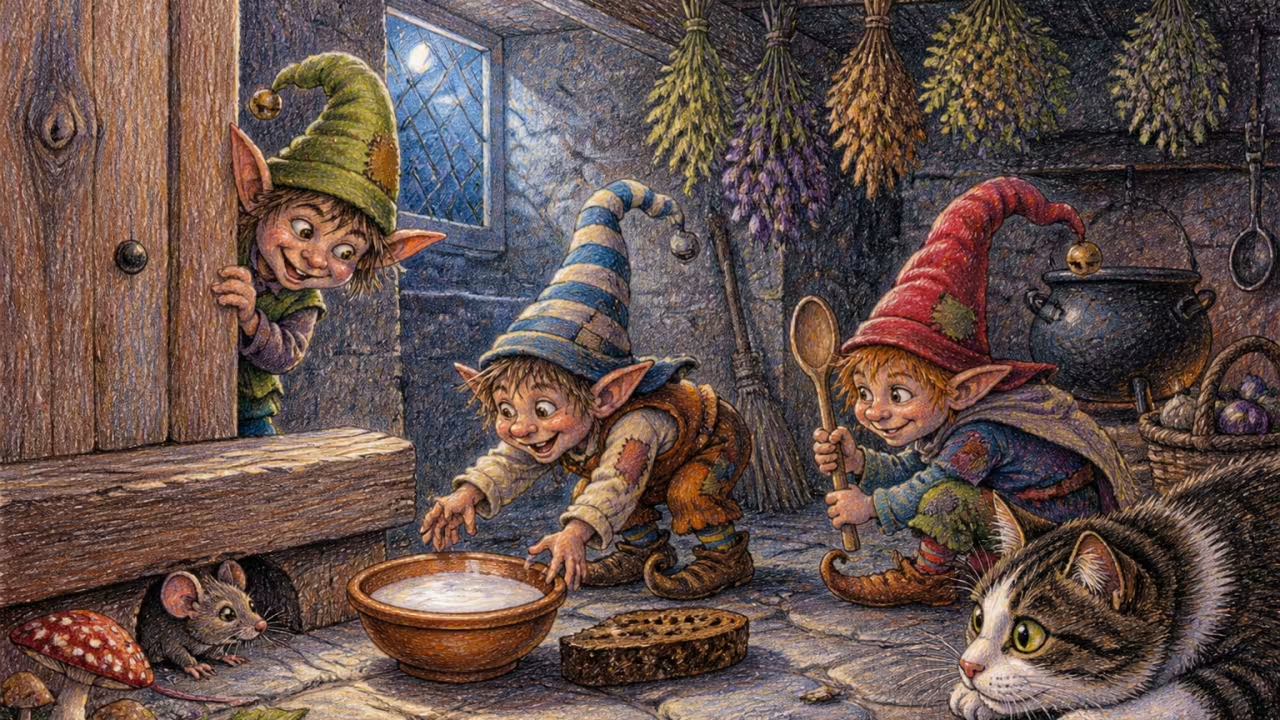
Which is why a horseshoe nailed above the door doesn't drive a brownie away through magical powers. It just signals that this space has a character where a wild-yet-domestic spirit doesn't want to settle. The brownie isn't hurt by the iron. It simply leaves for a household with better terms. As anyone with an ounce of self-respect would.
The iron-as-protection tradition appears in the Scottish Brownie, the German Kobold, the French Lutin, the Italian Folletto and almost every household spirit in European folklore. In our piece on household spirits worldwide and in the one on who keeps hiding your keys, we've already explored how consistent this family of beliefs turns out to be. Iron is its quintessentially European symbol: the first marker of human mastery over the natural world, which is precisely the symbol a spirit of the natural world doesn't want nearby.
The offering: saying thank you without words
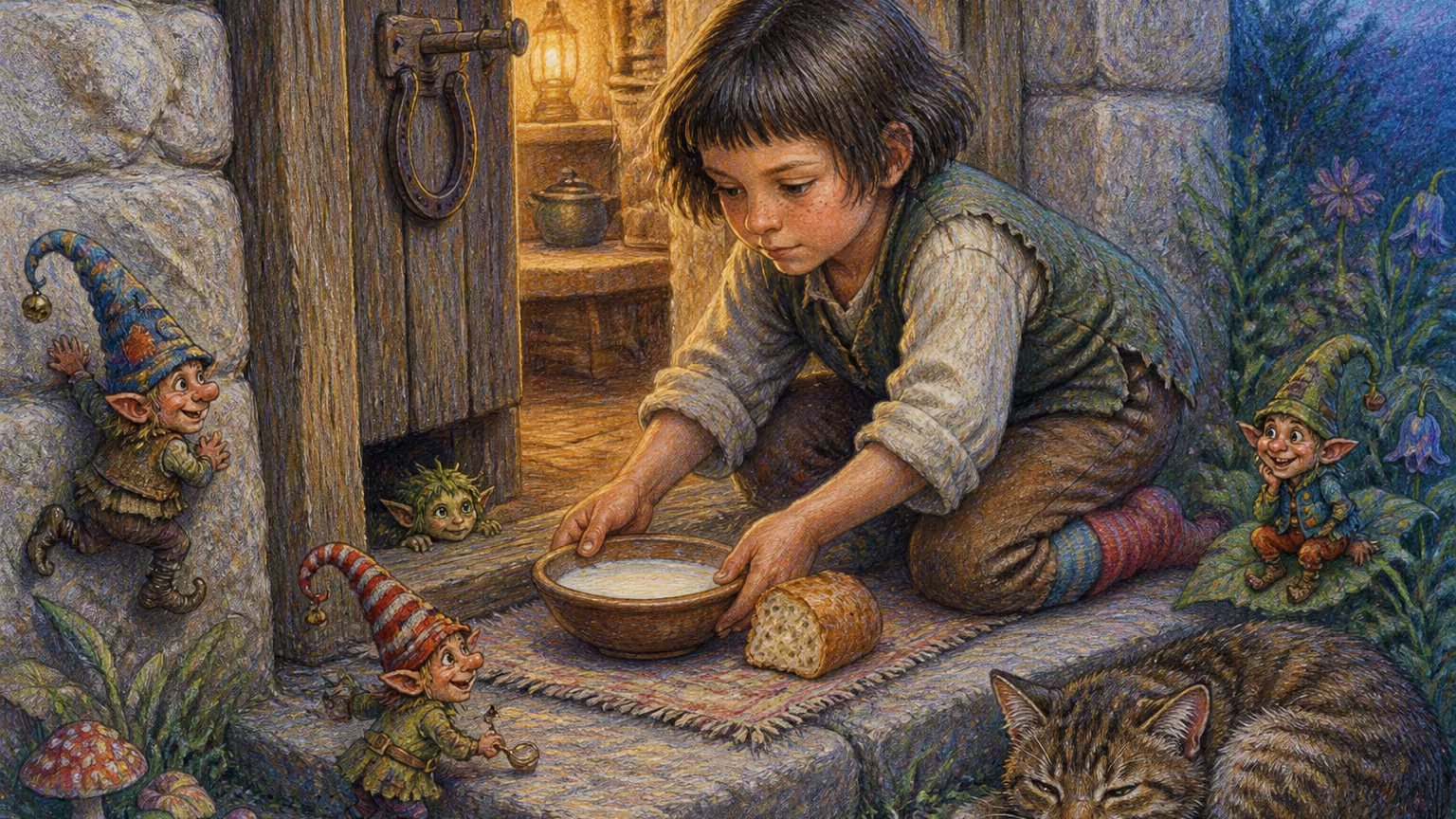
The classic offering for a household brownie is milk. In Scotland, a bowl of oatmeal. In Scandinavia, Christmas porridge with a knob of butter. In Germany, bread and salt on the threshold. In Asturias, the first glass of water of the day left on the front step for the Trasgu.
What all these have in common isn't the food itself. It's the gesture. Taking something of what you have and leaving it for another without watching who collects it, without waiting for acknowledgement, without making a performance of it. The brownie doesn't need the milk for calories. It takes it because it's the only language in which a human can say I see you, you're here, what you do matters, without the awkwardness of actually saying so.
The threshold was the required spot. Not in the middle of the kitchen, not in the sitting room: at the threshold. The liminal space between inside and outside, which is exactly where a brownie exists. Leaving the offering in the centre of the room would be a protocol error on par with inviting someone to dinner and serving it in the hallway. You need to know where the other is to know where to meet them.
And there's one more condition, which anyone who's read about making deals with the magical world will have spotted before: don't say thank you out loud. Verbal gratitude has a peculiar inverse power in household spirit folklore. The milk on the threshold, the broken bread, the first glass of water: those are the thank-yous that work. The effusive word is almost an insult. Like telling someone who's been looking after you for years without being asked: "oh, you're so kind." It breaks the spell accidentally.
The name taboo: living together without owning
There's a rule that appears in almost every European household-spirit tradition and at first glance seems arbitrary: don't give it a name. The Scottish Brownie that's lived with a family for generations leaves the moment someone starts calling it "Wee Tommy". The Kobold that's been quietly working away in the stable for decades vanishes the night after the stable hand introduces it to the others.
Naming is the first act of possession. We name the things we want to fix, retain, collect. The household brownie lives with you freely, like a bird that flies in through an open window and stays. Closing that window with a name would be a fundamental misreading of the whole arrangement. The brownie isn't yours. It coexists with you, which is different and considerably better.
The same logic appears in Asian spirit folklore, in Andean waca traditions, in animist cultures worldwide. Naming means claiming, and claiming breaks the free reciprocity pact. The brownie doesn't sign ownership contracts. It has better options.
What happens if you give a brownie clothes?
It leaves. That same night, no drama, no farewell, no note. And it doesn't come back.
This is the most documented taboo in European folklore. The Brownie that swept, wove and nursed sick animals would flee the moment the lady of the house left new clothes by the threshold, with the best intentions in the world. The English Hob did the same. So did the Scandinavian Nisse. The German Kobold was so offended it sometimes broke things before leaving, which makes a certain sense if you think about it.
The explanation is the most elegant one we've found in centuries of looking: giving clothes is paying. And when you pay, you've turned a relationship into a transaction. The household brownie doesn't work for money or its cloth equivalent. It works because that home is as much its own as yours, because it cares, because it has something economists can't measure and neighbours notice when it's gone. To pay it is to tell it the deal is over. That now it's an employee. Brownies aren't employees. They're housemates.
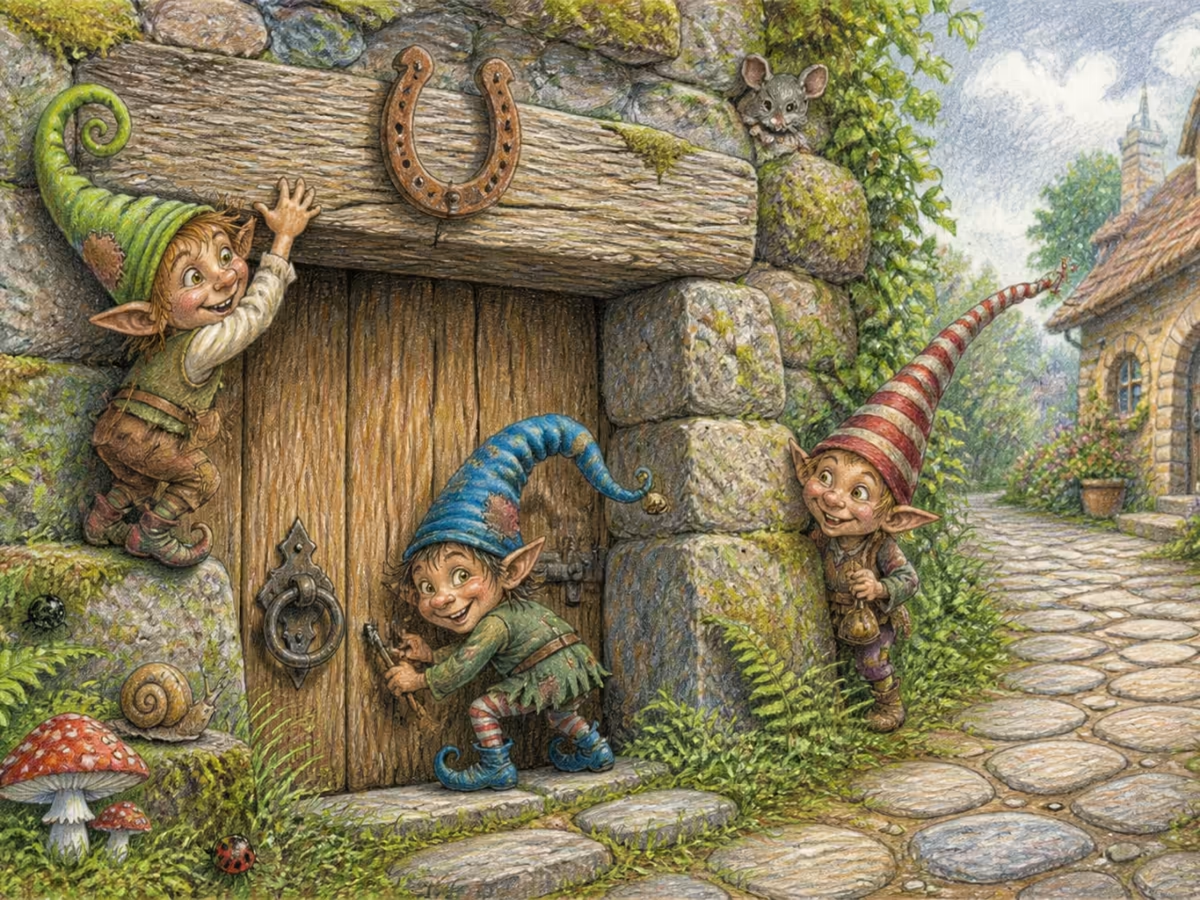
These beliefs survived centuries not because people were credulous, but because they encoded something true about coexistence. Iron marks territory. Milk acknowledges presence. Naming claims. Clothing pays. Each gesture follows a logic that any creature sharing space with another understood without needing it explained.
If this sounds like a lot of weight for a six-inch-tall companion, bear in mind that the Scottish Brownie has been documented since the 13th century, the German Kobold appears in first-hand medieval records, and the folklore of European household spirits has more internal consistency than many ethics treatises published in the 20th century.
The relationships that last centuries aren't built on contracts. They're built on milk on the threshold and the good sense not to ask too many questions.
If you want to know whether you've got one, our piece on the signs you've got a brownie has the full official checklist. And if you've already identified yours and want to look after it properly, the complete guide to living with your Brownie covers everything from maintenance to offering protocol, no gaps left.
The arrangement has held for millennia. That's not a bad sign that it knows something we don't.