Some words carry centuries of magic without anyone ever asking where they came from. Fairy is one of them. The word sits so naturally in the English imagination, so embedded in stories and names and everyday speech, that it is almost startling to learn it traces back to Latin, passes through three Roman goddesses who spun mortal destiny, and only then becomes the luminous creature we know today.
That is the journey. Not as a linguistics lesson, there are enough of those, but because the answer is genuinely strange and wonderful, and strange and wonderful things deserve to be told properly.
It starts with fate: the Latin fatum
The word fairy arrives in English through Old French fée, which came from Latin fata, plural of fatum: fate, the thing that has been spoken. That verbal root, fari (to speak), gives destiny a nearly acoustic quality, as if the future were something someone once said aloud and it stuck, lodged in the air before anyone could step around it.
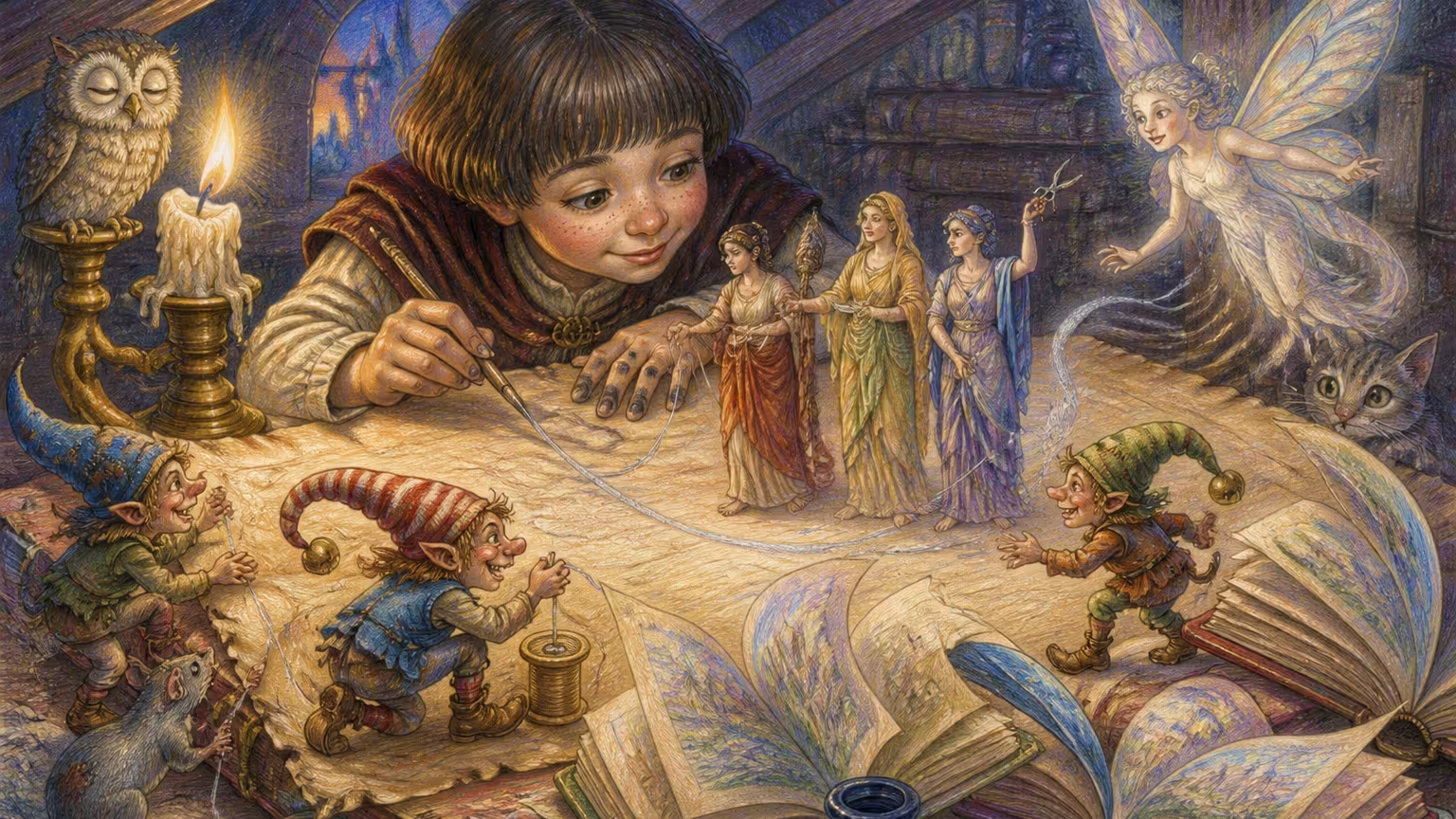
The Roman fatae were three women who spun, measured, and cut the thread of every life. Not suggestions. Verdicts. Before the Romans called them the Parcae (Nona, Decima, and Morta) the Greeks had already named that same trio the Moirai: Clotho at the spindle, Lachesis measuring, Atropos cutting with no room for appeal.
When fate wore three faces
There is something beautifully unsettling about a life that fits entirely on a thread. The Parcae did not act on whims, they wove what was already written into the nature of things. Nona spun at the ninth month, birth, Decima measured the length, Morta determined the end. Three moments of one story shared, surprisingly, by cultures that never met each other.
The Norse traditions held the same three figures as the Norns: Urð (what was), Verðandi (what is becoming), and Skuld (what shall be). Different names, same function. As if every culture independently arrived at the conclusion that time requires exactly three keepers.
And it was precisely those fatae who, over centuries, shed their scissors and gained a different kind of light. Somewhere in the later medieval period, Old French turned them into fées, through syncope, the dropping of inner syllables in fast speech, and from there the word slipped into Middle English as fairie, then settled into fairy.
One root, five names across Europe
This is where etymology becomes genuinely electrifying: the word English uses for fairy, the one Italian uses (fata), French (fée), German (Fee), and Spanish (hada) all share the same Latin grandmother. They are branches of the same tree, threads from the same spool that Clotho set spinning twenty centuries ago.
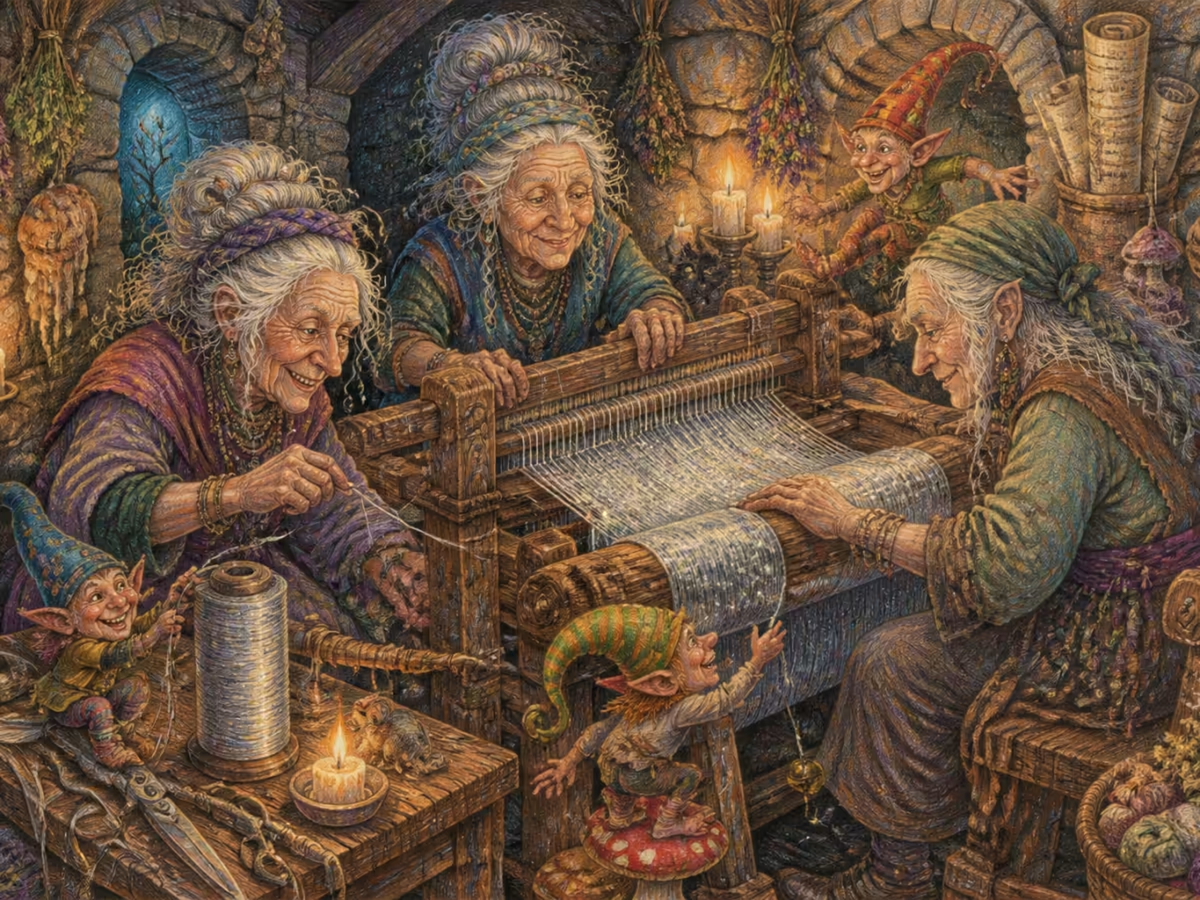
From the Roman Fates to European fairies, the same thread, five different names
Italian kept fata almost untouched, as Italian tends to do with Latin, with the easy familiarity of a language that never moved far from home. French compressed it to fée through syncope. English borrowed from Medieval French and adapted the sound to its own phonetics. Spanish took its own path: the initial Latin f became an aspirated h that eventually went silent, so fata traveled through fada to become hada, an h that is no longer pronounced but carries the memory of a consonant that once was.
| Language | Word today | How it evolved from fata |
|---|---|---|
| English | fairy | Borrowed from Medieval French fée |
| Italian | fata | Almost untouched, straight from Latin |
| French | fée | Syncope: the inner syllables drop away |
| German | Fee | Arrived through Old French |
| Spanish | hada | The f aspirated, then went silent (fata → fada → hada) |
And if you are wondering about the household's other half, the word Brownie hides a story just as good, born from the brown of earth and hearth. We gave it its own article, with the same kind of history behind it.
For the full folkloric tradition that surrounds these beings, there is an entire journey waiting in our complete history of fairies, from Celtic legends to contemporary culture. And for those curious about nature and alignment, the distinction between Seelie and Unseelie fairies is a fascinating place to start.
Where does the word fairy come from?
From Old French fée, which came from Latin fata, plural of fatum (fate, destiny), derived from the verb fari (to speak, to pronounce). The fatae were the Parcae, the three goddesses who wove the destiny of mortals. Over time those figures of fate were transformed into luminous beings and the word spread across Europe: fata in Italian, fée in French, Fee in German, hada in Spanish, and fairy in English, all from the same Latin root.
Is fairy the same word as fae or fay?
Yes, they are siblings. Fae and fay are older English forms that came straight from Old French fae, the very same source that gave us fairy (originally faerie, the land or the enchantment itself, before it ever meant the creature). All three trace back to Latin fata. So when modern fantasy writes about the fae, it is reaching for the oldest version of the word, the one closest to those three women spinning fate.
From the thread of destiny to stardust
What fascinates us is the qualitative leap: how does one go from three figures with shears to a creature that flies and leaves trails of light? Much of the answer lies in how the popular imagination takes serious archetypes and gradually softens them, adds wings, removes the weight of destiny, keeps the magic.
Medieval fairies still retained something of that original gravity. Fairy godmothers were not simply wish-granters, they were assigners of paths, guardians of the hinge moments in a life. The role of godparent in Christian baptism is, in fact, a secular echo of that original function.
For those who want to carry a little of that everyday magic, our gallery of Magikita fairies holds the right companion for exactly what is needed right now.
Five letters carrying twenty centuries of fate. The silent e at the end of fée still holds the shape of a word that once meant destiny, and before that it meant something someone spoke aloud and could not take back.